
Regulatory Shifts in Automotive Safety: Long-Term Valuation Impacts on OEMs and Suppliers
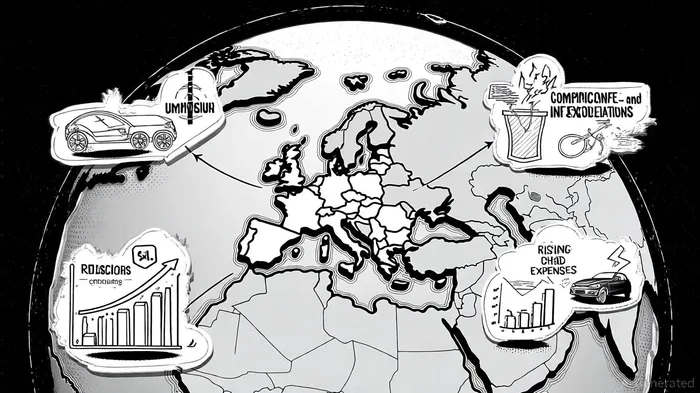
The automotive industry is undergoing a seismic shift driven by regulatory reforms in safety and emissions standards. As governments in the EU, U.S., and China tighten requirements for vehicle safety and environmental performance, original equipment manufacturers (OEMs) and technology suppliers face mounting pressures on R&D budgets, compliance costs, and long-term profitability. This analysis examines how these regulatory changes—particularly Euro 7, FMVSS 305a, and GB 11551-2014 amendments—are reshaping valuation metrics such as EBITDA margins and P/E ratios, and what this means for investors.
EU's Euro 7: A Costly Leap Toward Zero Emissions
The EU's Euro 7 regulations, set to take effect in 2025, represent the most stringent emissions framework to date. These rules extend beyond traditional exhaust emissions to include brake dust, tire wear, and battery durability requirements[1]. For OEMs, compliance demands significant investments in advanced technologies such as coated brake discs, optimized brake pad formulations, and longer-lasting catalytic converters[2]. The European Automobile Manufacturers' Association (ACEA) estimates direct compliance costs could reach €2,000 per car and €12,000 for diesel trucks and buses—4 to 10 times higher than initial projections[3].
These costs are compounded by extended durability requirements (10 years or 200,000 km), which necessitate rigorous testing and redesigns. For example, BMW and StellantisSTLA-- have already allocated €7.1 billion and €4.487 billion, respectively, to R&D in 2022–2023, with a growing share directed toward Euro 7 compliance[4]. Such expenditures are likely to compress EBITDA margins in the short term, as automakers balance innovation with profitability.
U.S. FMVSS 305a: Safety Standards for Electric Vehicles
In the U.S., the Federal Motor Vehicle Safety Standard (FMVSS) 305a introduces stringent safety requirements for electric vehicles (EVs), focusing on high-voltage system integrity and post-crash safety[5]. The regulation mandates crash tests for battery retention, electrolyte leakage prevention, and fire safety protocols, including a one-hour post-crash monitoring period[6]. Compliance requires OEMs to invest in advanced simulation tools and physical testing, increasing R&D costs by an estimated 15–20% for EV models[7].
For suppliers, the shift to EV-specific safety systems—such as reinforced battery enclosures and thermal management solutions—creates both challenges and opportunities. While smaller suppliers may struggle with capital-intensive upgrades, larger firms like Panasonic and LG Chem are poised to benefit from increased demand for compliant components. However, these costs could indirectly pressure OEM EBITDA margins, particularly for companies with limited economies of scale in EV production.
China's GB 11551-2014 Amendments: Tightening Safety and Emissions
China's 2025 amendments to GB 11551-2014, which govern occupant protection in frontal collisions, include updated airbag warning labels and adjusted battery discharge rates to align with GB/T 31486-2024[8]. While these changes are less headline-grabbing than Euro 7 or FMVSS 305a, they reflect a broader trend of regulatory harmonization in China's automotive sector. The tightening of battery safety and fuel consumption standards is expected to increase production costs for domestic automakers, particularly those reliant on low-cost combustion engine models[9].
Financial Implications: R&D, Compliance, and Valuation Metrics
The cumulative impact of these regulations is evident in rising R&D expenditures and compliance costs. In 2023, the EU accounted for 84.1% of global automotive R&D spending (€84.1 billion), with a growing emphasis on electrification and emissions control[10]. For OEMs, this shift may temporarily depress EBITDA margins, as seen in Fitch Ratings' downgrade of the European automotive sector's 2025 outlook to “deteriorating” due to Euro 7 and U.S. tariff pressures[11].
However, the long-term valuation story is more nuanced. Companies that successfully innovate—such as those investing in battery recycling, lightweight materials, or AI-driven safety systems—could see improved margins and higher P/E ratios as market leaders. Conversely, laggards may face declining competitiveness, particularly if they fail to adapt to stricter standards or cross-border trade dynamics.
Market Dynamics and Investment Considerations
Regulatory harmonization efforts, such as the proposed U.S.-EU reciprocal recognition of vehicle standards, could mitigate some costs by reducing redundant testing and certification requirements[12]. This could benefit Chinese automakers seeking entry into Western markets, as streamlined compliance processes lower barriers to expansion. For investors, the key is to differentiate between companies that treat regulations as a cost burden versus those leveraging them as a catalyst for innovation.
Conclusion
Regulatory shifts in automotive safety are reshaping the industry's financial landscape. While Euro 7, FMVSS 305a, and GB 11551-2014 amendments impose immediate costs, they also drive long-term innovation and market realignment. Investors should monitor how OEMs and suppliers navigate these challenges—prioritizing those with robust R&D pipelines, scalable compliance strategies, and agility in adapting to global regulatory trends.





Comentarios
Aún no hay comentarios