
Regulatory Shifts in U.S. Agricultural Markets: How USDA Rulemaking Reshapes Long-Term Investment in Livestock and Poultry Production
Regulatory Framework and Compliance Timelines
The OLPS introduces stringent requirements for organic livestock and poultry operations, including year-round outdoor access for avian species, species-specific space allowances, and prohibitions on practices like beak trimming and mulesing. Key provisions, such as outdoor stocking density and soil access, are staggered to ease implementation, with most requirements effective by January 2025 and extended deadlines for poultry operations until January 2029. This phased approach acknowledges the operational adjustments needed for compliance, particularly for small- and medium-sized producers.
The rule's economic analysis, however, reveals a nuanced picture. While initial compliance costs for organic layer and broiler operations are estimated at $28.1–$32.9 million and $4.8–$5.5 million annually, respectively, the USDA projects net annualized benefits of $59.1 million to $78.1 million, driven by enhanced consumer trust and market value for organic products. These figures underscore the long-term potential for organic producers to capture premium pricing, despite short-term capital outlays.
Production Costs and Market Competitiveness
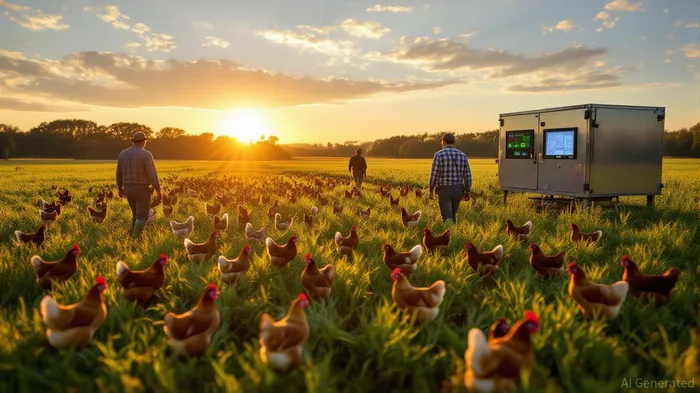 The poultry sector, a cornerstone of U.S. agricultural output, has already demonstrated resilience amid shifting dynamics. In 2024, total poultry sector sales reached $70.2 billion, with broiler production alone valued at $45.4 billion-a 5.8% increase from 2023. However, the sector faces headwinds, including soft demand for processed items like boneless breast meat and downward price pressures. The OLPS adds another layer of complexity, as organic producers must balance compliance costs with maintaining competitiveness against conventional and cage-free alternatives.
For organic poultry, the cost of compliance is particularly acute. The prohibition of concrete "porches" for outdoor access and mandates for 50% soil coverage in enclosures necessitate infrastructure upgrades, raising capital expenditures. Yet, these changes align with consumer preferences for ethically sourced products, a trend that could offset higher costs through premium pricing. The USDA's projection of a $76.6–$89.6 million annual benefit for layer operations highlights this potential.
Investor Behavior and Capital Allocation
Investor confidence in the organic livestock and poultry sectors has been shaped by the OLPS's phased implementation. The delayed compliance deadlines for outdoor space requirements (until 2029) provide a buffer for producers to adapt, reducing abrupt market disruptions and allowing investors to plan for gradual transitions. This has encouraged capital allocation toward operations that can scale sustainably, particularly those leveraging technology for efficient resource management.
Conversely, the rule's economic analysis has sparked debate. Critics, including the Office of Information and Regulatory Affairs (OIRA), have questioned the USDA's cost-benefit calculations, arguing that small producers may struggle with compliance. This uncertainty has led to a more measured investor approach, with capital favoring vertically integrated operations that can absorb transitional costs. For example, major players like Tyson FoodsTSN-- and Sanderson Farms have adjusted hatchery operations in response to broader market pressures, including OLPS-related compliance needs.
Market Entry and Exit Trends
The OLPS's impact on market entry and exit is evident in the poultry sector's evolving landscape. Organic egg producers, for instance, face a temporary economic welfare loss of $8.7–$16.0 million over the first 20 years as some exit for the cage-free market. Meanwhile, the turkey segment, which saw a 9.0% production decline from 2015 to 2024, remains a seller's market due to tight supplies and premium pricing for cuts like bone-in breasts according to data. These divergent trends highlight how regulatory shifts can create both challenges and opportunities, depending on the subsector.
Globally, U.S. poultry producers also contend with retaliatory tariffs from China, which have dampened export competitiveness according to industry analysis. The OLPS's focus on domestic standards may indirectly bolster exports by enhancing the perceived value of U.S. organic products, though this remains untested in the short term.
Conclusion: Strategic Implications for Investors
The USDA's OLPS represents a pivotal regulatory intervention that will redefine the organic livestock and poultry sectors over the next decade. For investors, the key takeaway is the interplay between compliance costs, consumer-driven demand, and long-term profitability. While the initial financial burden is significant, the rule's emphasis on animal welfare and transparency aligns with broader trends toward ethical consumption, positioning organic producers to capture market share in premium segments.
However, success will depend on operational agility. Producers and investors must prioritize infrastructure upgrades, technology adoption, and strategic partnerships to navigate compliance timelines and mitigate risks. As the 2029 deadlines for poultry-specific provisions loom, the coming years will test the sector's ability to balance regulatory demands with profitability-a challenge that will shape the future of U.S. agricultural investment.







Comentarios
Aún no hay comentarios