
Regulatory Scrutiny and Investor Confidence: Unpacking Shareholder Risks at Molina Healthcare
The recent turmoil at Molina HealthcareMOH-- (MOH) underscores the fragility of investor confidence in the face of regulatory and governance risks. Over the past two months, the company has faced a cascade of challenges, from revised earnings guidance to securities fraud allegations, raising critical questions about its leadership's transparency and risk management practices.
A Perfect Storm of Earnings Revisions and Legal Fallout
On July 7, 2025, MolinaMOH-- issued preliminary second-quarter results, slashing its full-year adjusted earnings guidance by over 10% due to "elevated medical cost pressures," according to a Business Wire notice. This included rising utilization of behavioral health, pharmacy, and inpatient services-factors the company had previously downplayed in its financial projections, as reported by a Becker's Payer report. The stock price plummeted 2.9% in response.
The situation worsened on July 23, 2025, when Molina released finalized Q2 results, further reducing guidance by 13.6% after "new information gained in the quarterly closing process," per a PR Newswire release. The stock dropped another 16.8%, closing at $158.22 per share. According to a report by Business Wire, the company attributed the shortfall to a dislocation between premium rates and medical cost trends, but critics argue this reflects a failure to anticipate systemic risks.
Legal Challenges and Governance Concerns
The fallout has triggered multiple class-action lawsuits. A securities fraud investigation alleges that Molina and its executives misled investors by failing to disclose adverse facts about its medical cost assumptions and overreliance on low utilization of services for growth, according to a GlobeNewswire alert. As stated by Frank R. Cruz of the law firm representing investors, the company's guidance revisions "constitute a material misrepresentation of its financial health."
The lawsuits highlight a governance gap: Molina's leadership allegedly prioritized short-term earnings projections over long-term risk preparedness. For instance, the company's 2025 earnings guidance assumed stable utilization rates for behavioral health services, despite industry-wide trends indicating rising demand due to post-pandemic mental health needs. This disconnect between assumptions and reality has left investors questioning the board's oversight capabilities.
Investor Confidence in Jeopardy
According to data from Bloomberg, MOH's beta coefficient-a measure of stock volatility relative to the market-surged to 1.8 in late July 2025, up from 1.2 in early 2025, as noted in a GlobeNewswire release. This suggests heightened sensitivity to market movements, a red flag for risk-averse investors. Meanwhile, the lead plaintiff deadline of December 2, 2025, for the class-action suits adds near-term uncertainty.
Legal experts note that the lawsuits could force Molina to restructure its governance framework. "If the allegations are proven, the company may face not only financial penalties but also a mandate for board-level reforms," said a spokesperson for Robbins LLP, one of the firms handling the case.
Conclusion: A Test of Resilience
Molina's current crisis serves as a cautionary tale for healthcare companies navigating regulatory scrutiny. While the sector is inherently prone to cost pressures, the speed and magnitude of MOH's guidance downgrades-and the subsequent legal backlash-highlight the importance of transparent communication and robust risk modeling. For investors, the key takeaway is clear: governance failures can amplify financial vulnerabilities, turning manageable challenges into existential threats.
As the legal proceedings unfold, all eyes will be on Molina's ability to restore credibility. Until then, the stock remains a high-risk proposition, with its trajectory hinging on the outcome of lawsuits and the board's willingness to address systemic governance flaws.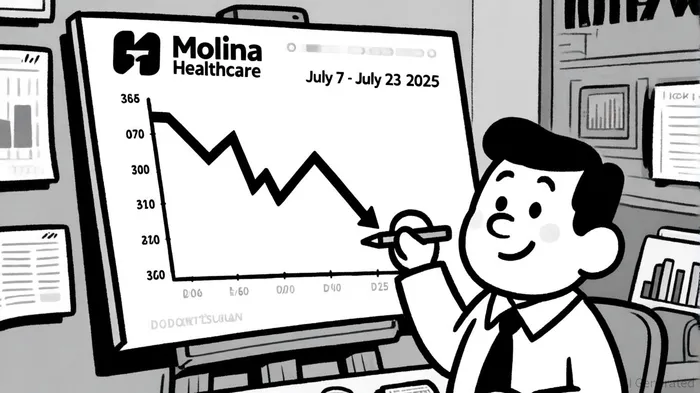





Comentarios
Aún no hay comentarios