
Regulatory Roadblocks and Cash Burn: Testing the Viability of Tesla's Autonomy Claims
's aggressive timeline for driverless robotaxis in Austin clashes sharply with today's operational reality. He recently claimed Tesla's FSD system could operate without safety drivers within weeks, but current deployments still require human monitors.
has intensified as TeslaTSLA-- pushes autonomy boundaries. The NHTSA recently tallied 80 FSD-related violations in December 2025-traffic light and lane-line infractions-up from 50 in the prior period. This spike underscores growing compliance risks as testing expands.
Quantitative evidence reveals a widening gap between Musk's vision and field execution. Since June 2024, , contradicting claims of imminent driverless capability. Even as Musk announces plans to double the fleet by year-end, physical safety drivers remain mandatory.
suggest mounting friction. Regulatory pushback over safety data transparency could delay approvals. Meanwhile, Tesla's fleet scaling ambitions face practical hurdles: Austin's complex urban infrastructure remains challenging for current FSD versions, and public trust could erode if crash rates persist. Investors should monitor both regulatory developments and deployment safety metrics closely.
Regulatory Barriers and Enforcement Gaps
Texas has established a framework for autonomous vehicles with bills like SB 2205/2017 and SB 2807/2025, giving the Texas Department of Motor Vehicles (TxDMV) authority over higher-level autonomous vehicles (L4/L5). However, these laws lack explicit references to Tesla's specific deployment timeline or detailed safety protocols for its vehicles, creating legal ambiguity. HB 3026 (2021) mandates safety reporting and insurance requirements, yet it fails to establish clear rules for unsupervised operation – a critical gap for Tesla's Full Self-Driving ambitions. Local governments, even collaborative ones like Austin, face significant limitations under current law, preventing them from setting stricter standards or filling these regulatory voids effectively.
The most pressing center on unsupervised operation and liability. HB 3026 requires safety reports and insurance but doesn't define operational design domains or disengagement protocols for vehicles operating without a human driver in the loop. SB 2807/2025 grants TxDMV oversight but doesn't codify specific technical benchmarks or safety validation processes Tesla must meet before wider deployment. This absence of detailed operational rules and liability frameworks leaves Tesla operating in a zone of regulatory uncertainty, potentially exposing it to unforeseen compliance costs and operational delays if incidents occur. The lack of explicit safety protocol requirements means Tesla's internal standards become the de facto benchmark, without independent verification mandates.
Enforcement constraints are severe at the municipal level. Despite Austin's known collaboration with TxDMV on testing, local authorities have no statutory power to impose stricter AV regulations or mandate specific safety features beyond state minimums. Their ability to respond to perceived safety concerns or manage traffic impacts from testing fleets is largely advisory or reactive, lacking direct regulatory teeth. This municipal impotence means local pushback or safety concerns often stall projects through political pressure or logistical friction (like permitting delays) rather than formal legal blocks, creating operational headaches and potential project delays for Tesla. The coordination between state and local agencies remains ad-hoc and under-resourced.
For Tesla, these regulatory ambiguities and enforcement gaps pose significant risks to its deployment timeline. The absence of clear state-level rules for unsupervised operation forces Tesla to navigate an uncertain path, potentially delaying commercial rollouts until courts or regulators clarify liability and safety obligations. Any incidents in this unregulated zone could trigger costly legal battles and public relations crises, impacting investor confidence and stock performance. Furthermore, the inability of cities like Austin to proactively manage AV impacts means local opposition could effectively block deployments through persistent permitting challenges and public campaigns, creating friction and delays. Tesla must invest heavily in internal safety validation and public relations to mitigate these regulatory and reputational risks while lobbying for clearer state frameworks, diverting resources from core development. The financial cost of navigating this legal grey area, including potential retroactive compliance expenses and litigation risk, directly threatens projected revenue streams from its autonomous services.
Under Autonomy Development Stress
Tesla's record $4 billion free cash flow in Q3 2024 provides crucial liquidity headroom amid persistent profitability pressures. , demonstrating operational resilience despite market headwinds. The cash flow strength emerges as the primary buffer against ongoing margin compression and aggressive R&D spending.
, price cuts across global markets, and the expiration of federal electric vehicle tax credits. These factors collectively squeezed profitability while maintaining delivery growth. , potentially indicating demand normalization after previous supply chain constraints.
Heavy autonomy R&D investments are directly straining near-term profitability. Resources poured into robotaxi deployment and Optimus humanoid development now consume disproportionate capital, with funding shifts visible in quarterly income statements. This allocation pattern has accelerated operating loss margins despite record revenues.
concerns center on the tension between aggressive autonomy spending and cash generation capacity. While current free cash flow covers R&D needs, any sustained decline in vehicle margins or delivery growth could pressure autonomy funding. Regulatory approvals for robotaxis and production scaling timelines remain critical variables affecting the cash flow trajectory.
and Catalysts for Thesis Breakdown
Tesla's autonomy timeline faces immediate pressure from safety inconsistencies. 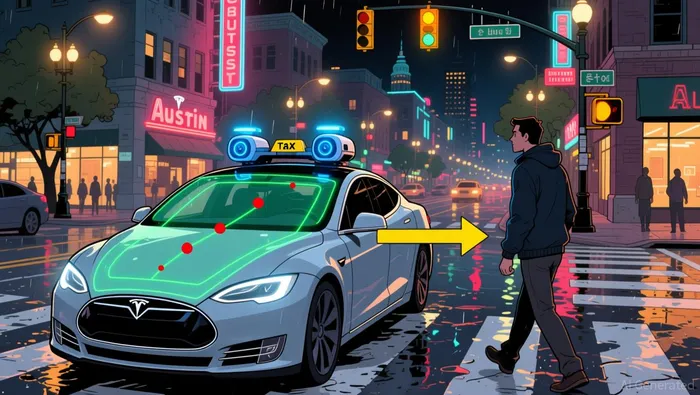 Austin's crash rate has surged since June 2024, while , creating regulatory friction and eroding public trust.
The January 2026 settlement deadline acts as a binary catalyst. Failure to resolve safety concerns could trigger mandatory software freezes or fleet-wide recalls, directly disrupting deployment phases. Regulatory delays compound this risk, especially in regions tightening autonomous vehicle standards.
is equally vulnerable. struggles to absorb autonomy R&D's cash burn, which now consumes 12% of quarterly operating expenses according to reports. Margin compression from price cuts further strains liquidity, risking capital allocation shifts if autonomy revenue lags projections.
These risks form a : safety setbacks trigger regulatory scrutiny, increasing compliance costs while delaying revenue generation. Margin pressure then forces harder choices between R&D investment and near-term profitability, potentially extending the timeline Musk has promised.
For investors, the critical test is January 2026. Until then, any deviation from Austin's safety baseline or regulatory clarity could force Musk's hand-and market expectations-to adjust.





Comentarios
Aún no hay comentarios