
Regulatory Risks and Valuation Distortions in Crypto Treasury-Driven Equities: Investor Protection and Market Stability Amid Speculative DAT Strategies
Regulatory Clarity and Enforcement: A Double-Edged Sword
The U.S. Securities and Exchange Commission (SEC) has taken decisive steps to modernize digital asset regulations, including clarifying that liquid staking activities do not constitute securities offerings under federal law, according to a DLA Piper report. These moves aim to foster innovation but also highlight the agency's balancing act between encouraging capital formation and mitigating risks. For instance, the SEC's no-action letters-such as those permitting state-chartered trust companies to custody digital assets-have provided much-needed clarity for institutional investors, as documented in the Latham policy tracker. Yet, these same measures have inadvertently enabled speculative excess, as DATs leverage regulatory flexibility to raise capital rapidly.
Regulatory harmonization efforts, like the SEC-CFTC joint statements on digital asset oversight, underscore the complexity of aligning commodity and securities frameworks, as noted in the Latham policy tracker. Meanwhile, the Financial Crimes Enforcement Network (FinCEN) has tightened scrutiny of crypto transactions, particularly those involving ATMs and mixing services, to curb illicit activity, according to the same Latham policy tracker. These actions reflect a broader trend: regulators are increasingly prioritizing investor protection without stifling innovation.
Valuation Distortions: The Flywheel Effect and Its Limits
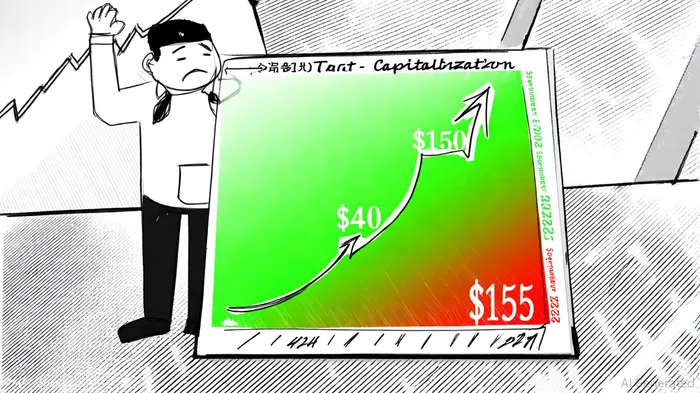
DAT companies operate on a self-reinforcing model: raising capital to purchase crypto assets, which in turn boosts equity valuations, enabling further fundraising. This "wealth flywheel" has led to persistent valuation distortions, with DAT equities frequently trading at premiums exceeding 20% to their underlying digital asset holdings, according to a BitPushNews analysis. For example, MicroStrategy's aggressive BitcoinBTC-- accumulation-funded by $42 billion in stock and bond sales-exemplifies how corporate treasuries can become speculative vehicles, as the BitPushNews analysis observes.
However, this model is inherently fragile. By August 2025, corporate Bitcoin purchases had declined sharply, with monthly growth in BTC treasury holdings dropping to 16% from over 90% earlier in the year, as reported in the BitPushNews analysis. Regulatory clampdowns, such as Nasdaq's stricter disclosure requirements for frequent capital raises, have further eroded the premium. Smaller DATs, reliant on hype rather than fundamentals, now face existential challenges as capital flows shift toward Ethereum's staking yields, a trend highlighted in the BitPushNews analysis.
Academic and Regulatory Analyses: Volatility, Governance, and Compliance
Academic studies from 2023 to 2025 reveal that DAT strategies amplify market volatility through behavioral biases and interconnectedness. For instance, machine learning models like LASSO and gradient boosting regression have outperformed traditional volatility forecasts, highlighting the role of investor sentiment in exacerbating market swings, as shown in a volatility forecasting study. Regulatory bodies, meanwhile, are addressing these risks through custody rule amendments. The SEC's proposed April 2026 rulemaking will explicitly govern crypto asset custody, requiring RIAs to implement key management, segregation, and insurance protocols, as outlined in the SEC regulatory agenda.
These developments underscore a critical tension: while DATs offer institutional investors indirect exposure to digital assets, their governance structures often lack transparency. The SEC's emphasis on best-interest disclosures and due diligence for custodians aims to mitigate this gap, as discussed in MoFo custody guidance. Yet, as the QMMM Holdings collapse demonstrated, even robust frameworks cannot fully insulate markets from speculative overreach, according to an Intellectia analysis.
Case Studies: Systemic Risks and Regulatory Reckonings
The decline of DAT firms in Asian markets-such as HKEX, JPX, and SGX rejecting DAT listings-signals a growing awareness of liquidity and regulatory risks, as detailed in the Intellectia analysis. QMMM Holdings' collapse, likened to the FTX scandal, exposed the fragility of speculative DAT strategies and prompted calls for stricter oversight, a point the Intellectia analysis emphasizes. These cases illustrate how valuation distortions can cascade into broader market instability, particularly when DATs operate in regulatory gray areas.
Conclusion: Balancing Innovation and Stability
The DAT phenomenon has redefined corporate treasury management, but its speculative nature demands vigilant regulatory oversight. While the SEC and other agencies have made strides in clarifying custody rules and investor protections, the persistence of valuation premiums and volatility highlights the need for adaptive frameworks. For investors, the lesson is clear: DAT equities, while innovative, carry unique risks that require careful due diligence. As the market evolves, the challenge will be to harness the benefits of digital assets without replicating the instability of past speculative bubbles.






Comentarios
Aún no hay comentarios