
Regulatory Risks in the Crypto Mining Sector: Lessons from the VBit Scandal
The crypto mining sector, once a niche corner of the digital economy, has emerged as a critical asset class for institutional and retail investors alike. However, the 2025 VBit scandal-a $95.6 million fraud orchestrated by founder Danh C. Vo-has exposed systemic vulnerabilities in regulatory compliance and investor due diligence. As the U.S. Securities and Exchange Commission (SEC) intensifies its scrutiny of crypto activities, the case underscores the urgent need for investors to navigate a landscape where technological innovation collides with evolving legal frameworks.
The VBit Scandal: A Blueprint for Regulatory Failure
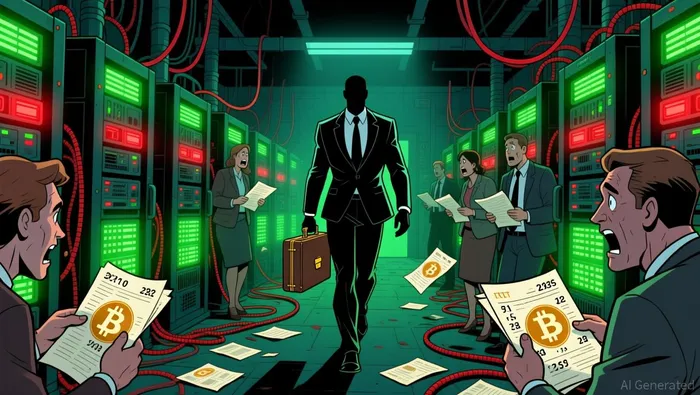
The SEC's lawsuit against Vo reveals a pattern of deliberate misrepresentation. By marketing "Hosting Agreements" as a path to passive income through BitcoinBTC-- mining, Vo allegedly misled 6,400 investors while operating far fewer mining rigs than claimed. Over $48.5 million of the raised funds were misappropriated for personal expenses, including gambling and gifts, before Vo fled the U.S. according to reports. This case highlights a critical flaw: even as the SEC clarified in March 2025 that proof-of-work (PoW) mining does not constitute a securities offering under federal law as the SEC stated, fraudulent actors can exploit the sector's ambiguity by layering misrepresentations over legitimate operations.
The SEC's charges under Sections 5(a), 5(c), and 17(a) of the Securities Act of 1933, and Section 10(b) of the Securities Exchange Act of 1934, emphasize that regulatory clarity does not preclude enforcement action when fraud occurs. As the SEC stated, "The guidance does not absolve operators from securities law obligations if they engage in deceptive practices."
Regulatory Framework: Clarity and Gaps in 2025
The SEC's March 2025 statement on PoW mining sought to reduce uncertainty by affirming that solo and pooled mining activities do not meet the Howey test's criteria for investment contracts. This distinction is pivotal: miners earn rewards through computational effort, not reliance on third-party management according to the SEC's guidance. However, the VBit case illustrates that this clarity applies only to the technical activity of mining, not to the broader ecosystem of fundraising, marketing, or operational transparency.
Chairman Paul Atkins' November 2025 vision for a "comprehensive digital asset framework" further signals a shift toward tailored exemptions and safe harbors for crypto activities according to industry analysis. Yet, as of 2025, formal rule proposals remain pending, leaving a regulatory vacuum where enforcement actions like the VBit case serve as de facto precedents.
Investment Due Diligence: Lessons from VBit and Beyond
Post-VBit, due diligence must extend beyond traditional financial metrics. Investors are advised to scrutinize:
1. Operational Transparency: Verify claims about mining capacity, energy efficiency, and geographic distribution. The SEC's guidance explicitly warns that "misrepresentations about the scale or nature of mining operations can trigger securities law violations" according to the SEC.
2. Regulatory Alignment: Ensure operators comply with anti-money laundering (AML) and know-your-customer (KYC) protocols. The DPRK's $1.5 billion theft from ByBit in 2025-a separate but instructive incident-exposed vulnerabilities in centralized custodial models, underscoring the need for robust internal controls according to Chainalysis.
3. Cybersecurity Protocols: The ByBit hack revealed that even legitimate operators can fall victim to sophisticated social engineering attacks. Investors must assess whether mining firms employ multi-factor authentication, cold storage solutions, and real-time threat monitoring according to industry reports.
The Path Forward: Balancing Innovation and Compliance
The VBit scandal and the SEC's evolving stance highlight a paradox: crypto mining's potential for innovation is both a driver of growth and a magnet for fraud. For investors, the key lies in adopting a proactive approach to due diligence. As one industry analyst notes, "The future of crypto mining hinges on aligning technological ambition with regulatory rigor" according to analysis.
With the SEC's Project Crypto and the administration's "Strengthening American Leadership in Digital Financial Technology" executive order, 2026 may bring clearer rules. Until then, investors must treat due diligence as an ongoing process, not a one-time checklist. The lessons from VBit are clear: in a sector where the line between innovation and exploitation is thin, vigilance is not just prudent-it is imperative.






Comentarios
Aún no hay comentarios