
Regulatory Risks in the Crypto ATM Industry: Emerging Enforcement Trends and Operator Viability
Global Enforcement Trends: A Harsh New Regulatory Landscape
Australia's AUSTRAC Takes a Hard Line
In 2025, Australia's AUSTRAC has intensified its focus on crypto ATMs, which it now classifies as "high-risk channels for money laundering." A landmark case involved Queensland-based Cryptolink, which was fined $56,340 for failing to report large cash transactions and for inadequate anti-money laundering (AML) controls, according to a Bitcoin.com report. AUSTRAC also mandated third-party reviews of Cryptolink's processes, with compliance due by March 2026. Notably, the report found that 85% of transactions from the 90 most frequent users of these machines were linked to scams or money mule activities, underscoring the systemic risks regulators aim to mitigate.
EU's MiCA Framework Reshapes the Market
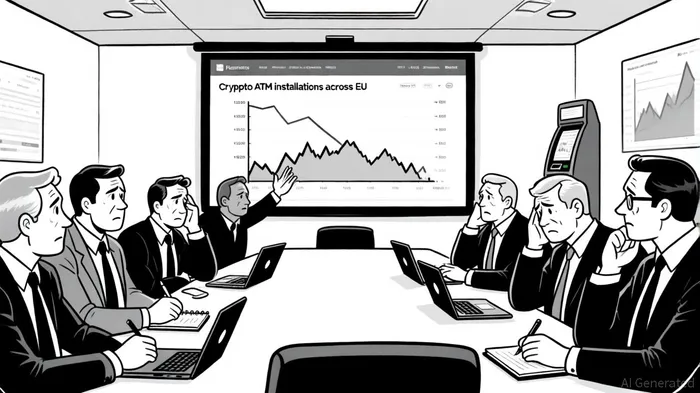
The EU's Markets in Crypto-Assets (MiCA) regulations, implemented since 2023, have led to a 35% decline in BitcoinBTC-- ATM operations across the bloc, according to EU MiCA statistics. By enforcing strict Know Your Customer (KYC) and AML protocols, MiCA has pushed 70% of EU crypto transactions to MiCA-compliant exchanges, while non-compliant platforms saw a 40% drop in users. The same analysis reports that over €540 million in fines have been levied against non-compliant entities since the regulation's rollout, signaling a shift toward institutional-grade compliance.
U.S. States Enact Diverse but Restrictive Laws
In the U.S., 20 states have introduced crypto ATM regulations since 2023, with Colorado, Nebraska, and Arizona leading the charge. Nebraska's 2025 law, for instance, imposes $2,000–$10,500 transaction limits, mandates fraud warnings, and requires refunds for reported scams, as reported by Stateline. Iowa's attorney general took legal action in February 2025, suing two major operators for enabling $20 million in losses to scammers, according to an ABA Banking Journal report. Meanwhile, California regulators have fined operators like Coinhub and Coinme for AML failures, reflecting a bipartisan push to balance innovation with consumer protection.
Operational Impact: Compliance Costs and Viability Challenges
The regulatory onslaught has forced operators to overhaul their business models. In Australia, AUSTRAC now requires mandatory reporting for transactions exceeding $10,000 and stricter transaction limits. Similarly, U.S. operators must invest in third-party compliance reviews, real-time transaction monitoring, and customer education tools, as noted in the ABA Banking Journal analysis. These measures, while necessary to avoid penalties, have significantly increased operational costs.
For example, Cryptolink's court-enforceable undertaking includes engaging third-party reviewers to validate its AML controls-a costly and time-consuming process rooted in the AUSTRAC case. In California, operators fined for AML lapses have faced not only financial penalties but also reputational damage, deterring institutional partnerships, according to the ABA report. Smaller operators, lacking the capital to absorb these costs, are particularly vulnerable.
The financial burden is compounded by declining user trust. AARP reports that Americans lost at least $65 million to crypto ATM fraud in 2024, with the elderly disproportionately affected. As regulators impose stricter limits and warnings, operators must navigate a delicate balance between compliance and user experience.
Future Outlook: Consolidation and Compliance as a Competitive Edge
The regulatory landscape is likely to drive consolidation in the crypto ATM industry. Operators unable to meet compliance standards-particularly small, unregulated players-will exit the market, leaving room for larger firms with robust AML frameworks. For instance, MiCA-compliant exchanges have gained institutional trust, suggesting that regulatory alignment could become a key differentiator.
However, the path forward is fraught with uncertainty. While compliance can mitigate risks, it also reduces profit margins and limits accessibility-a core promise of crypto. Operators must innovate to offset costs, such as leveraging AI-driven transaction monitoring or partnering with compliance-as-a-service providers.
Conclusion
The crypto ATM industry is at a crossroads. Regulatory enforcement actions in 2025 have exposed systemic vulnerabilities, forcing operators to prioritize compliance over convenience. While this may curb illicit activity, it also raises questions about the sector's long-term viability. Investors must weigh the risks of regulatory overreach against the potential for a more structured, institutional-grade market. For now, the message is clear: in the age of heightened scrutiny, survival in the crypto ATM space hinges on adaptability and adherence to evolving global standards.







Comentarios
Aún no hay comentarios