
Regulatory Risks in the Crypto Asset Sector: SEC Enforcement Trends and Corporate Governance Failures
The U.S. Securities and Exchange Commission's (SEC) evolving approach to regulating the crypto asset sector has become a focal point for investors, policymakers, and industry participants. Between 2020 and 2025, the agency transitioned from a broad enforcement-first strategy to a more nuanced, collaborative framework aimed at balancing innovation with investor protection. However, persistent corporate governance failures-exemplified by high-profile collapses like FTX and Binance's regulatory missteps-underscore the sector's systemic vulnerabilities. For investors, understanding these dynamics is critical to navigating the regulatory and operational risks inherent in crypto markets.
SEC Enforcement: From Regulation-by-Enforcement to Structured Clarity
The SEC's enforcement priorities in the crypto space have undergone a marked shift under Chairman Paul Atkins and the leadership of the Crypto Task Force and Cyber and Emerging Technologies Unit (CETU). In 2025, the agency dismissed several high-profile lawsuits, including its long-running case against CoinbaseCOIN-- and Binance, signaling a pivot toward fostering clarity rather than retroactive punishment. Acting Chairman Mark Uyeda emphasized this shift, advocating for a regulatory framework that "addresses the economic realities of crypto assets" rather than relying on enforcement to define compliance according to a 2025 update.
This recalibration aligns with the SEC's "Project Crypto" initiative, which seeks to classify digital assets into four categories-digital commodities, collectibles, tools, and tokenized securities-to provide clearer guidance on when a token qualifies as a security under existing laws. 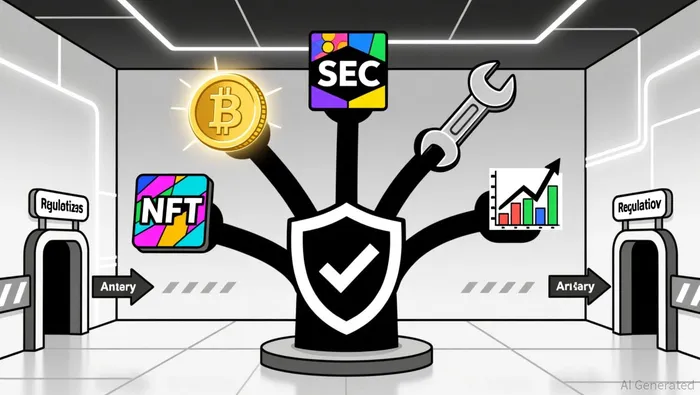 While this approach aims to reduce regulatory ambiguity, it also reflects a strategic deprioritization of expansive enforcement sweeps in favor of targeted actions against fraud and market manipulation. For instance, in May 2025, the SEC secured a case against Unicoin Inc. for selling rights certificates backed by undervalued crypto assets, demonstrating its continued focus on investor protection.
Corporate Governance Failures: Systemic Risks in the Crypto Ecosystem
Even as the SEC refines its regulatory approach, corporate governance failures in the crypto sector have exposed systemic risks that threaten investor confidence. Two Sigma Investments and Two Sigma Advisers, for example, were fined $90 million in January 2025 for algorithmic trading model vulnerabilities that allowed an employee to manipulate parameters, resulting in over $400 million in overperformance and $165 million in underperformance. The SEC also cited whistleblower protection violations, highlighting the sector's susceptibility to internal control lapses.
The Binance and FTX scandals epitomize broader governance shortcomings. The SEC's 2023 complaint against Binance revealed a lack of trade surveillance controls, unregistered broker-dealer activities, and misleading disclosures about compliance with U.S. client restrictions according to a key regulatory filing. Meanwhile, FTX's collapse exposed a toxic mix of customer fund misuse, opaque financial reporting, and liquidity mismanagement, leading to criminal and civil actions against its executives. These cases underscore the urgent need for robust compliance frameworks, transparency, and accountability in crypto operations.
Implications for Investors: Navigating a High-Risk Landscape
For investors, the interplay between regulatory shifts and corporate governance failures presents a dual challenge. On one hand, the SEC's move toward structured clarity may reduce the risk of abrupt enforcement actions that destabilize markets. On the other, the sector's history of governance lapses-such as the misuse of customer assets and algorithmic vulnerabilities-highlights the importance of due diligence.
Investors should prioritize platforms with transparent financial reporting, audited reserves, and robust compliance mechanisms. Additionally, the SEC's focus on fraud and market manipulation in 2025, including actions against entities like MCC International Corp. and Bitchain Exchanges, suggests that regulatory scrutiny will remain a key risk factor for unscrupulous actors. As Commissioner Hester Peirce has argued, the SEC's policy divisions must lead in regulating new technologies, ensuring that innovation does not come at the expense of investor safeguards according to a mid-year update.
Conclusion: A Call for Prudence and Proactive Governance
The crypto asset sector's regulatory and governance challenges are far from resolved. While the SEC's evolving strategy offers a path toward clearer rules, the persistence of corporate misconduct-exemplified by the Binance, FTX, and Two Sigma cases-demands vigilance. For investors, the lesson is clear: success in this space requires not only an understanding of market dynamics but also a critical evaluation of the governance and compliance practices of the platforms and projects they engage with. As the industry matures, the ability to navigate these risks will separate prudent investors from those exposed to the sector's inherent volatility.





Comentarios
Aún no hay comentarios