
Regulatory Risks in Big Pharma: Implications for Sanofi and the Sector
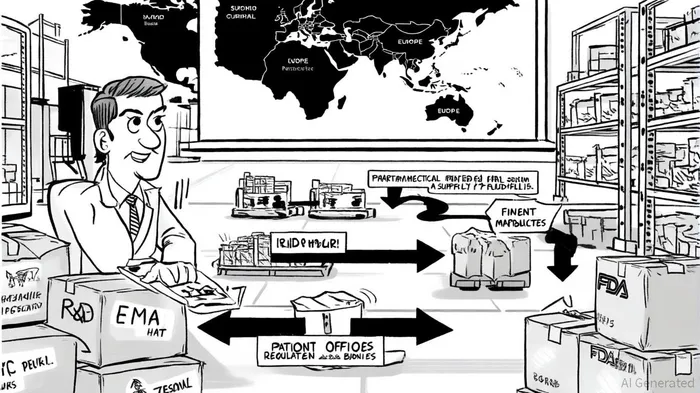
The pharmaceutical sector, long a cornerstone of global innovation and profit, now faces a regulatory landscape thick with uncertainty. For investors, the question is no longer whether Big Pharma will adapt to new rules but how swiftly and effectively it can navigate a shifting mosaic of patent law, pricing controls, and geopolitical tensions. SanofiSNY--, a global leader in biopharma, exemplifies both the challenges and opportunities inherent in this environment.
Patent Uncertainty and Innovation Costs
Recent U.S. Supreme Court rulings, such as Amgen v. Sanofi, have redefined the standards for patent enablement, particularly for antibody-based therapies. According to a report by Kirkland & Ellis, the decision has forced companies to adopt more rigorous patent disclosures under Section 112 of the Patent Act, increasing legal and R&D costs[6]. For Sanofi, which relies heavily on monoclonal antibodies in its immunology and oncology pipelines, this means not only higher upfront costs but also a strategic shift toward narrower, more defensible patent claims. Such adjustments could slow innovation timelines, reducing the window for exclusivity and squeezing long-term returns for investors.
Antitrust Scrutiny and Market Access
The Federal Trade Commission's (FTC) aggressive campaign against “abusive” Orange Book listings—where companies list secondary patents to delay generic competition—has added another layer of complexity. Data from the same Kirkland & Ellis analysis indicates that the FTC's 2023 challenge of over 100 pharmaceutical patents has created regulatory ambiguity for firms like Sanofi, which must now balance IP protection with antitrust compliance[6]. This tension is particularly acute in markets like Latin America and the Gulf, where Sanofi has faced additional data requests from regulators such as Swissmedic, delaying approvals and complicating regional expansion[2].
The Inflation Reduction Act and Pricing Pressures
The Inflation Reduction Act (IRA) has emerged as a seismic force in the sector. A study by the Information Technology & Innovation Foundation (ITIF) reveals that early-stage investments in small-molecule drugs have plummeted by over 70% since the IRA's passage, as price negotiations and revenue erosion make these projects less attractive to venture capital[5]. For Sanofi, which has historically balanced biologics with small-molecule offerings, this shift could force a reallocation of R&D resources. The IRA's Medicare price caps, which could reduce drug revenues by up to 50% in certain therapy areas, also threaten to reshape Sanofi's financial model, particularly in oncology and immunology, where its portfolio is most exposed[1].
Tariff Risks and Supply Chain Reshaping
The Trump administration's proposed pharmaceutical tariffs, while still in flux, pose a dual threat. According to a report by WTWCO, tariffs on imported raw materials and finished drugs could raise production costs by 10–20%, forcing companies to either absorb losses or pass them to consumers[2]. Sanofi, which sources globally, faces a dilemma: reshoring production to the U.S. would require years of investment and could lead to short-term drug shortages, while maintaining current supply chains risks margin compression. The Harvard Petrie-Flom Center notes that generic drugmakers, already operating on thin margins, may struggle to absorb these costs, potentially reducing competition and paradoxically inflating prices for branded drugs[3].
Sanofi's Strategic Resilience
Despite these headwinds, Sanofi has demonstrated agility. Its 2023 acquisitions of Blueprint Medicines and Vicebio signal a commitment to innovation in high-growth areas like cell and gene therapy[3]. The company's focus on vaccines and immunology also aligns with global health priorities, offering a buffer against pricing pressures in other segments. However, as CFO François Roger recently warned, the lack of clarity around U.S. tariffs and the IRA's implementation remains a “major constraint” on long-term planning[2].
Assessing Long-Term Viability
For investors, the key question is whether Sanofi and its peers can offset regulatory costs with innovation. Sanofi's pipeline, which could add €10 billion in sales by 2030[5], suggests optimism. Yet, the sector-wide shift toward biologics and away from small molecules indicates a narrowing of therapeutic focus, potentially limiting long-term growth. Regulatory risks, meanwhile, are unlikely to abate: the CBO projects that pharmaceutical tariffs could reduce U.S. economic output by increasing consumer costs[6], while global regulators continue to prioritize affordability over profit.
Conclusion
The pharmaceutical sector stands at a crossroads. For Sanofi, the path forward requires balancing regulatory compliance with R&D boldness, a task complicated by the sector's high-liability environment. Investors must weigh the company's strategic acquisitions and pipeline strength against the looming specter of pricing controls and supply chain disruptions. In this climate, long-term viability hinges not just on scientific innovation but on the ability to navigate a regulatory landscape that increasingly prioritizes public health over shareholder returns.







Comentarios
Aún no hay comentarios