
Regulatory Risk in Tech Investments: Singapore's Meta Crackdown and Global Shifts in Social Media Oversight
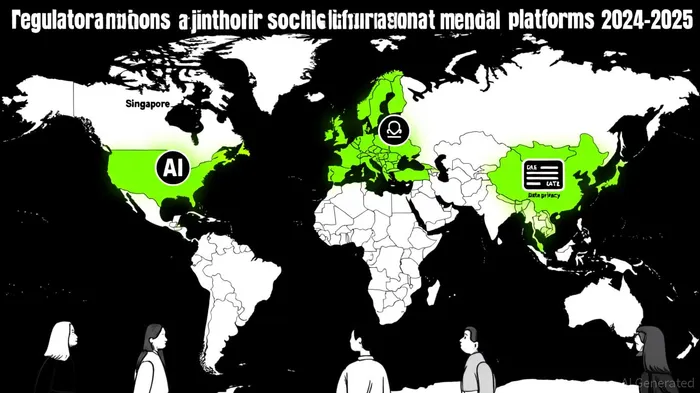
The regulatory landscape for technology companies has entered a new era of scrutiny, with Singapore's recent actions against MetaMETA-- serving as a microcosm of broader global trends. In 2024-2025, Singapore's Ministry of Home Affairs imposed stringent requirements on Meta under the Online Criminal Harms Act, mandating the removal of scam advertisements and impersonation accounts on platforms like Facebook. Non-compliance risks a penalty of up to $1 million (S$1.3 million), a move directly tied to the platform's role in hosting over a third of the country's reported e-commerce scams in 2024 [1]. Meta's response—deploying advanced facial recognition technology to combat fake accounts—reflects the growing pressure on tech firms to balance innovation with accountability [2].
This case underscores a critical shift in global regulatory oversight. As the World Economic Forum's Global Risks Report 2025 notes, misinformation amplified by generative AI has become a top driver of instability, particularly in regions experiencing geopolitical tensions [2]. Governments are increasingly prioritizing digital accountability, with Singapore's approach mirroring similar efforts in the EU and U.S. For instance, the EU's Digital Services Act (DSA) and the U.S.'s ongoing debates over Section 230 reforms highlight a shared focus on platform responsibility for harmful content. These measures are not isolated but part of a coordinated global response to the societal risks posed by unregulated digital ecosystems [2].
The convergence of technological and geopolitical forces is reshaping regulatory priorities. AI's rapid integration into content moderation and recommendation systems has forced regulators to address ethical concerns, such as algorithmic bias and transparency [2]. Meanwhile, rising economic nationalism—exemplified by U.S. tariff policies and fragmented global supply chains—has led to divergent regulatory frameworks, complicating compliance for multinational tech firms [2]. For investors, this fragmentation introduces heightened operational and financial risks, as companies must navigate a patchwork of rules while maintaining innovation.
The implications for tech investments are profound. Companies like Meta face not only direct penalties for non-compliance but also reputational damage and loss of user trust. For example, Meta's 2025 fine of $775,000 for failing to meet Singapore's scam-mitigation orders illustrates the financial stakes of regulatory missteps [2]. Investors must now evaluate tech firms through a dual lens: assessing both their technological capabilities and their ability to adapt to evolving regulatory demands.
Looking ahead, the Global Gender Gap Report 2025 offers an indirect but relevant insight: progress toward gender parity in high-income economies (74.3% closed) contrasts with slower advancements in lower-income regions [2]. While not directly tied to tech regulation, this disparity highlights the uneven global response to systemic risks, including digital governance. Regulators in advanced economies are more likely to enforce strict oversight, creating a regulatory gradient that could further fragment the global tech market.
For investors, the lesson is clear: regulatory risk is no longer a peripheral concern but a central determinant of long-term value. The Singapore-Meta case exemplifies how governments are leveraging legal tools to address societal harms, while global trends—ranging from AI ethics to geopolitical fragmentation—demand a proactive approach to compliance. As the World Economic Forum notes, the next phase of digital governance will likely involve even more stringent frameworks, particularly as AI's societal impact becomes more pronounced [2].
In this environment, tech firms must prioritize agility in regulatory strategy, embedding compliance into their core operations rather than treating it as an afterthought. For investors, due diligence must extend beyond financial metrics to include assessments of a company's governance practices, technological safeguards, and geopolitical exposure. The future of tech investing hinges on navigating these regulatory crosscurrents with foresight and resilience.





Comentarios
Aún no hay comentarios