
Regulatory Risk in the Food Industry: Lessons from Tyson Foods' $85 Million Settlement
The recent $85 million settlement by Tyson FoodsTSN-- to resolve a class-action lawsuit over alleged pork price-fixing underscores a critical vulnerability in the food industry: the intersection of weak supply chain governance and regulatory risk. This case, the largest in over seven years of antitrust litigation, reveals systemic flaws in how major agribusinesses manage competition, compliance, and corporate oversight-issues investors must scrutinize when evaluating food-sector equities.
Collusion in the Supply Chain: A Blueprint for Risk
According to Reuters, TysonTSN-- Foods and its rivals allegedly conspired to restrict pork supply between 2009 and 2018, using tactics such as coordinated slaughter reductions and benchmarking data from Agri Stats to manipulate prices in the $20 billion U.S. pork market. This settlement, which brings total consumer recoveries in the litigation to $208 million, highlights how supply chain governance failures-specifically, the misuse of industry data and production controls-can create antitrust liabilities. For investors, the case illustrates that even well-established firms are susceptible to collusion when market concentration and opaque practices converge, as reported by MoLawyers Media.
The pork price-fixing scheme also reflects broader trends in the meatpacking sector. Similar antitrust actions are ongoing in beef, chicken, and turkey markets, with Tyson and competitors like JBS and Hormel already facing settlements. As reported by MeatingPlace, these cases signal a regulatory shift toward aggressive enforcement of antitrust laws in agriculture, where five firms dominate over 80% of meat processing. Investors should weigh how such concentrated markets amplify the risk of coordinated behavior, even when firms claim compliance with antitrust policies.
Governance Gaps: From Executives to Ethics Violations
Tyson's corporate governance has come under further scrutiny in 2025. In September, according to TalkBusiness, the company terminated Brady Stewart, its chief supply chain officer, for an ethics violation-the second high-level dismissal in a year, following the removal of former CFO John R. Tyson for a drunk driving arrest. These incidents, coupled with a Missouri state court case alleging anticompetitive conduct in the Dexter chicken complex closure, reveal persistent weaknesses in internal compliance mechanisms, as reported by Investigate Midwest.
While Tyson maintains a Global Antitrust Policy and Code of Conduct, the repeated legal challenges suggest these frameworks are insufficient to deter misconduct. For instance, the Dexter case alleges that Tyson sold its chicken complex to Cal-Maine to suppress supply and inflate profits-a claim the court deemed "colorable," leading to the case's remand to state court. Such governance lapses not only invite litigation but also erode investor confidence in management's ability to navigate regulatory scrutiny.
Financial and Strategic Implications for Investors
The financial toll of these legal battles is significant. In Q2 2025, Tyson recorded a $93 million legal contingency accrual for beef antitrust litigation, compounding costs from pork and poultry settlements, according to Tyson's SEC filing. These expenses, combined with production challenges in its Beef segment, contributed to a projected adjusted operating loss for fiscal 2025. For investors, the recurring legal costs highlight the material impact of regulatory risk on profitability and cash flow.
Moreover, Tyson's troubles are emblematic of a sector-wide crisis. The USDA's ongoing investigation into Tyson's compliance with the Packers and Stockyards Act-triggered by allegations of wage suppression and plant closures-exposes the company to potential fines, operational restrictions, or even structural reforms, as previously reported by Investigate Midwest. Such outcomes could force costly adjustments to business models, further pressuring margins.
Conclusion: A Call for Vigilance
Tyson Foods' $85 million settlement is not an isolated incident but a symptom of deeper vulnerabilities in the food industry's regulatory and governance architecture. For investors, the case underscores the need to assess not only a company's compliance policies but also its culture of enforcement, executive accountability, and market concentration risks. As antitrust enforcement intensifies, firms with weak governance will face escalating costs-both financial and reputational. In an industry where supply chains are as complex as they are critical, vigilance is no longer optional.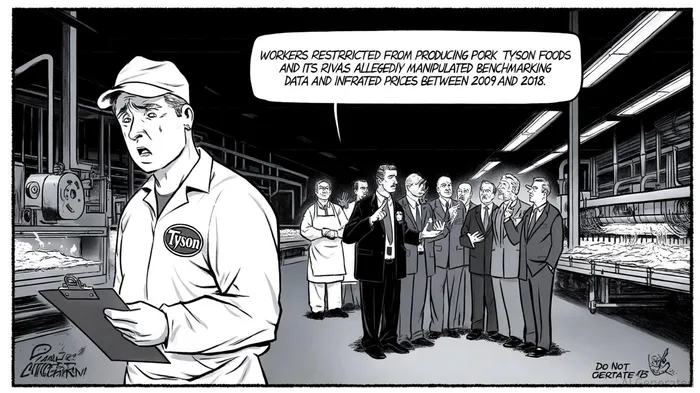







Comentarios
Aún no hay comentarios