
Regulatory Risk in Fintech Expansion: Musk’s X Money and the Super-App Challenge in the U.S.
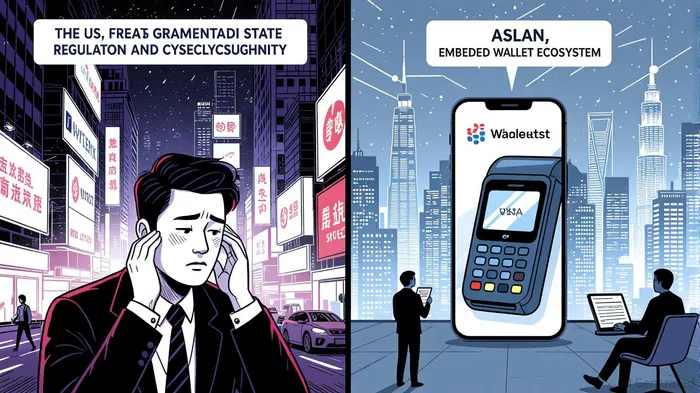
The fintech industry is at a crossroads. As platforms like Elon Musk’s X Money and U.S. crypto-native firms chase the “super-app” dream, they face a thorny question: Can regulatory frameworks adapt to the scale and ambition of these models? The answer hinges on navigating a labyrinth of compliance demands, cultural differences in digital trust, and the tension between innovation and oversight.
X Money’s Regulatory Quicksand
Elon Musk’s X Money initiative, part of his broader vision to turn X (formerly Twitter) into an “everything app,” has hit a wall in 2025. The project’s core ambition—to integrate payments, social media, and financial services into a single platform—collides headfirst with U.S. regulatory complexity. Money transmitter licenses (MTLs) are required in 48 states, each with its own anti-money laundering (AML) and consumer protection rules. New York’s Department of Financial Services (NYDFS) has repeatedly denied X Money’s applications, citing insufficient safeguards against financial crime [1].
Compounding this are staffing crises in X Money’s compliance and legal teams. High turnover has delayed progress on critical infrastructure, such as real-time transaction monitoring systems, leaving the project vulnerable to regulatory pushback [2]. Meanwhile, global AML standards are tightening. The Financial Action Task Force (FATF)’s 2025 updates demand enhanced national risk assessments and transparency in beneficial ownership, adding layers of complexity for platforms like X Money [3].
The U.S. vs. Asia: A Tale of Two Regulatory Worlds
The U.S. regulatory environment is a patchwork of state and federal rules, contrasting sharply with Asia’s more centralized approach. In markets like China and Southeast Asia, super-apps such as WeChat and Grab thrived due to government-backed digital infrastructure and relaxed fintech regulations. These platforms embedded digital wallets into daily life, leveraging cultural trust in centralized systems [1].
In the U.S., however, privacy norms and antitrust concerns dominate. The Securities and Exchange Commission (SEC)’s “Project Crypto” aims to bridge traditional finance and blockchain, but its success depends on balancing innovation with oversight. SEC Chair Paul Atkins has called for a “generational opportunity” to unify financial services under a single license, yet the U.S. remains fragmented [1]. For example, Coinbase’s rebranded “Base app” integrates crypto trading, payments, and social features but must navigate a maze of state-level AML requirements [2].
Feasibility of Super-Apps in the U.S.: A Work in Progress
Despite challenges, the U.S. is inching toward super-app viability. The GENIUS Act, signed into law in 2025, provides a regulatory framework for stablecoins and tokenized assets, easing some compliance burdens [1]. Firms like RobinhoodHOOD-- are betting on this shift, aiming to offer tokenized assets and integrated financial tools under a single platform [2].
However, scaling remains fraught. Maintaining a super-app costs over $1 million annually in development and support, with cybersecurity risks escalating as services consolidate [1]. AI-powered scams and data breaches threaten user trust, while fragmented regulations force platforms to adopt costly, region-specific compliance strategies [2].
Investment Implications: Navigating the Risks
For investors, the key question is whether platforms like X Money can balance regulatory compliance with user experience. Musk’s team must address New York’s AML concerns while retaining talent to build robust infrastructure. Similarly, CoinbaseCOIN-- and Robinhood must prove that modular, blockchain-driven super-apps can thrive in a fragmented regulatory landscape.
The long-term outlook depends on two factors:
1. Regulatory harmonization: Will states adopt unified AML standards, or will the patchwork persist?
2. Consumer adoption: Can U.S. users embrace centralized platforms, or will privacy concerns stifle growth?
Conclusion
Musk’s X Money and U.S. fintech super-apps are testing the limits of regulatory adaptability. While the U.S. lags behind Asia in digital infrastructure, recent legislative moves and SEC initiatives suggest a path forward. For now, the risks are high—regulatory, operational, and reputational—but the potential rewards for platforms that succeed are transformative. Investors must weigh these risks against the growing demand for integrated financial services, recognizing that the next decade’s winners will be those who navigate compliance as deftly as they innovate.
**Source:[1] US Crypto and Fintech Firms Chase Asia's 'Super App' Model [https://thedefiant.io/news/cefi/us-crypto-and-fintech-firms-chase-asia-super-app-model-regulatory-clarity][2] Exploring the Future of Super Apps in the U.S. Market [https://www.zintego.com/blog/exploring-the-future-of-super-apps-in-the-u-s-market-is-it-a-viable-concept/][3] Regulatory Changes in AML Compliance for 2025 [https://www.flagright.com/post/regulatory-changes-in-aml-compliance]







Comentarios
Aún no hay comentarios