
Regulatory Risk in the Crypto Sector: Implications for Investors
The crypto sector is at a crossroads. Over the past three years, U.S. regulators have imposed nearly $32 billion in settlements on major players, from FTX's $12.7 billion resolution with the CFTC to Binance's $4.3 billion agreement with the DOJ, according to the Coin Republic settlement list. These enforcement actions, coupled with a surge in legislative activity, have created a regulatory environment that is both punitive and transformative. For investors, the implications are stark: the sector's volatility is no longer driven solely by market forces but by a rapidly evolving legal and political landscape.
The Enforcement Overhaul: From FTX to Binance
The collapse of FTX in late 2022 exposed systemic weaknesses in crypto governance, triggering a regulatory crackdown. By August 2024, the CFTC had secured a $12.7 billion settlement with FTX, including $4 billion in disgorgement and $8.7 billion in restitution. Similarly, Celsius Network's $4.7 billion settlement with the FTC in July 2023 marked the end of its business, with regulators permanently barring its executives from promoting crypto assets. These cases underscore a shift from reactive enforcement to proactive deterrence.
Binance's $4.3 billion settlement with the DOJ in 2025, including a four-month prison sentence for its founder, Changpeng Zhao, further illustrates the stakes. Notably, the SEC's decision to dismiss its lawsuit against Binance-despite ongoing investigations into other firms-has raised questions about the agency's enforcement strategy. As one industry analyst put it, "Regulators are now playing chess, not checkers. They're targeting systemic risks while leaving room for innovation."
Legislative Clarity or Chaos? The GENIUS and CLARITY Acts
The Trump administration's push for a federal crypto framework has introduced both clarity and complexity. The GENIUS Act, signed into law on July 18, 2025, mandates that stablecoins be fully backed by high-quality assets like U.S. dollars or short-term Treasuries, imposing stringent AML and KYC requirements, according to the National Law Review. Smaller stablecoin issuers (under $10 billion in issuance) may now operate under state-level supervision if their frameworks align with federal standards.
Meanwhile, the CLARITY Act, passed by the House in July 2025, seeks to divide regulatory authority between the SEC and CFTC; digital commodities fall under the CFTC, while investment contracts remain with the SEC, as explained by Arnold & Porter. However, Senate negotiations have introduced competing proposals, such as the Responsible Financial Innovation Act, which grants the SEC broader oversight of "ancillary assets" and mandates extensive disclosure requirements, as reported by Consumer Financial Services Law Monitor. This legislative tug-of-war leaves investors in a limbo: clarity for some, confusion for others.
Legal Frontlines: Ripple, CoinbaseCOIN--, and the Redefinition of Digital Assets
Court cases are reshaping the sector's legal boundaries. In SEC v. Ripple Labs, the Second Circuit's July 2023 ruling partially exonerated Ripple, distinguishing between institutional and programmatic XRP sales, as summarized in Katten's overview. This decision challenges the SEC's broad application of the Howey test, which defines securities. Similarly, SEC v. Coinbase has reached an interlocutory appeal, with the court considering whether secondary market transactions in 13 digital assets qualify as investment contracts.
These cases are not just legal battles-they are existential questions for the industry. If the SEC succeeds in classifying a majority of digital assets as securities, exchanges like Coinbase could face existential regulatory hurdles. Conversely, a favorable ruling for Ripple or Coinbase might embolden innovators to push boundaries, but at the risk of regulatory backlash.
Investor Implications: Navigating a Shifting Minefield
For investors, the regulatory landscape is a double-edged sword. On one hand, stricter oversight reduces the risk of fraud and systemic collapse, as seen in the Unicoin case, where the SEC secured a $100 million settlement for misleading investors. On the other, the uncertainty of evolving laws creates operational and legal risks. For instance, the Crypto.com v. Nevada Gaming Control Board case highlights the tension between state and federal regulators, with potential precedents for preemption disputes.
Moreover, the rise of "meme coins" has drawn regulatory scrutiny. Cases like Albouni v. Schultz and Carnahan v. Baton Corp. are targeting platforms like Pump.Fun for unregistered securities offerings. These lawsuits signal that even speculative assets are not immune to enforcement.
The Road Ahead: Innovation vs. Control
The Trump administration's pro-crypto stance, including the nomination of Paul Atkins to lead the SEC, suggests a pivot toward fostering innovation. Yet, the administration's executive orders promoting blockchain and stablecoins also reflect a desire to maintain U.S. global competitiveness. This duality-encouraging innovation while mitigating risks-will define the sector's trajectory.
For investors, the key takeaway is adaptability. High-profile holdings like stablecoins, NFTs, and meme coins remain exposed to regulatory shifts. Diversification, due diligence, and a close watch on legislative developments are no longer optional-they are survival strategies. 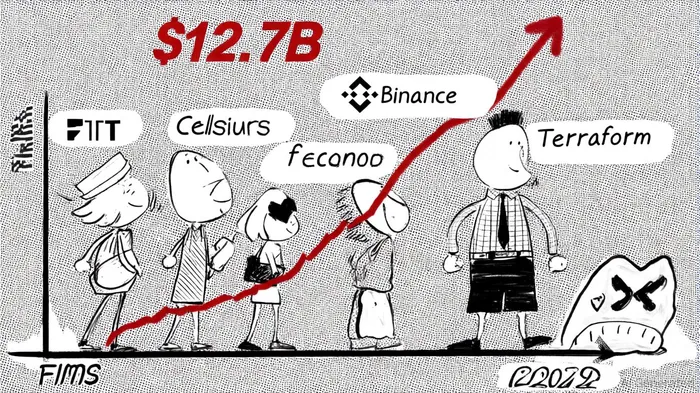







Comentarios
Aún no hay comentarios