
Regulatory Risk and Asset Recovery in Cryptocurrency: UK Court Decisions on Seized Bitcoin and Their Impact on Institutional Investor Sentiment and Market Stability
The United Kingdom's recent landmark rulings on seized BitcoinBTC-- have ignited a critical conversation about regulatory risk, asset recovery, and the maturation of cryptocurrency as an institutional asset class. In September 2025, UK authorities secured a historic conviction in a £5.1 billion Bitcoin fraud case involving 61,000 BTC, marking one of the largest cryptocurrency seizures in history, according to a Breaking Crypto report. This case, which involved cross-border collaboration with Chinese authorities, underscores the UK's growing sophistication in tracking and prosecuting digital asset crimes. However, the legal and ethical debates surrounding the disposition of the seized Bitcoin-whether to return it to victims or retain it for government use-highlight broader implications for institutional investor sentiment and market stability.
The UK's Enforcement Actions and Institutional Confidence
The conviction of Zhimin Qian, a Chinese national linked to a large-scale investment fraud, demonstrates the UK's ability to enforce accountability in the crypto space. The successful seven-year investigation into Qian's activities has reinforced the perception that cryptocurrencies are no longer a haven for illicit actors, as covered in the Breaking Crypto report. For institutional investors, this signals a shift toward a more regulated and transparent ecosystem. Data from the 2025 Institutional Investor Digital Assets Survey, reported by Pinnacle Digest, reveals that over 59% of institutional investors now allocate at least 10% of their portfolios to Bitcoin, driven by the emergence of Spot Bitcoin ETFs and improved custody solutions.
The UK's potential decision to establish a Strategic Crypto Reserve or liquidate the seized Bitcoin for public use further legitimizes digital assets within traditional financial frameworks, as noted in the Breaking Crypto coverage. Such actions could reduce institutional hesitancy by demonstrating regulatory clarity and long-term confidence in crypto. However, the debate over retaining surplus gains from the seizure-estimated at £6.6 billion in appreciation-has raised concerns about legal challenges and market volatility, according to a Cointelegraph report. If mishandled, these disputes could erode trust in the UK's regulatory approach, particularly as global competitors like the U.S. and Singapore refine their frameworks, a point highlighted in a Forbes article.
Market Stability and the Risks of Government Intervention
The UK's handling of seized Bitcoin also carries direct implications for market stability. A Cointelegraph report notes that officials are weighing whether to return only the original defrauded amount (£640 million) to victims or retain the excess gains. This ambiguity has sparked speculation about the potential sale of the 61,000 BTC, which could significantly impact Bitcoin's price. For instance, a sudden auction of such a large volume might trigger short-term volatility, as seen in past government asset sales, according to BeInCrypto. Conversely, a gradual, transparent approach could stabilize markets by signaling institutional demand and reducing uncertainty.
Institutional investors are closely monitoring these developments. As Pinnacle Digest reports, Bitcoin's 60-day price swings have decreased by 75% compared to 2021 levels, reflecting reduced volatility and greater institutional participation. However, regulatory missteps-such as the UK's delayed adoption of clear crypto policies-risk undermining this progress. For example, the Financial Conduct Authority's (FCA) restrictive stance on Bitcoin has been criticized for stifling innovation and driving businesses offshore, as discussed in the Forbes analysis.
Regulatory Evolution and the Path Forward
The UK's regulatory framework is evolving to address these challenges. The Economic Crime and Corporate Transparency Act 2023 has granted authorities new powers to seize crypto assets without formal charges, streamlining asset recovery while raising concerns about due process, according to a Coin Journal report. Meanwhile, the Financial Conduct Authority's (FCA) proposals for stablecoins and custody services aim to balance innovation with consumer protection, per a TRM Labs analysis. These measures align with the UK's broader goal of positioning itself as a global crypto hub, though progress lags behind jurisdictions like the U.S., where pension funds and asset managers have embraced Bitcoin more aggressively (Forbes).
For institutional investors, the key takeaway is the need to navigate a rapidly shifting regulatory landscape. While the UK's enforcement actions reinforce the legitimacy of digital assets, the lack of standardized protocols for handling seized crypto remains a risk. As noted by BeInCrypto, the UK government's decision to either hold or sell the 61,000 BTC could set a precedent for future asset recovery cases, influencing global market dynamics.
Conclusion
The UK's landmark Bitcoin seizure and subsequent legal deliberations highlight the dual-edged nature of regulatory risk in cryptocurrency investments. While robust enforcement actions bolster institutional confidence and market legitimacy, the absence of clear guidelines for asset recovery introduces uncertainty. For investors, the path forward requires a nuanced understanding of both the UK's evolving regulatory framework and the global competitive landscape. As the UK debates the fate of its largest-ever crypto seizure, the resolution of this case will likely shape the future of digital asset governance-and investor sentiment-for years to come.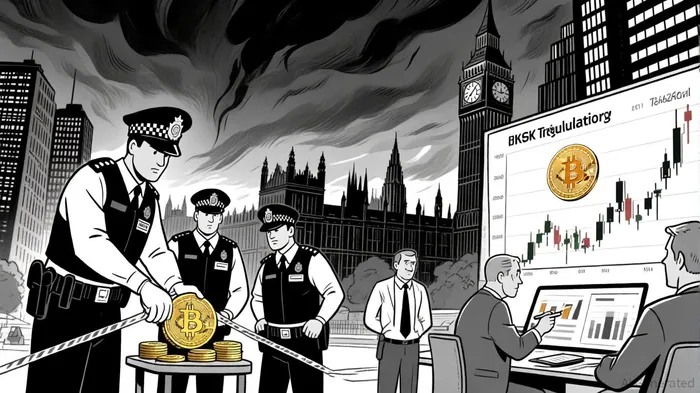






Comentarios
Aún no hay comentarios