
Regulatory and Reputational Risks in Medical Device Stocks: Governance and Investor Trust in a High-Stakes Industry
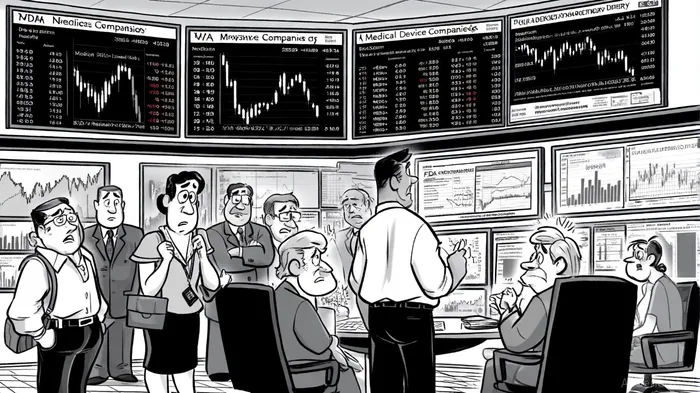
The medical device industry, long a cornerstone of healthcare innovation, has faced mounting scrutiny in 2024 as regulatory actions and product recalls have tested corporate governance frameworks and investor confidence. From Magellan Diagnostics' criminal plea agreement to Hologic's Class I recall of its BioZorb markers and Stryker's Cartiva implant fiasco, the sector's challenges highlight the critical interplay between regulatory compliance, reputational risk, and market dynamics. For investors, these events underscore the need to evaluate governance structures and transparency practices as rigorously as financial metrics.
Regulatory Enforcement: A New Era of Accountability
The Department of Justice (DOJ) and the Food and Drug Administration (FDA) have intensified enforcement in 2024, reflecting a broader shift toward accountability. Magellan Diagnostics, for instance, entered a $21.8 million deferred prosecution agreement after concealing a malfunction in its LeadCare devices, which produced inaccurate lead level readings for years[1]. This case, one of the largest criminal settlements in medical device history, signals a zero-tolerance approach to corporate malfeasance. Similarly, the FDA's Class I recall of Hologic's BioZorb markers—linked to 252 injuries and over 100 lawsuits—demonstrates the agency's willingness to act swiftly against devices posing “serious injury or death” risks[2].
Such actions are not isolated. Stryker's October 2024 recall of its Cartiva synthetic cartilage implant, due to high failure rates and revision surgeries, further illustrates the FDA's heightened vigilance[3]. These cases collectively reveal a regulatory environment where delayed disclosures or inadequate risk management can trigger severe financial and reputational consequences.
Financial and Reputational Fallout: The Investor's Dilemma
The financial toll of recalls is stark. HologicHOLX--, for example, recorded a $13.3 million impairment charge on its BioZorb product line in 2024, reflecting the asset's diminished value amid litigation and market withdrawal[4]. Meanwhile, Magellan's $42 million DOJ settlement—including a Victim Compensation Fund and an independent compliance monitor—signals the escalating costs of regulatory noncompliance[5]. For StrykerSYK--, while its robust balance sheet ($4.68 billion in cash reserves) provides a buffer, the Cartiva recall has raised questions about its risk management protocols, particularly as the company faces ongoing FCPA investigations[6].
Investor sentiment has mirrored these challenges. Hologic's stock price plummeted from $83.72 in November 2024 to $57.28 by May 2025, a 31% decline, driven by recalls, tariffs, and operational setbacks[7]. Similarly, Magellan Health's stock, though not explicitly tied to the LeadCare scandal in available data, has seen mixed sentiment, with analysts noting a lack of clear institutional engagement[8]. Stryker, however, remains a relative outlier: despite the Cartiva recall, its stock retains a “Moderate Buy” rating from 19 analysts, with an average price target of $430.10 (a 9.86% upside from its current price)[9]. This divergence suggests that while recalls can erode trust, strong governance and financial resilience may mitigate long-term damage.
Governance Reforms: A Path to Restoring Trust
The 2024 crisis has accelerated governance reforms across the industry. The FDA's pilot program for faster public notifications—such as its early alert for the Fresenius infusion pump recall—aims to reduce delays in communicating high-risk issues[10]. Additionally, companies are increasingly adopting ISO 13485 and ISO 14971 standards to strengthen quality management systems and risk mitigation practices[11]. For instance, Magellan's post-settlement compliance program, overseen by an independent monitor, represents a structural commitment to transparency[1].
Investors must also consider the role of corporate leadership. Hologic's equity buyback plan ($200 million spent on 2.99 million shares) and Stryker's strategic acquisitions ($1.6 billion in 2024) reflect efforts to stabilize market perception[12]. However, these measures are only effective if paired with proactive risk disclosure. As the GAO has noted, the FDA's recall process remains imperfect, underscoring the need for continuous oversight[13].
Future Outlook: Innovation vs. Risk in a Regulated Landscape
Looking ahead, the medical device sector faces a dual challenge: balancing innovation with accountability. While advancements in AI and robotics (e.g., Intuitive Surgical's robotic systems) promise growth, they also introduce new regulatory complexities. For investors, the key will be identifying companies that prioritize governance as a competitive advantage.
The 2024 cases offer a cautionary roadmap. Magellan's criminal settlement, Hologic's litigation, and Stryker's recall all highlight the costs of reactive compliance. Conversely, firms that integrate robust risk management—such as real-time adverse event tracking and transparent stakeholder communication—may emerge as long-term winners. As the FDA's Communications Pilot program gains traction, early adopters of proactive governance could see a premium in investor trust and stock valuation.
Conclusion
The 2024 medical device recalls and regulatory actions have reshaped the industry's risk landscape. For investors, the lesson is clear: governance and transparency are no longer optional—they are existential. Companies that fail to adapt will face not only fines and lawsuits but also eroded market confidence. Conversely, those that embrace rigorous compliance and proactive communication may find themselves well-positioned to navigate the sector's next phase of growth.





Comentarios
Aún no hay comentarios