
Regulatory Progress in Crypto ETFs: Strategic Entry Points in Emerging Digital Asset Markets
The crypto ETF landscape in 2025 is undergoing a seismic shift, driven by regulatory clarity and institutional momentum. For investors seeking strategic entry points into digital asset markets, understanding these developments is critical. The U.S. Securities and Exchange Commission's (SEC) recent adoption of generic listing standards for commodity-based crypto ETFs[3] has created a streamlined pathway for product launches, reducing approval times from 240 days to as little as 60–75 days[2]. This regulatory pivot has already catalyzed market activity, with products like Grayscale's Digital Large Cap Crypto Fund—exposing investors to BitcoinBTC--, EthereumETH--, XRPXRP--, and others—benefiting from the new framework[2].
Institutional Inflows and Market Dynamics
The most striking evidence of this shift lies in institutional flows. Ethereum ETFs, in particular, have attracted $4 billion in inflows during August 2025 alone[2], signaling growing confidence in the asset class. Conversely, Bitcoin ETFs faced net outflows of $800 million during the same period[2], a divergence that underscores shifting risk appetites and the potential for sector rotation within crypto markets. This dynamic creates a unique opportunity for investors to capitalize on Ethereum's institutional adoption while hedging against Bitcoin's short-term volatility.
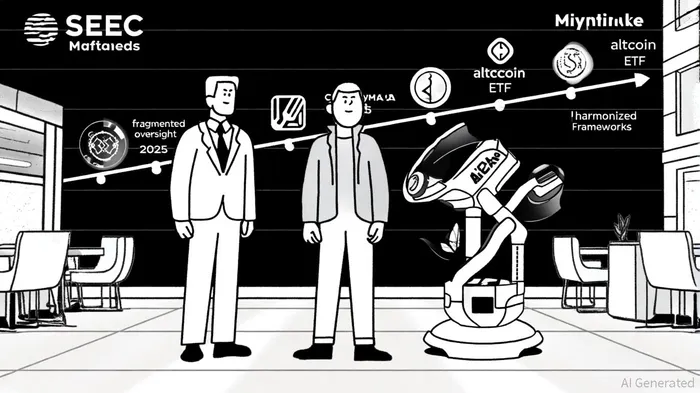
The SEC's extended review of altcoin ETFs—such as those tied to SolanaSOL--, XRP, and Cardano—adds another layer of complexity[2]. With decisions expected by October 2025, these products could unlock new liquidity pools for investors seeking exposure to high-growth, lower-market-cap assets. However, the legal uncertainties surrounding certain tokens (e.g., XRP's ongoing SEC litigation) necessitate caution[5].
Global Regulatory Harmonization
Beyond the U.S., Europe's Markets in Crypto-Assets Regulation (MiCA) has established a unified framework for digital assets across the EU[4], influencing regulatory approaches in the UK and Singapore. This global trend toward harmonization reduces jurisdictional arbitrage and lowers compliance costs for asset managers, further accelerating crypto ETF adoption. For investors, this means greater transparency and reduced counterparty risk—a critical consideration for first-time entrants.
Strategic Entry Points
Given these developments, strategic entry points emerge in three key areas:
1. Ethereum-Dominated ETFs: With institutional inflows and regulatory tailwinds, Ethereum ETFs offer a low-risk on-ramp to crypto markets.
2. Altcoin ETFs (Post-October 2025): If the SEC approves applications for Solana, XRP, and CardanoADA--, these products could outperform broader crypto indices due to their exposure to innovation-driven blockchains.
3. Global Diversification: MiCA-compliant ETFs provide access to European liquidity pools, mitigating U.S.-centric regulatory risks.
Risks and Considerations
Investors must remain mindful of lingering challenges. Compliance costs for crypto ETFs remain elevated compared to traditional assets[5], and legal disputes over token classification could disrupt market sentiment. Additionally, the rapid pace of regulatory change demands agility—positions that appear attractive today may face headwinds tomorrow.
Conclusion
The 2025 regulatory environment for crypto ETFs represents a inflection point. By leveraging streamlined approvals, institutional trends, and global harmonization, investors can identify entry points that balance growth potential with risk mitigation. As the SEC's October decisions loom and MiCA's framework solidifies, the next few months will likely define the trajectory of crypto ETFs for years to come.






Comentarios
Aún no hay comentarios