
Regulatory and Litigation Risks Facing Dow Inc.: A Due Diligence Perspective for Investors
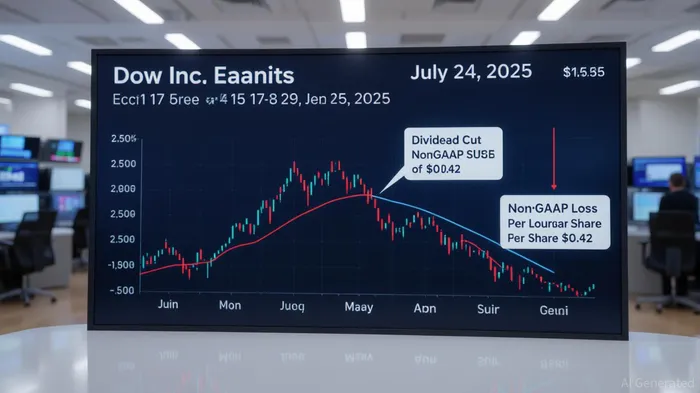
Investors in industrial giants like Dow Inc.DOW-- (DOW) must remain vigilant about evolving legal and regulatory risks, particularly in the wake of recent securities litigation. A class-action lawsuit filed in the U.S. District Court for the Eastern District of Michigan (Sarti v. Dow Inc., No. 25-cv-12744) underscores the company's vulnerability to investor claims tied to alleged misrepresentations about its financial resilience. The case, which seeks to represent investors who purchased Dow securities between January 30 and July 23, 2025, alleges that the company and its executives overstated its ability to navigate macroeconomic and tariff-related challenges while maintaining dividend support[1].
The lawsuit's timing is critical. On July 24, 2025, Dow reported a non-GAAP loss per share of $0.42—far below analyst expectations—and announced a dividend cut, triggering a 17.45% stock price decline[3]. According to a report by Robbins Geller, the company's statements during the alleged class period were said to have misled investors about its financial flexibility, creating a “false sense of security”[2]. This pattern of earnings volatility and governance scrutiny aligns with broader trends in 2024-2025 securities litigation, where chemical and life sciences firms face heightened legal exposure[4].
For investors, the implications are twofold. First, the lead plaintiff deadline of October 28, 2025, means shareholders with significant financial stakes must act swiftly to assert their claims[5]. Second, the involvement of multiple law firms—including Kahn Swick & Foti and Kessler Topaz—suggests a coordinated effort to maximize recovery for affected investors[6]. While the outcome of Sarti remains uncertain, the reputational and financial toll of protracted litigation could weigh on Dow's operations and capital allocation.
Beyond securities lawsuits, Dow faces indirect regulatory risks from agencies like the U.S. Environmental Protection Agency (EPA). Though no direct investigations into Dow were detailed in the provided sources, the EPA's broad authority over hazardous waste management and site remediation means future enforcement actions could emerge[7]. For example, the agency's focus on industrial pollution and chemical safety could lead to costly compliance requirements for companies operating in sensitive sectors[8]. While no OSHA or SEC investigations were explicitly cited for 2023-2025, the chemical industry's regulatory history demonstrates that even indirect EPA actions can disrupt corporate strategies[9].
Investors should also consider the macroeconomic context. Dow's recent dividend cut, framed as a response to “challenging market conditions,” highlights the fragility of its financial commitments[10]. If the company's earnings recovery is slower than anticipated, further governance-related lawsuits or regulatory scrutiny could follow. This underscores the importance of stress-testing Dow's balance sheet against worst-case scenarios, including prolonged litigation settlements or environmental remediation costs.
In conclusion, while Dow Inc. remains a cornerstone of the industrial sector, its current litigation and regulatory profile demands rigorous due diligence. Shareholders must monitor the Sarti case's progress, assess the company's compliance posture, and evaluate how macroeconomic headwinds might amplify legal risks. For now, the stock's volatility and the lead plaintiff deadline serve as clear signals: in an era of aggressive securities litigation, even well-established firms like Dow are not immune to investor backlash.







Comentarios
Aún no hay comentarios