
Regulatory and Litigation Risks in the Aerospace Sector: Assessing Long-Term Impacts on Boeing and Honeywell's Valuations
The aerospace sector, a cornerstone of global infrastructure and innovation, faces unique regulatory and litigation risks that can profoundly shape corporate valuations. BoeingBA-- and HoneywellHON--, two industry titans, exemplify how safety-related lawsuits and regulatory actions ripple through investor sentiment, operational strategies, and long-term financial health. This analysis examines their recent challenges, drawing on authoritative sources to assess the implications for their market positions.
Boeing: A Perfect Storm of Safety Scrutiny and Financial Strain
Boeing's 2025 woes stem from a confluence of regulatory penalties, operational missteps, and lingering reputational damage. The Federal Aviation Administration (FAA) proposed a $3.1 million fine for hundreds of quality system violations, including the January 2024 Alaska Airlines 737 MAX 9 door plug blowout[1]. The FAA's findings revealed systemic issues: unairworthy aircraft submitted for certification, pressure on safety officials to bypass standards, and inadequate oversight at Boeing and subcontractor Spirit AeroSystems[2]. These violations, coupled with a monthly delivery cap on 737 MAX aircraft, have exacerbated Boeing's financial struggles.
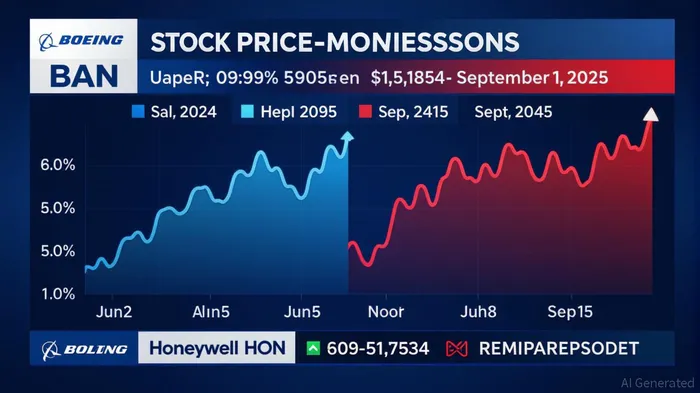
According to a report by Reuters, Boeing's revenue contracted by -5.6% year-over-year in 2024, while its debt-to-equity ratio ballooned to 2.7[3]. The company's recent quarterly loss of $5.46 per share—far exceeding Wall Street expectations—underscores its precarious position[4]. Investor sentiment remains mixed: while Boeing's stock price rose slightly in late August 2025, it has fallen 16% over the past 12 months[5]. This volatility reflects skepticism about the efficacy of Boeing's Safety & Quality Plan, which includes expanded training and quality control authority[6].
The FAA's ongoing oversight and a litany of class-action lawsuits over safety disclosures further complicate Boeing's recovery. A 2025 Monexa.ai analysis notes that shareholder litigation intensified following the 787 Dreamliner crash in India, eroding trust and contributing to an $11.82 billion net loss in FY2024[7]. With activist investors and Warren Buffett reportedly monitoring the situation, Boeing's path to regaining regulatory and market trust hinges on sustained operational discipline[8].
Honeywell: Legal Resolutions and Strategic Realignments
Honeywell's 2024 settlement with Bombardier over turbofan engine pricing offers a contrasting narrative. The decade-long legal battle, which culminated in a confidential agreement, ended with a new strategic partnership focused on avionics, propulsion, and satellite communications[9]. While the settlement resolved litigation risks, it also imposed short-term financial headwinds. Honeywell cut its 2024 guidance, citing reduced free cash flow and adjusted earnings per share[10].
However, the partnership's long-term potential—projected to generate $17 billion in revenue—signals a strategic pivot toward high-growth technologies[11]. Honeywell's Q2 2025 results, which exceeded expectations and prompted a 5% pre-market stock surge, suggest resilience[12]. However, historical data from 2022 to 2025 reveals that while earnings beats initially boost the stock, the average cumulative abnormal return turns negative by Day 30, with a -4.14% drawdown[12]. The win-rate (percentage of events with positive excess return) also declines from ~54% on Day 1 to ~31% by Day 30, underscoring the mean-reverting nature of post-beat performance[12].
The company's Building Automation segment, a key growth driver, has offset some of the aviation-related pressures[13]. Investor sentiment toward Honeywell remains cautiously optimistic. Despite the 2024 guidance cuts, the company's stock traded between $210 and $216 in late August–September 2025, reflecting stability compared to Boeing's volatility[14]. A proposed class-action settlement for a 2023 data breach also mitigates lingering legal risks, offering compensation to affected individuals.
Strategic Risk Management: Lessons for Aerospace Giants
The divergent trajectories of Boeing and Honeywell highlight the importance of proactive risk management. Boeing's struggles underscore the reputational and financial costs of regulatory non-compliance, particularly in safety-critical industries. The FAA's emphasis on “rigorous oversight” and Boeing's Safety & Quality Plan must translate into measurable improvements in production quality and transparency to rebuild trust.
Honeywell's experience, meanwhile, demonstrates how resolving litigation can unlock innovation and collaboration. The Bombardier partnership aligns with broader industry trends toward technology integration and sustainability. However, the short-term financial hit underscores the need for contingency planning in protracted legal disputes.
Conclusion: Navigating a High-Stakes Landscape
For investors, the aerospace sector's regulatory and litigation risks demand a nuanced approach. Boeing's challenges—rooted in operational and cultural failures—pose existential threats to its valuation unless addressed comprehensively. Honeywell's strategic realignment, though costly in the short term, positions it to capitalize on emerging opportunities. Both cases illustrate the delicate balance between regulatory compliance, innovation, and investor confidence in an industry where safety is non-negotiable.
As the FAA and other regulators tighten oversight, aerospace firms must prioritize transparency, workforce training, and adaptive governance. The long-term valuations of Boeing and Honeywell will ultimately hinge on their ability to navigate these risks while delivering sustainable growth in an increasingly scrutinized market.







Comentarios
Aún no hay comentarios