
Regulatory and Legal Risks in Energy Infrastructure: Sable Offshore's Pipeline Restart and the Path to Value Recovery
The energy infrastructure sector has long been a double-edged sword for investors, balancing high returns with the volatility of regulatory and environmental risks. Nowhere is this tension more evident than in SableSOC-- Offshore's attempt to restart its oil pipeline in Santa Barbara, California. The company's efforts to revive operations after years of dormancy have collided with a thicket of jurisdictional disputes, legal challenges, and environmental concerns. These factors collectively cast a shadow over its prospects for value recovery, offering a cautionary case study for investors in energy infrastructure plays.
Jurisdictional Shifts and Federal Overreach
Sable Offshore's pipeline restart hinges on a strategic reclassification of its infrastructure as "interstate" facilities, a move that transferred regulatory authority from California's Office of the State Fire Marshal (OSFM) to the federal Pipeline and Hazardous Materials Safety Administration (PHMSA) according to a legal analysis. This shift was enabled by an emergency special permit issued by PHMSA in December 2025 under President Trump's national energy emergency declaration, bypassing California regulators and waiving standard safety protocols. While this maneuver allowed Sable to sidestep state-level scrutiny, it has drawn sharp criticism from environmental groups and local authorities.
According to a report by the Center for Biological Diversity, the federal permit violates the Pipeline Safety Act and NEPA by circumventing public review and environmental assessments. The lawsuit filed by environmental advocates argues that PHMSA's decision prioritizes expediency over safety, particularly given the pipeline's history of corrosion issues and the 2015 Refugio Oil Spill, which contaminated 150 miles of coastline. This jurisdictional tug-of-war underscores the fragility of relying on federal overreach in a politically polarized environment, where regulatory frameworks can shift with each administration.
Legal Challenges and Permit Denials
Santa Barbara County's Board of Supervisors has further complicated Sable's plans by denying the transfer of permits previously held by ExxonMobil. The county cited concerns over Sable's compliance with environmental regulations and its financial responsibility to cover potential liabilities. This local-level resistance highlights the growing influence of subnational actors in energy policy-a trend that has gained momentum in the wake of federal deregulation.
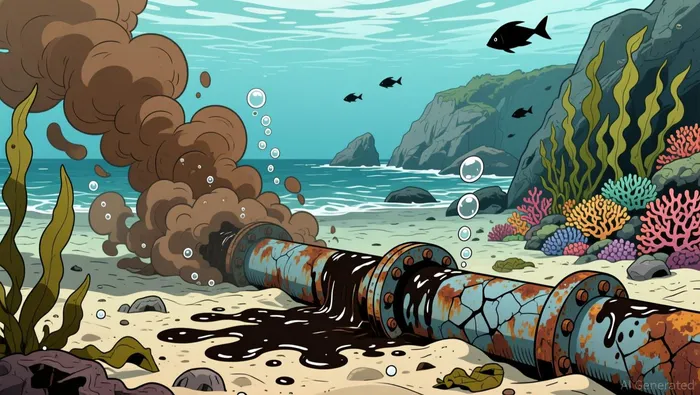
Meanwhile, Sable faces multiple lawsuits alleging violations of environmental laws, including claims from state and local authorities over past incidents. An emergency lawsuit filed by the Environmental Defense Center seeks to suspend PHMSA's permit while the court evaluates its legality according to legal analysis. These legal battles, if prolonged, could delay operations indefinitely and force Sable into costly negotiations or settlements. For investors, the uncertainty surrounding permit approvals and litigation timelines represents a significant headwind to capital deployment and revenue generation.
Environmental Risks and Public Backlash
Environmental groups have amplified their concerns about the pipeline's safety, particularly the emergency permit's exemption from the 180-day corrosion evaluation requirement. As stated by the Independent, this waiver raises questions about the pipeline's structural integrity and the potential for another catastrophic spill according to independent analysis. The 2015 Refugio disaster, which resulted in criminal charges against former operators, has left a lasting scar on the region's ecosystem and public trust.
Public opposition is further fueled by Sable's pending permit for a pipeline easement across Gaviota State Park, a request that remains unresolved. Environmental advocates argue that such projects threaten biodiversity and recreational resources, galvanizing grassroots movements that could escalate into broader political pressure. For Sable, the reputational damage from repeated environmental controversies may deter future partnerships and strain community relations, compounding operational risks.
Financial Implications for Value Recovery
The cumulative effect of these challenges is evident in Sable Offshore's stock performance. Following the PHMSA permit announcement in December 2025, the company's shares tumbled, reflecting investor skepticism about the pipeline's viability. Analysts at Barrons note that the stock's volatility underscores the market's wariness of regulatory and legal uncertainties. Even if Sable navigates the current hurdles, the need for additional permits and the looming threat of litigation suggest that its path to profitability will be neither swift nor smooth.
Moreover, the company's financial responsibility remains in question. Santa Barbara County's denial of permit transfer cited Sable's ability to cover potential liabilities, a red flag for investors. If the pipeline were to fail or cause another spill, the costs of cleanup and penalties could far exceed its operational revenues, eroding shareholder value.
Conclusion: A Broader Lesson for Energy Investors
Sable Offshore's pipeline restart epitomizes the precarious balance between regulatory agility and environmental accountability in energy infrastructure. For investors, the case illustrates the perils of overreliance on federal permits in a landscape where local and state actors increasingly assert their authority. The interplay of jurisdictional shifts, legal battles, and environmental risks creates a volatile environment where even technically sound projects can falter.
As the energy transition accelerates, infrastructure plays must navigate not only technical and financial hurdles but also the evolving expectations of regulators, communities, and capital markets. Sable's experience serves as a stark reminder that in energy investments, regulatory and legal risks are not abstract concerns-they are existential threats that can derail value recovery before a single barrel of oil flows.





Comentarios
Aún no hay comentarios