
Regulatory Interventions and the Future of U.S. Power Generation Assets: Assessing the Investment Implications of Policy-Driven Plant Extensions in the Renewable Transition
Regulatory Interventions: A Double-Edged Sword
State and federal policies have emerged as pivotal forces in determining the operational lifetimes of U.S. power plants. At the state level, laws such as Arkansas's 2021 Affordable Energy Act and Wyoming's coal preservation statutes have created legal hurdles for plant retirements, mandating cost-benefit analyses and reliability assessments that favor continuity over closure, according to an American Action Forum analysis. Similarly, federal actions under the Trump administration, including the "Protecting American Energy from State Overreach" executive order, have reinforced a pro-fossil fuel stance by challenging state-level climate policies and asserting federal control over energy infrastructure, as described in a Steptoe summary.
These interventions have directly influenced utility strategies. For instance, Duke Energy's decision to co-fire coal and natural gas at its Gibson plant in Indiana-extending its operational life until 2038-reflects a recalibration of retirement timelines, according to an S&P Global analysis. Such delays, while providing short-term grid stability, risk locking in capital-intensive assets that may become stranded as decarbonization targets tighten.
Investment Implications: Capital Reallocation and Market Divergence
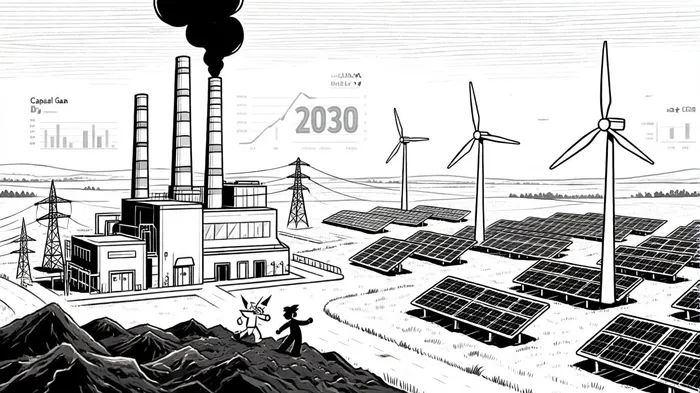
The regulatory landscape has triggered a recalibration of capital flows. According to an EIA projection, renewable energy capacity is projected to grow by 380% from 2022 to 2050, outpacing fossil fuel expansion by a factor of 34:1. This shift is underscored by declining costs for solar and wind technologies, as well as policy incentives like the Inflation Reduction Act (IRA), which has catalyzed private sector investments. For example, LyondellBasell's 175 MW solar PPAs with TotalEnergies and Industrial Sun illustrate how corporate climate goals are aligning with renewable procurement strategies.
Conversely, the extension of coal and gas plants has introduced uncertainty. While utilities like Georgia Power and PacifiCorp cite surging demand from data centers and manufacturing as justification for prolonging fossil fuel operations, according to a Power Magazine report, these decisions may deter capital from flowing into renewables. A Semafor report notes that financing for oil, gas, and coal projects by top U.S. banks fell to $73 billion in the first seven months of 2025-a 25% decline year-over-year-while private equity infrastructure funds raised $134 billion in the same period, with a third earmarked for renewables. This divergence highlights a growing skepticism among financial institutions about the long-term profitability of fossil fuel assets.
Global Context and Strategic Considerations
The U.S. is not alone in navigating this transition. The UAE's $6 billion gigascale solar and battery storage project, set to deliver 1 GW of baseload renewable energy by 2027, exemplifies how technological innovation can address intermittency challenges, as reported in an OilPrice article. Similarly, the Philippines' $6 billion renewable energy pipeline, driven by 100% foreign ownership policies, underscores the role of regulatory frameworks in attracting capital, according to an Inquirer report. These global trends suggest that markets prioritizing regulatory clarity and decarbonization incentives will outperform those clinging to fossil fuel subsidies.
For investors, the key lies in balancing short-term grid reliability with long-term sustainability. While policy-driven plant extensions may delay renewable adoption, they also create opportunities for hybrid solutions-such as Duke Energy's co-firing strategy-that bridge the gap between legacy infrastructure and clean energy goals, as S&P Global noted. However, the risk of regulatory reversals, particularly under shifting political cycles, necessitates a diversified portfolio approach.
Conclusion: Navigating the Energy Transition
The U.S. power sector stands at a crossroads. Regulatory interventions have temporarily extended the lifetimes of coal and gas plants, but the underlying economic and environmental imperatives for renewables remain intact. Investors must weigh the immediate benefits of grid stability against the long-term risks of stranded assets and policy volatility. As the EIA projects renewables to dominate new capacity additions and private capital increasingly flows toward decarbonization, the strategic imperative is clear: aligning investments with the trajectory of the energy transition will be critical to long-term resilience and returns.





Comentarios
Aún no hay comentarios