
Regulatory Evolution and the Future of Tokenized ETFs
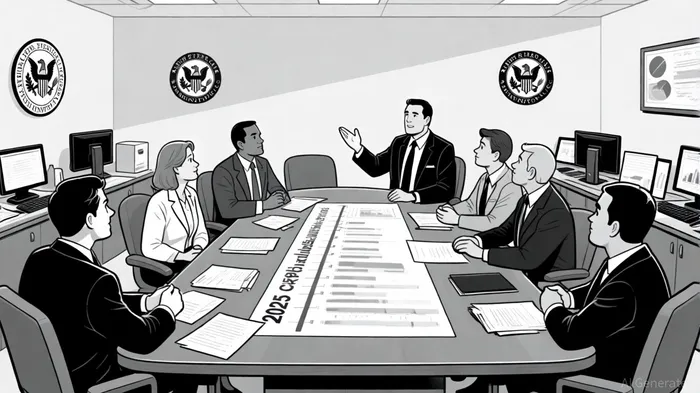
The U.S. Securities and Exchange Commission's (SEC) 2025 regulatory shifts have ignited a seismic shift in the financial landscape, particularly for tokenized exchange-traded funds (ETFs). By approving generic listing standards for crypto spot ETFs on major exchanges like NYSE, Nasdaq, and CboeCBOE--, the SEC has slashed the approval timeline from 240 days to just 75 days[2]. This marks a departure from the previous case-by-case review process, signaling a broader commitment to fostering innovation while maintaining investor safeguards[2]. For investors, this regulatory clarity is a green light to reposition portfolios toward tokenized assets, which now have a clearer on-ramp into mainstream finance.
Strategic Investment Opportunities in a Regulated Era
The Spring 2025 Regulatory Agenda underscores the SEC's pivot toward structured rulemaking, with proposed changes to custody regulations, market structure, and crypto asset offerings[1]. These updates aim to modernize frameworks for digital assets, addressing unique challenges like cybersecurity and asset segregation[2]. For asset managers, this means a more predictable environment to launch tokenized ETFs, particularly for large-cap altcoins like SolanaSOL-- (SOL) and XRP[2].
Institutional adoption is accelerating. A survey by EY-Parthenon and CoinbaseCOIN-- reveals that 83% of institutional investors plan to boost digital asset allocations in 2025, driven by regulatory stability[1]. Tokenized ETFs, already holding 55% of spot crypto exposure for investors, are projected to dominate 2025 allocations, with 69% of investors favoring ETFs over direct crypto purchases[1]. This trend aligns with McKinsey's forecast of tokenized financial assets reaching $2 trillion in market cap by 2030, excluding cryptocurrencies and stablecoins[2].
Tokenized ETFs offer distinct advantages: 24/7 secondary transfers, fractional ownership, and instant collateralization[3]. These features democratize access to global markets, reduce settlement risks, and enable real-time liquidity—a critical edge in a high-interest-rate environment[4]. For example, Franklin Templeton's FOBXX and WisdomTree's WTGXX have already demonstrated the viability of tokenized mutual funds, attracting capital with their composability and efficiency[3].
Risk Assessment and Mitigation Strategies
While the regulatory tailwinds are strong, risks persist. Forbes highlights vulnerabilities in smart contracts, interoperability challenges, and the need for robust compliance frameworks[5]. The SEC's focus on custody rules and market structure aims to mitigate these risks, but investors must remain vigilant. For instance, tokenized ETFs require seamless integration with traditional infrastructure, a hurdle that could delay adoption if notNOT-- addressed[5].
Asset allocation strategies should balance exposure across digital asset classes. Boston Consulting Group (BCG) and AptosAPT-- Labs suggest diversifying into tokenized real-world assets (RWAs), stablecoins, and DeFi derivatives to hedge against volatility[3]. Additionally, leveraging blockchain's programmability—such as hyper-personalized portfolios via smart contracts—can enhance yield generation and risk-adjusted returns[3].
Timing the Market: A Strategic Imperative
The SEC's 75-day approval window creates a critical window for early movers. With the first Solana and XRPXRP-- ETFs expected to launch soon[2], investors should prioritize platforms with proven interoperability and compliance. The New York Fed's analysis notes that tokenized funds can alleviate redemption pressures during market stress, but their systemic risks—like amplified volatility—require careful monitoring[1].
For long-term positioning, aligning with infrastructure providers that support 24/7 liquidity and global collateral mobility is key[3]. Projects like Hong Kong's e-HKD+ initiative demonstrate how tokenized ETFs can scale beyond U.S. borders, offering cross-border opportunities[4].
Conclusion
The SEC's 2025 reforms have redefined the playing field for tokenized ETFs, blending regulatory rigor with innovation. As institutional demand surges and market infrastructure matures, strategic investors must act swiftly to capitalize on this paradigm shift. By prioritizing compliance, diversification, and technological agility, the next decade could see tokenized ETFs become a cornerstone of global finance.







Comentarios
Aún no hay comentarios