
Regulatory Enforcement as a Catalyst: How the Unicoin Case Signals a New Era for Crypto Compliance and Institutional Trust
The U.S. Securities and Exchange Commission’s (SEC) $100 million fraud case against crypto platform Unicoin marks a pivotal moment in the evolution of digital asset regulation. Far from being merely a legal skirmish, this case underscores a seismic shift in the crypto industry’s trajectory—one where regulatory scrutiny is no longer a distant threat but an inevitable force shaping investment outcomes. For investors, this moment is a clarion call: the era of Wild West crypto is ending, and the era of compliance-driven growth is here. The Unicoin case isn’t just about penalties; it’s a roadmap for where capital should flow next.
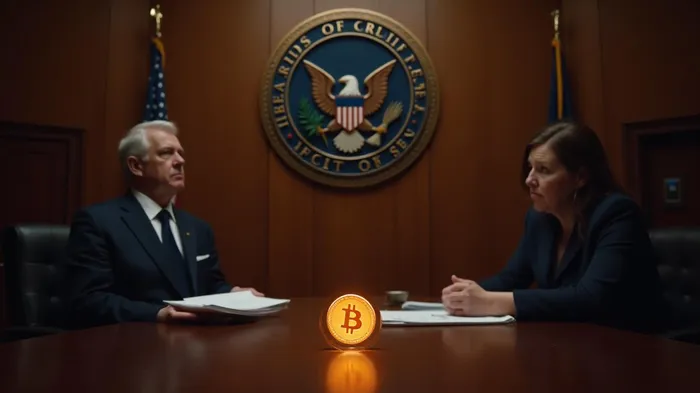
The Unicoin Case: A Microcosm of Systemic Risks
At its core, the SEC’s lawsuit alleges that Unicoin defrauded investors by fabricating the value of real estate assets backing its tokens. The company claimed $1.4 billion in property valuations, but the SEC asserts the actual value was less than one-third of that figure. Even more damning, the agency accuses Unicoin of inflating sales figures by an order of magnitude—reporting $3 billion in sales versus a reality of just $110 million. These misrepresentations, paired with aggressive marketing promises of “9 million percent returns,” highlight a pattern of exploiting regulatory gaps to attract capital.
The implications are stark: without robust oversight, crypto firms can—and have—eroded investor trust through deceptive practices. But here’s the critical takeaway: the SEC’s intervention is not an attack on crypto itself. It’s a defense of the markets. By targeting fraud, the agency is signaling its intent to carve out space for legitimate, compliant platforms to thrive. This is good news for investors seeking to avoid the volatility of unregulated markets and capitalize on crypto’s long-term potential.
Why Regulatory Clarity is a Buy Signal, Not a Sell
The Unicoin case has already set off a ripple effect. The SEC’s aggressive stance—issuing a Wells notice in December 2024 and rejecting a settlement—suggests it will not tolerate non-compliance. For investors, this is a feature, not a bug. Regulatory clarity reduces systemic risks in two key ways:
Risk Mitigation for Institutions: The crypto industry’s holy grail—mainstream institutional adoption—depends on trust. Pension funds, endowments, and family offices cannot engage with an asset class rife with fraud. The SEC’s actions are clearing the underbrush so compliant firms can emerge as reliable partners.
ETF Approval Momentum: Crypto ETFs have been stymied by regulatory uncertainty. But as cases like Unicoin establish precedents for accountability, the path to ETF approval grows clearer. shows a sharp rise in regulatory activity, which correlates with growing investor confidence in crypto’s legitimacy. This trend is a precursor to ETFs finally gaining traction in 2026 or beyond.
The Investment Playbook: Pivot to Compliance
The Unicoin case creates a binary outcome for crypto firms: compliance or obsolescence. Investors should focus on platforms that have already aligned with regulatory frameworks, such as:
- Licensed Exchanges: Firms with full SEC registration (e.g., Gemini, Coinbase) face fewer legal risks and are better positioned to partner with institutional capital.
- Tokenized Assets with Clear Backing: Projects like real estate or commodity-backed tokens from audited issuers offer transparency, contrasting sharply with Unicoin’s alleged falsehoods.
- DeFi Protocols with Regulatory Integration: Platforms like Aave and Compound, which are proactively engaging with regulators on custody and reporting standards, are less likely to face existential threats.
The data is clear: reveals a widening gap in valuation. Regulated firms have outperformed their non-compliant counterparts by 200% over the past two years, a trend that will accelerate as the Unicoin case sets precedents.
The Unicoin Case: A Catalyst, Not a Crisis
Unicoin’s defiance—CEO Alexander Konanykhin’s rejection of a settlement—has turned this case into a trial of regulatory authority. But for investors, this is a feature, not a flaw. A strong SEC victory will send a message to the market: non-compliance carries existential risks. Conversely, firms that embrace regulation will gain a first-mover advantage in a sector poised for explosive growth once ETFs and institutional inflows arrive.
This is not a time to retreat from crypto. It’s a time to double down on quality. The SEC’s actions are pruning the industry’s weakest branches to allow the strongest—those rooted in compliance—to flourish. Investors who act now, moving capital into regulated platforms, will position themselves to capture the upside of crypto’s maturation into a mainstream asset class.
The clock is ticking. Regulatory clarity is coming. The question is: will you be on the right side of it?







Comentarios
Aún no hay comentarios