
The Regulatory Crossroads of Tokenized Equities: Risk, Innovation, and Market Stability
SEC's Regulatory Foray and Nasdaq's Blockchain Experiment
The SEC's engagement with tokenized equities has accelerated in 2025, marked by Nasdaq's September 2025 proposal to facilitate trading and settlement of tokenized securities via blockchain technology. This initiative allows for T+1 settlement of tokenized trades, aligning with existing U.S. securities laws while leveraging distributed ledger efficiency according to Nasdaq's proposal. Nasdaq's approach emphasizes transparency and continuity in shareholder rights, contrasting sharply with unregulated platforms that offer tokenized assets mimicking traditional equities but lacking equivalent legal protections according to Nasdaq's proposal.
However, the SEC has yet to issue comprehensive guidance on tokenized assets, creating a regulatory vacuum. Commissioner Hester Peirce has affirmed that tokens qualify as securities, yet ambiguities persist regarding cross-border compliance, smart contract enforceability, and custody standards according to institutional analysis. This lack of clarity has left institutional investors in a precarious position, where technological innovation outpaces legal frameworks.
WFE's Market Stability Concerns and the Call for Regulatory Parity
The WFE has sounded alarms about the risks posed by tokenized equities, particularly those issued by unregulated brokers. These platforms, the WFE argues, threaten liquidity fragmentation, investor protection, and market integrity by offering tokenized assets that replicate traditional equities without adhering to equivalent regulatory standards according to WFE analysis. For instance, tokenized assets may lack voting rights or dividend entitlements, eroding investor confidence according to legal analysis. The WFE advocates for "technological neutrality," urging regulators to apply the same rules to tokenized and traditional instruments to prevent regulatory arbitrage according to WFE analysis.
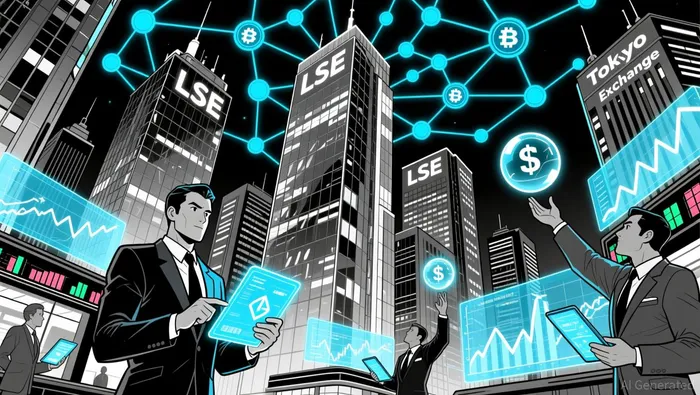 This stance highlights a broader tension: while tokenization democratizes access to capital markets, it also risks creating parallel ecosystems with uneven safeguards. For institutional investors, the WFE's warnings underscore the need for caution in engaging with tokenized assets that lack robust regulatory oversight.
Institutional Investor Strategies: Caution Amidst Opportunity
Despite the allure of tokenized equities-faster settlement, reduced counterparty risk, and fractional ownership-institutional participation remains limited. A key barrier is the absence of harmonized cross-border regulations, which complicates compliance for global portfolios according to institutional analysis. Additionally, unresolved questions about custody, taxation, and ownership rights deter large-scale adoption. For example, some tokenized assets do not confer actual shareholder rights, leaving investors exposed to legal and operational risks according to legal analysis.
Institutional players like JPMorgan, Robinhood, and CoinbaseCOIN-- have launched tokenized equity products, but their strategies often prioritize pilot programs over full-scale integration according to institutional analysis. This cautious approach reflects the sector's infancy and the need for clearer regulatory guardrails.
Risk Management: Custody, Compliance, and Technological Safeguards
As institutional investors explore tokenized equities, robust risk management frameworks are critical. Federal banking regulators have emphasized a "conservative risk posture" for crypto-asset safekeeping, requiring institutions to demonstrate expertise in custody models and operational controls according to regulatory guidance. Platforms like Fireblocks and Securitize offer institutional-grade solutions, leveraging multi-party computation (MPC) to secure cryptographic keys and align with global standards such as NIST CSF 2.0 and the EU's MiCA framework according to legal analysis.
Moreover, risk analytics platforms like Particula aggregate on-chain and off-chain data to provide real-time compliance tools, enabling institutions to navigate the complexities of tokenized asset management according to industry reports. These innovations are essential for mitigating fraud, operational vulnerabilities, and legal uncertainties.
Strategic Implications for Institutional Investors
For institutional investors, the tokenized equities market presents both opportunities and pitfalls. The strategic imperative lies in balancing innovation with risk mitigation. Key considerations include:
1. Regulatory Engagement: Advocating for clear, technology-neutral frameworks that harmonize cross-border standards.
2. Custody Solutions: Partnering with platforms offering institutional-grade custody and compliance infrastructure.
3. Due Diligence: Scrutinizing tokenized assets for legal enforceability, shareholder rights, and alignment with traditional securities laws.
4. Scenario Planning: Preparing for market fragmentation and liquidity risks, particularly in unregulated ecosystems.
The SEC and WFE's ongoing efforts will shape the sector's trajectory. If regulators succeed in establishing parity between tokenized and traditional instruments, institutional adoption could accelerate. Conversely, a lack of clarity may perpetuate fragmentation and erode trust.
Conclusion
Tokenized equities represent a paradigm shift in capital markets, but their success hinges on resolving regulatory and operational challenges. For institutional investors, the path forward requires vigilance, strategic partnerships, and active participation in shaping policy. As Nasdaq's blockchain experiment and the WFE's warnings illustrate, the crossroads of innovation and regulation will define the next phase of this market.





Comentarios
Aún no hay comentarios