
Regulatory Crossroads: How U.S. State Actions Are Reshaping Prediction Markets and Decentralized Trading Platforms
The rise of prediction markets and decentralized trading platforms has ignited a regulatory arms race across U.S. states, creating a fragmented yet dynamic landscape that investors must navigate with caution. As state legislatures and regulators grapple with the implications of these speculative instruments, the interplay between innovation and oversight is reshaping the future of digital wagering. This analysis explores how state-level actions-ranging from New York's sweeping ORACLEORCL-- Act to Nevada's aggressive legal challenges-threaten to redefine the risk profile of decentralized platforms and speculative trading ecosystems.
State-Level Regulatory Surge: A Patchwork of Approaches
The most significant regulatory development in 2025 was New York's introduction of the ORACLE Act (Assembly Bill 9251), a comprehensive framework targeting prediction markets. The law imposes strict restrictions, including bans on markets tied to political and athletic events, mandatory deposit and spending limits, and time-based usage notifications to curb addictive behavior according to state legislation. By granting the New York Attorney General broad enforcement powers, the act signals a shift toward treating prediction markets as a subset of gaming, not speculative finance.
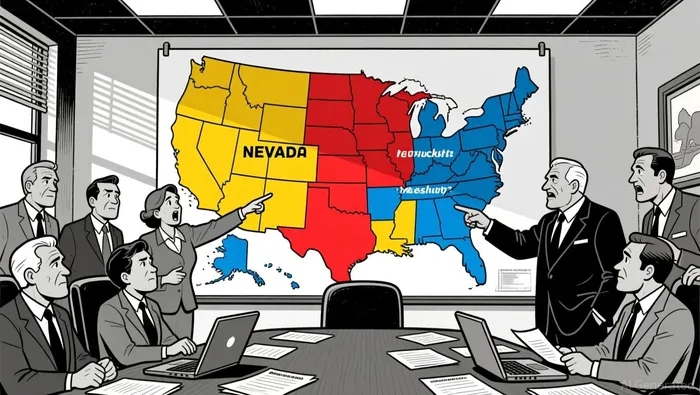
Meanwhile, Nevada has taken a confrontational approach, issuing cease-and-desist orders against platforms like Kalshi in March 2025. Regulators argue that prediction markets operate as unlicensed gaming services, a stance reinforced by a federal judge who denied Kalshi's request to stay enforcement. Massachusetts has escalated the conflict further by directly suing Kalshi in state court-a strategic move that bypasses federal jurisdiction and sets a precedent for other states to assert authority according to legal analysis.
These actions highlight a growing trend: states are increasingly viewing prediction markets as a regulatory gray area ripe for intervention. Ohio, South Carolina, and Arizona have also introduced legislation to regulate virtual currency kiosks and digital asset transactions, often requiring money transmitter licenses and consumer disclosures as reported by state legislative records. While these laws primarily target crypto infrastructure, they indirectly impact prediction markets by tightening oversight of the underlying financial tools used in decentralized trading.
Federal Ambiguity and the CLARITY Act
At the federal level, the Digital Asset Market Clarity Act of 2025 (CLARITY Act) has attempted to provide a unified framework for digital commodities, including non-stablecoin assets according to regulatory analysis. The bill defines digital commodities, mandates registration for exchanges and custodians, and aligns with the CFTC's existing oversight of derivatives. However, the CLARITY Act leaves critical gaps-particularly in how it interacts with state laws. For instance, while the CFTC may regulate prediction markets as derivatives, states like New York and Nevada are challenging this federal preemption, creating a legal tug-of-war.
The GENIUS Act, which established a federal framework for stablecoins, further complicates the landscape. By influencing global stablecoin policy, the act indirectly affects prediction markets that rely on stablecoins for liquidity as industry reports indicate. Yet, as Coinbase has warned, any restrictions on stablecoin rewards could derail broader crypto legislation, underscoring the interconnectedness of regulatory decisions according to Coinbase's public statement.
Legal Uncertainties and the Path to the Supreme Court
The most pressing risk for investors lies in the unresolved tension between state and federal jurisdiction. Legal experts predict that the conflict will eventually reach the U.S. Supreme Court, as circuit courts issue conflicting rulings on whether states can regulate prediction markets independently of federal derivatives laws according to legal experts. A circuit split-a situation where different federal courts apply varying interpretations of the law-has already emerged, increasing the likelihood of a high court review.
For example, Nevada's legal battle with Kalshi hinges on whether the CFTC's oversight of derivatives preempts state gaming laws. If the Supreme Court rules in favor of federal preemption, it could create a national regulatory framework for prediction markets. Conversely, a ruling affirming state authority would cement a patchwork of regulations, forcing platforms to navigate a labyrinth of compliance requirements.
Investor Implications: Navigating the New Normal
For investors, the regulatory landscape presents both risks and opportunities. Regulatory risk is now a core consideration for platforms operating in this space. Startups must allocate significant resources to compliance, particularly in states like New York and Nevada, where enforcement is aggressive. The ORACLE Act's restrictions on political and athletic event markets, for instance, could limit the appeal of prediction platforms to a niche audience, reducing liquidity and user engagement according to regulatory analysis.
Conversely, platforms that proactively engage with regulators-such as Kalshi, which has sought to work with the CFTC-may gain a competitive edge. Google's recent decision to allow regulated prediction market ads (excluding Nevada) also signals that compliance can unlock new growth channels as reported by NCSL. Investors should prioritize platforms with robust legal teams and flexible architectures that can adapt to evolving state laws.
The broader crypto market is also at risk. As the U.S. Treasury has demonstrated, regulatory actions against decentralized platforms can have spillover effects, such as the $4 million fine imposed on Paxful for inadequate AML controls according to legal updates. Investors must monitor enforcement trends, particularly in states with aggressive regulatory agendas, to avoid exposure to sudden compliance shocks.
Conclusion: A Defining Moment for Decentralized Finance
The regulatory battles of 2025-2026 are not just about prediction markets-they represent a broader struggle to define the boundaries of decentralized finance. As states assert their authority and federal agencies seek clarity, the industry faces a critical inflection point. For investors, the key takeaway is clear: regulatory risk is no longer a peripheral concern but a central determinant of value. Platforms that navigate this complex landscape with agility and foresight will emerge as leaders, while those that fail to adapt may find themselves sidelined by the very regulators they hoped to ignore.





Comentarios
Aún no hay comentarios