
Regulatory Crosshairs: TON's Toncoin Purchase and the Future of Crypto Capital Raises
Regulatory Violations: A Recipe for Reprimand
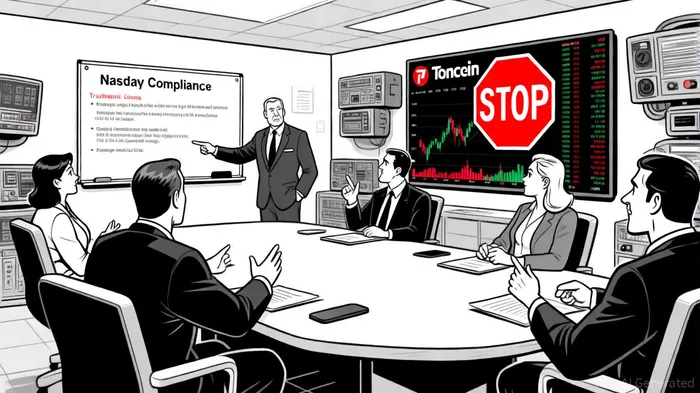
According to a report by Investing.com, Nasdaq formally notified TON StrategyTONX-- of its failure to secure shareholder approval for the PIPE financing and Toncoin acquisition, violating Listing Rules 5635(a) and 5635(b). These rules mandate shareholder consent for share issuances exceeding 20% of outstanding stock or transactions that trigger a change in control. TON's August 2025 deal not only bypassed this requirement but also resulted in affiliated entities acquiring nearly 19.99% of voting power-a near-threshold move that Nasdaq deemed a de facto change in control, according to an AlphaTON press release.
The SEC's broader framework, while not directly cited in this case, looms large. The agency has increasingly focused on ensuring transparency in crypto transactions, particularly for public companies. Nasdaq's decision to reprimand rather than delist TON's securities suggests a measured approach, but the message is clear: regulatory guardrails are tightening, according to Coinotag.
Strategic Risks: Volatility and Governance Gaps
The Toncoin purchase, which consumed nearly half of the PIPE proceeds (48.78%), raises questions about strategic coherence. While acquiring a native token could theoretically bolster a company's ecosystem, the lack of shareholder input and the sheer scale of the investment expose TON to reputational and financial risks. For context, Toncoin's price has historically exhibited extreme volatility-a trait that amplifies exposure for public companies relying on such assets as collateral for growth, as Coinotag noted.
Moreover, the transaction's timing and structure suggest a governance gap. By linking the Toncoin purchase to the PIPE financing, TON created a circular dependency: the acquisition was contingent on the success of the fundraising, yet the proceeds were immediately reallocated to the asset purchase. This opacity could erode investor trust, particularly in an industry where transparency is paramount, as described in the AlphaTON press release.
Broader Implications: A Cautionary Tale for Crypto Fundraising
Nasdaq's reprimand of TON Strategy is more than a corporate infraction-it's a bellwether for the crypto industry. As stated by Coinotag, the incident underscores regulators' growing emphasis on compliance in digital asset transactions, particularly for public companies seeking to build "crypto treasuries." The SEC's recent focus on shareholder rights and disclosure requirements means that future PIPE financings involving cryptocurrencies will face heightened scrutiny.
For investors, the takeaway is twofold:
1. Due Diligence is Non-Negotiable: Assess whether a company's crypto-related capital raises align with clear governance protocols and shareholder interests.
2. Regulatory Risk is Material: Even well-intentioned strategies can falter if they ignore evolving compliance standards.
While TON's shares remain listed, the reprimand signals that regulatory tolerance for ambiguity is shrinking. Companies that fail to adapt risk not just fines, but long-term damage to credibility-a critical asset in crypto's high-stakes arena.
Conclusion
The TON case exemplifies the delicate balance between innovation and compliance in crypto. As the industry matures, regulatory frameworks will continue to evolve, demanding agility from both companies and investors. For now, TON's experience serves as a stark reminder: in the race to capitalize on digital assets, governance and transparency must never take a backseat.







Comentarios
Aún no hay comentarios