
The Regulatory-Compliant Revolution in Tokenized Yield Solutions: A New Era for Investors
The financial world is undergoing a seismic shift as tokenized yield solutions bridge the gap between blockchain innovation and regulatory compliance. Investors are no longer forced to choose between the efficiency of decentralized systems and the safeguards of traditional markets. Instead, they're witnessing a new paradigm where U.S. Treasuries, equities, and stablecoins are being reimagined as programmable, liquid, and compliant assets. Let's break down how this revolution is unfolding-and why it's a golden opportunity for forward-thinking investors.
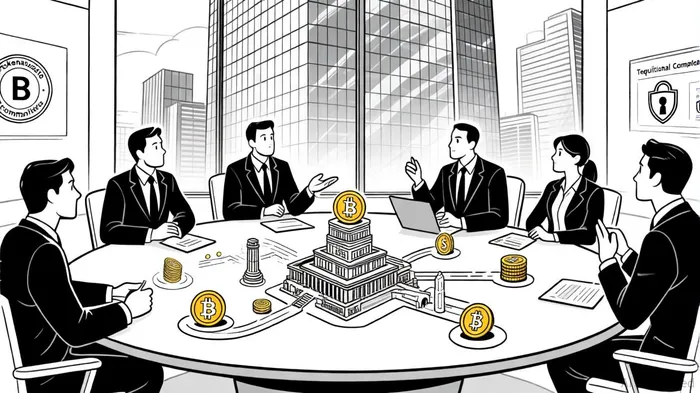
The Regulatory Framework: A Foundation for Trust
Regulatory clarity has been the linchpin of this transformation. The GENIUS Act, for instance, has created a clear pathway for stablecoin issuance backed by cash or Treasuries, ensuring that innovation doesn't come at the expense of stability, according to an EY briefing. According to a report by EY, this framework not only fosters compliance for banks and fintechs but also sets robust anti-money laundering (AML) and redemption standards, giving institutional players the confidence to deploy capital. Meanwhile, the U.S. Securities and Exchange Commission (SEC) has emphasized that tokenized securities remain subject to federal securities laws, urging market participants to engage proactively with regulators, as noted in a SEC statement. This alignment between innovation and oversight is critical-it ensures that tokenized assets aren't just speculative but are built to last.
Case Study 1: Tokenized Treasuries-A $4 Billion Bet on Efficiency
One of the most compelling examples of this shift is the Anemoy Liquid Treasury Fund (LTF), a joint venture between Janus Henderson, Anemoy, and Centrifuge. This fully on-chain fund provides direct access to short-term U.S. Treasury bills, leveraging Centrifuge's blockchain infrastructure to tokenize the assets, according to a Keyrock analysis. The results? A 211% surge in assets under management in just 30 days, with dual ratings from Moody's (Aa) and DeFi-focused agency Particula (A+), per the EY briefing. The fund's 24/7/365 redemption model, powered by a partnership with Wintermute, has shattered the limitations of traditional settlement cycles . For investors, this means instant liquidity and a new way to deploy idle capital-without sacrificing the safety of U.S. government-backed assets.
Case Study 2: Circle's USYC-Stablecoins as Collateral
Meanwhile, Circle has made waves by acquiring Hashnote, the issuer of US Yield Coin (USYC), a $1.52 billion tokenized money market fund (covered in the Keyrock analysis). By integrating USYC with USDC, CircleCRCL-- is enabling seamless convertibility between yield-bearing collateral and cash on blockchains-a move that could redefine how institutional players manage margin requirements. A strategic partnership with DRW, one of the largest institutional crypto traders, further amplifies USYC's utility as a collateral asset on exchanges and custodial platforms. This acquisition isn't just a win for Circle; it's a signal that stablecoins are evolving from speculative tools to foundational infrastructure for global finance.
The Investor's Edge: Efficiency, Liquidity, and Scalability
The benefits of these innovations are clear. Tokenized Treasuries eliminate settlement delays and intermediation costs, while tokenized equities enable 24/7 trading and instant settlement (as discussed in the Keyrock analysis). For example, Backed Finance and Ondo Finance are leveraging MiFID II-compliant infrastructure to bring tokenized equity solutions to European markets. Meanwhile, Deloitte predicts that tokenized currencies will reduce global cross-border payment costs by up to 70% by 2030. These aren't just incremental improvements-they're systemic upgrades that could unlock trillions in value.
Challenges and the Road Ahead
Of course, challenges remain. Regulatory complexities, particularly in cross-border markets, require careful navigation. The SEC's insistence on compliance with federal securities laws means that tokenization isn't a free pass for unregulated experimentation (the SEC statement underscores this). However, the progress made by the Anemoy LTF and USYC demonstrates that these hurdles are surmountable with the right partnerships and frameworks.
Conclusion: A Golden Cross of Innovation and Compliance
The tokenization of yield solutions isn't just a trend-it's a tectonic shift. By aligning blockchain's efficiency with regulatory rigor, firms like Janus Henderson, Circle, and Centrifuge are creating assets that are both high-yield and high-trust. For investors, this means a new toolkit to navigate a world where liquidity, transparency, and compliance coexist. As the market matures, those who position themselves at the intersection of innovation and regulation will reap the rewards.







Comentarios
Aún no hay comentarios