
Regulatory Compliance as a Competitive Edge: How Fintechs Turn Early Monitoring Termination into Investor Trust
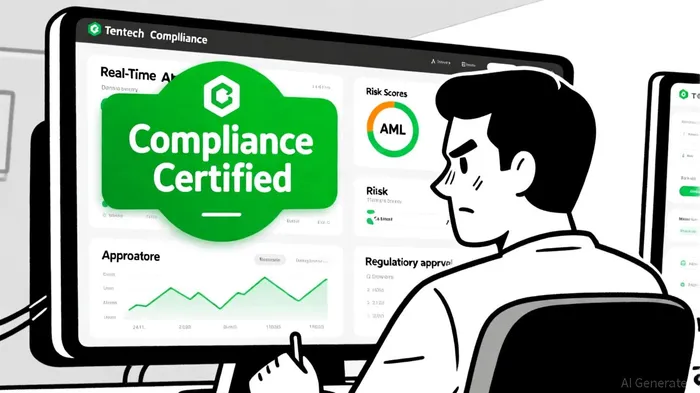
In the high-stakes world of fintech, regulatory compliance is no longer a mere checkbox—it is a strategic asset. Over the past three years, the sector has witnessed a stark divergence between firms that proactively address regulatory expectations and those that falter under scrutiny. A 2025 study by Hare Strategy Group reveals that 73% of fintech startups fail within their first three years, with preventable compliance issues as the primary culprit[4]. Yet, for those that excel in compliance, the rewards are profound: faster funding, stronger market positioning, and a competitive edge that regulators and investors alike recognize.
The Cost of Non-Compliance
Regulatory missteps can be catastrophic. PayoneerPAYO--, for instance, was fined $1.4 million in 2021 for sanctions violations tied to 2,220 transactions[6], while Robinhood's crypto division faced a $30 million penalty in 2022 for AML and cybersecurity lapses[6]. These cases underscore a broader trend: regulators are tightening oversight, particularly in anti-money laundering (AML) and consumer protection. The Financial Action Task Force (FATF) and the U.S. Consumer Financial Protection Bureau (CFPB) have intensified scrutiny, with enforcement actions rising 67% year-on-year[3]. For fintechs, the message is clear—non-compliance is not just costly; it is existential.
Early Termination of Monitoring: A Signal of Strength
While the term “early termination of regulatory monitoring” is rarely used explicitly, its implications are evident in firms that demonstrate such robust compliance that regulators reduce oversight. For example, CB Payments Limited (Coinbase UK) faced a £3.5 million fine in 2024 for AML failures[6], but its subsequent overhaul of risk management frameworks—including enhanced transaction monitoring and staff training—likely restored regulatory confidence. Similarly, Nordea Bank's $35 million fine by the New York DFS for AML deficiencies[6] prompted a restructuring of its compliance protocols, signaling to investors its commitment to rectifying systemic weaknesses.
The true test of compliance strength lies in regulatory sandboxes, where firms test innovations under relaxed rules. A 2025 report notes that fintechs participating in the UK's FCA sandbox raised 15% more capital and had a 50% higher funding success rate compared to non-participants[3]. These programs act as a “compliance trial,” allowing firms to prove their viability to regulators and investors simultaneously. For instance, Privalgo secured Dutch regulatory approval for EU payment operations[5], while Brex obtained an EU Payment Institution license[5], both leveraging sandbox frameworks to accelerate market entry and investor trust.
Investor Confidence and Market Position
Investor behavior reflects a growing preference for compliance-ready fintechs. According to a 2024 analysis, 73% of business leaders believe meeting compliance standards enhances public perception[4], directly influencing funding outcomes. Startups with regulatory experts on founding teams secured funding 2.8 times faster than those without[4], while pre-seed-stage compliance planning increased survival rates by 64%[4]. This trend is not lost on capital allocators: in 2024, fintechs with strong compliance frameworks raised $53 billion globally[2], with firms like FinLocker ($17 million) and Tractor Zoom ($13 million) exemplifying the link between compliance and capital access[5].
The market rewards compliance-driven innovation. Public fintechs saw EBITDA margins rise from 12% to 16% between 2023 and 2024[5], outpacing peers with weaker governance. RegTech tools, such as AI-driven AML platforms from Chainalysis and Ascent, have become critical infrastructure, enabling firms to automate monitoring and reduce manual workloads[5]. These technologies not only mitigate risk but also serve as selling points to investors seeking scalable, resilient businesses.
Strategic Implications for Fintechs
For firms aiming to thrive in this environment, the lesson is clear: compliance must be embedded in operational DNA. This means:
1. Proactive Risk Management: Implementing real-time transaction monitoring and dynamic KYC protocols[2].
2. Regulatory Agility: Staying ahead of evolving standards, such as the SEC's mandatory disclosure of material cyber incidents[1].
3. Sandbox Engagement: Using controlled environments to demonstrate compliance readiness and innovation[3].
Firms that achieve these goals not only avoid penalties but also position themselves as industry leaders. As the SEC's new chair, Paul Atkins, shifts toward principle-based disclosures[1], the ability to adapt and demonstrate compliance will become even more critical.
Conclusion
In fintech, regulatory compliance is no longer a defensive measure—it is a catalyst for growth. Firms that transform compliance challenges into competitive advantages, through early termination of monitoring or sandbox participation, are rewarded with investor confidence, market share, and long-term resilience. For investors, the message is equally clear: in a sector defined by innovation, the most promising bets are those that master the rules before breaking the mold.





Comentarios
Aún no hay comentarios