
Regulatory Clarity and the Future of Crypto Asset Markets
The U.S. Securities and Exchange Commission's (SEC) 2025 innovation-driven regulatory framework for crypto assets has emerged as a pivotal catalyst for institutional adoption and long-term investor gains. By shifting from an enforcement-heavy approach to structured rulemaking, the SEC has addressed longstanding ambiguities in crypto regulation, creating a fertile ground for institutional capital to flow into digital assets. This transformation, spearheaded by initiatives like Project Crypto and the formation of a dedicated Crypto Task Force, has not only clarified compliance pathways but also unlocked new opportunities for strategic investors.
A Regulatory Shift: From Ambiguity to Clarity
The SEC's 2025 agenda, under Chair Paul Atkins, prioritizes reducing compliance burdens while fostering innovation. Key reforms include modernizing the Investment Advisers Act of 1940 to accommodate crypto custody requirements and proposing rules to allow trading on national stock exchanges and alternative trading systems. These changes directly address institutional concerns about operational complexity and legal risk. For instance, the introduction of in-kind creation and redemption mechanisms for BitcoinBTC-- and EthereumETH-- ETFs has streamlined institutional access, enabling large-scale capital allocation with the same regulatory safeguards as traditional assets.
The Crypto Task Force, led by Commissioner Hester Peirce, has further accelerated progress by proposing tailored exemptions and safe harbors for compliant innovation. By the end of 2025, the SEC aims to finalize an innovation exemption that would provide a stable regulatory foundation for new crypto products, reducing the uncertainty that previously deterred institutional participation.
Institutional Adoption: A New Era of Legitimacy
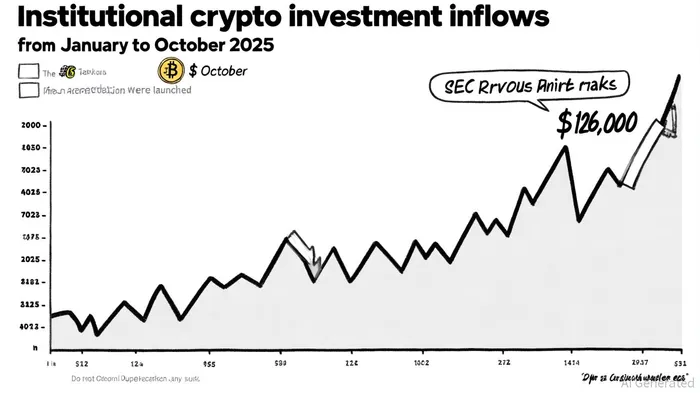
The regulatory clarity has directly spurred institutional adoption. According to a RiskWhale report, institutional investment inflows into crypto assets surpassed $10 billion in 2025, driven by the approval of Bitcoin and Ethereum ETFs. These ETFs, which attracted $50 billion in net inflows since their launch, have normalized crypto as a legitimate asset class for pension funds, endowments, and asset managers, as detailed in the Crypto Market Overview 2025.
The Strategic Bitcoin Reserve, announced by the Trump administration in July 2025, further solidified institutional confidence. By designating Bitcoin as a strategic reserve asset, the government signaled its intent to integrate digital assets into national financial strategies, reducing the "reputational risk" that once hindered institutional adoption, according to a Defi-Planet analysis. Complementing this, major banks like Fidelity Digital Assets and Anchorage Digital now offer institutional-grade custody solutions, addressing security concerns and enabling seamless portfolio integration, as covered in a CryptonewsInsights piece.
Market Impact: Record Inflows and Price Momentum
The institutional rush has had a measurable impact on market dynamics. In early October 2025, U.S. spot Bitcoin ETFs recorded $3.24 billion in net inflows in a single week, with BlackRock's iShares Bitcoin Trust alone attracting $967 million, according to a FinancialContent report. This surge coincided with Bitcoin reaching an all-time high of $126,000, while the total crypto market capitalization hit $4.25 trillion, as analyzed in a WealthManagement article.
Ethereum, too, has benefited from regulatory tailwinds. Record inflows into Ethereum ETFs and the approval of staked ETH ETFs have driven its price to multi-year highs, with institutional investors leveraging Ethereum's smart contract capabilities for tokenized assets and DeFi integration, consistent with the SEC spring agenda published earlier in the year.
Strategic Investor Gains: From ETFs to Tokenization
Strategic investors are capitalizing on the evolving landscape. The SEC's fast-track approval system for crypto ETFs-reducing processing times from 240 days to as little as 75 days-has enabled firms like Bitwise and Grayscale to launch niche products, including multi-coin and stablecoin ETFs. For example, the iShares Bitcoin Trust (IBIT) returned 28.1% in August 2025 alone, outperforming traditional asset classes, per Finance Monthly.
Beyond ETFs, the GENIUS Act of 2025-which mandates 100% reserve backing for stablecoins-has enhanced confidence in tokenized assets. This has spurred innovation in tokenization platforms, allowing institutions to tokenize real-world assets like real estate and art, further diversifying their portfolios, as noted in the Fidelity outlook.
Challenges and the Road Ahead
While the regulatory environment is improving, challenges remain. The SEC's delayed decisions on ETFs like the Truth Social Bitcoin & Ethereum ETF (pushed to October 8, 2025) highlight ongoing concerns about market manipulation and surveillance, according to a Cryptomus report. Additionally, the success of new ETFs will depend on the fundamentals of underlying assets, as analysts caution in an InTheNearFuture analysis.
Conclusion: A Foundation for Sustained Growth
The SEC's 2025 framework has laid the groundwork for a new era in crypto markets. By balancing innovation with investor protection, the agency has transformed digital assets from speculative novelties into mainstream investment vehicles. For strategic investors, this means opportunities to capitalize on ETFs, tokenization, and institutional-grade infrastructure-while navigating a regulatory environment that is increasingly aligned with market realities.
As the SEC continues to refine its approach, the focus will shift from regulatory clarity to execution. Investors who align with this trajectory-leveraging ETFs, custody solutions, and tokenization-stand to unlock long-term gains in a market now primed for sustained growth.





Comentarios
Aún no hay comentarios