
Regulatory Clarity in DeFi: How Senate Bills Could Catalyze Institutional Adoption and ETF Launches
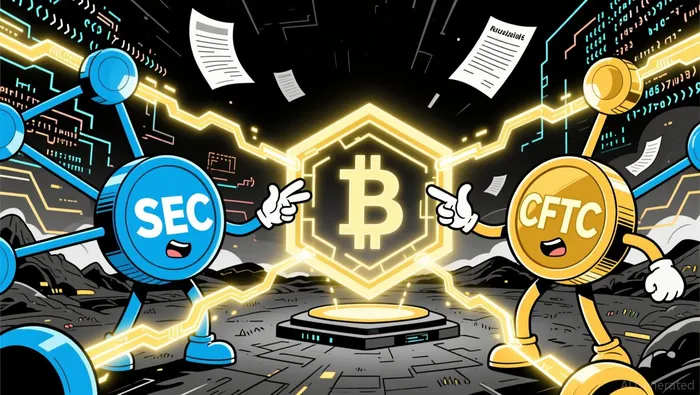
The decentralized finance (DeFi) sector has long grappled with regulatory ambiguity, a barrier that has stifled institutional participation and delayed the launch of exchange-traded funds (ETFs). However, 2025 has marked a pivotal shift in the U.S. regulatory landscape, with Senate bills like the Digital Asset Commodities and Securities Regulation Act of 2025 (H.R.3633) and the Responsible Financial Innovation Act of 2025 (RFIA) offering a framework to resolve jurisdictional conflicts between the SEC and CFTC. These legislative efforts, coupled with global regulatory momentum, are poised to unlock institutional capital flows and accelerate the development of DeFi ETFs.
A Framework for Clarity: The Senate's Role in Resolving Jurisdictional Chaos
The RFIA, introduced by the Senate Banking Committee, addresses a critical pain point in DeFi regulation: the lack of clear definitions for digital assets and their classification under securities or commodities laws. By distinguishing between "Digital Assets" and "Ancillary Assets," the bill explicitly excludes secondary transactions involving the latter from being treated as securities transactions under federal law. This distinction is a game-changer for DeFi platforms, as it reduces the risk of retroactive enforcement actions that have historically deterred institutional investors.
For example, the bill mandates that "Ancillary Asset Originators" meet scaled disclosure requirements with the SEC, including semiannual reports on risk factors and corporate details. Smaller originators receive exemptions, ensuring that regulatory burdens do not stifle innovation. Such provisions create a predictable environment for institutional players, who can now allocate capital with greater confidence in the legal boundaries of their activities.
Institutional Adoption: From Hesitation to Commitment
Regulatory clarity is the linchpin for institutional adoption. The RFIA's safe harbors for forward-looking statements in disclosures, coupled with the SEC's Project Crypto and no-action letters, signal a regulatory environment that balances oversight with innovation. Institutions like Galaxy DigitalGLXY-- and CoinbaseCOIN--, which operate platforms for institutional investors, stand to benefit from this shift.
Moreover, the 2025 passage of the GENIUS Act-establishing a federal framework for stablecoin issuance-has further solidified the U.S.'s position as a leader in digital asset regulation. Stablecoins, with their blockchain-native efficiency and value stability, are now a cornerstone of institutional adoption, particularly in cross-border payments and settlements. The Basel Committee's reassessment of prudential rules for crypto exposures also suggests a softening of risk-weighted capital requirements, making it easier for banks to engage with DeFi protocols.
ETF Launches: Legal Clarity as a Catalyst
The RFIA's provisions directly address the regulatory hurdles that have delayed DeFi ETF launches. By clarifying the treatment of digital assets in financial products, the bill supports the creation of U.S. spot ETFs. For instance, the requirement for joint rulemaking between the SEC and CFTC on portfolio margining and disclosure ensures a coordinated approach to risk management.
This legislative clarity aligns with global trends. The EU's MiCA regulation, implemented in 2025, has already created a harmonized framework for crypto activities, prompting U.S. lawmakers to act swiftly to maintain competitiveness. As stablecoins and tokenized assets (e.g., U.S. Treasuries, gold) gain traction, the conditions for launching DeFi ETFs are becoming increasingly favorable, particularly in jurisdictions with robust regulatory frameworks.
Challenges and the Road Ahead
Despite these advancements, challenges remain. Political divisions and shifting committee leadership could delay the RFIA's passage, especially with the 2026 midterm elections approaching. Additionally, the SEC's ongoing enforcement actions against DeFi protocols highlight the need for consistent application of the new framework.
Globally, the U.S. faces competition from regions like Japan and Hong Kong, which are also advancing stablecoin and tokenization regimes. According to Chainalysis, if the U.S. fails to finalize its regulatory framework, it risks ceding market leadership to jurisdictions with more agile policies.
Conclusion
The 2025 Senate bills represent a critical step toward resolving the regulatory uncertainty that has hindered DeFi's growth. By providing clear definitions, scaled disclosure requirements, and legal protections for innovators, these laws create a fertile ground for institutional adoption and DeFi ETF launches. However, the success of this framework hinges on its timely implementation and the ability of U.S. regulators to maintain a balance between oversight and innovation. For investors, the coming months will be pivotal in determining whether the U.S. can solidify its position as the global leader in the next financial revolution.





Comentarios
Aún no hay comentarios