
Regulatory Clarity in Blockchain Adoption: How New York DFS Guidance Fuels Institutional Trust and Investment in Blockchain Analytics
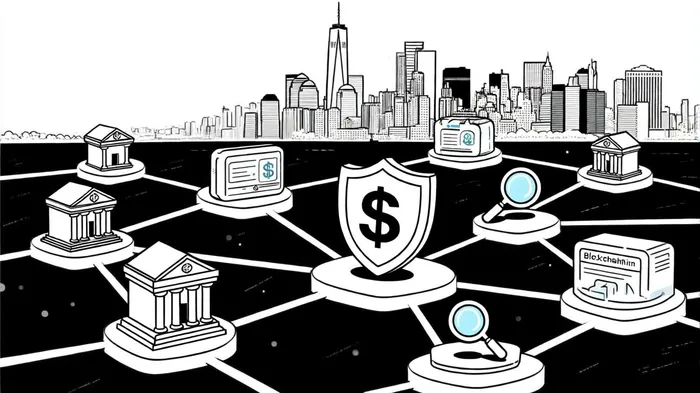
The blockchain industry has long grappled with a paradox: the technology promises transparency and efficiency, yet its adoption by traditional institutions has been hindered by regulatory uncertainty. New York's Department of Financial Services (DFS) is now reshaping this dynamic. By mandating the integration of blockchain analytics into compliance frameworks, DFS is not only addressing risks but also creating a fertile ground for institutional trust and investment in blockchain analytics firms.
DFS Guidance: A Blueprint for Institutional Adoption
In September 2025, DFS issued groundbreaking guidance requiring state-regulated banks to adopt blockchain analytics tools as part of their compliance strategies when engaging with virtualCYBER-- currencies [1]. The guidance, led by Superintendent Adrienne A. Harris, outlines four key use cases: customer wallet screening, verification of funds with virtual asset service providers (VASPs), holistic monitoring for illicit activity, and due diligence assessments to detect behavioral anomalies [2]. These requirements are not merely bureaucratic hurdles—they are a strategic push to align institutional practices with the realities of a digital asset-driven economy.
For example, the mandate to screen customer wallets ensures banks can trace the origins of funds, a critical step in combating money laundering. Similarly, verifying transactions with VASPs—entities like crypto exchanges and custodians—requires real-time analytics to validate the legitimacy of counterparties [2]. By codifying these practices, DFS is effectively signaling to the market that blockchain analytics is no longer optional but foundational for risk management.
Cybersecurity Timelines: Complementary Forces
DFS's regulatory efforts extend beyond blockchain analytics. The department has also imposed a strict cybersecurity timeline for financial institutionsFISI--, with key deadlines in May and November 2025. By May, banks must implement automated vulnerability scans and endpoint detection tools, while November brings mandatory multi-factor authentication (MFA) and asset inventory policies [1]. These measures, though broader in scope, reinforce the same message: institutions must invest in technology to mitigate risks.
The synergy between blockchain analytics and cybersecurity is evident. For instance, blockchain analytics tools can flag suspicious patterns that might otherwise go unnoticed in traditional systems. When combined with EDR solutions and MFA, they create a layered defense against threats. This holistic approach has made New York a testbed for innovation, with banks increasingly partnering with analytics firms to meet regulatory benchmarks.
The Investment Case: Blockchain Analytics as a Growth Sector
The DFS guidance has catalyzed a surge in demand for blockchain analytics firms. According to a report by Finance Feeds, banks are now prioritizing partnerships with companies that offer wallet screening and transaction verification capabilities [2]. Firms like Chainalysis, Elliptic, and TRM Labs have seen their services become table stakes for compliance, driving revenue growth and valuation increases.
This trend is not limited to existing players. Startups specializing in niche areas—such as AI-driven anomaly detection or VASP risk scoring—are attracting venture capital. The regulatory clarity provided by DFS reduces the “unknown unknowns” that once deterred institutional investors, making the sector more attractive to both traditional asset managers and crypto-native funds.
Why This Matters for Investors
For investors, the DFS-led regulatory shift represents a unique inflection point. Unlike earlier phases of blockchain adoption, where speculation dominated, today's environment is defined by institutional pragmatism. The DFS guidance ensures that blockchain analytics firms are not just solving hypothetical problems but addressing concrete regulatory requirements.
Moreover, the timeline for compliance creates a predictable growth trajectory. Banks have until November 2025 to meet MFA and asset inventory mandates, giving analytics firms a clear window to scale their offerings. This structured rollout minimizes the volatility often associated with unregulated tech sectors, making blockchain analytics a more defensible long-term investment.
Conclusion: A New Era of Trust
New York DFS's approach to blockchain regulation is a masterclass in balancing innovation with oversight. By mandating analytics tools, the department is not only safeguarding consumers but also building a bridge between traditional finance and digital assets. For blockchain analytics firms, this means a surge in institutional demand. For investors, it means a sector where regulatory clarity and market growth are finally aligned.
As the financial world watches New York's experiment unfold, one thing is clear: the next wave of institutional trust in blockchain will be built on the bedrock of regulatory frameworks like DFS's.







Comentarios
Aún no hay comentarios