
Regulatory Catalysts and Institutional Adoption: The SEC's Role in Crypto Market Maturation
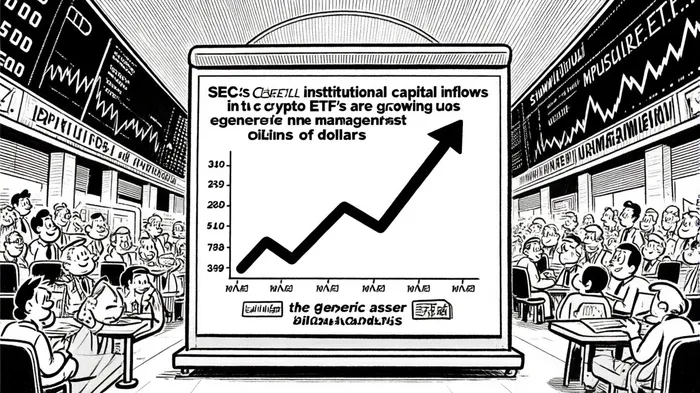
The U.S. Securities and Exchange Commission's (SEC) recent approval of Grayscale's Multi-Crypto Fund (GDLC) and its broader adoption of generic listing standards for crypto ETFs mark a pivotal turning point in the institutionalization of digital assets. These regulatory milestones are not merely procedural updates but foundational shifts that are accelerating the maturation of the crypto market, enabling institutional investors to allocate capital with greater confidence and compliance.
Grayscale's GDLC: A Diversified On-Ramp for Institutional Investors
The SEC's approval of Grayscale's Digital Large Cap Fund (GDLC) as the first multi-crypto exchange-traded product (ETP) on a U.S. exchange—NYSE Arca—represents a significant structural innovation. GDLC offers exposure to a diversified basket of major cryptocurrencies, including BitcoinBTC-- (BTC), EthereumETH-- (ETH), XRPXRP--, SolanaSOL-- (SOL), and CardanoADA-- (ADA), with a net asset value of $57.70 per share and over $915 million in assets under management [1]. This product addresses a critical gap in the market by providing institutional investors with a regulated, diversified vehicle to access crypto assets without the complexities of direct custody or trading on decentralized exchanges.
Grayscale CEO Peter Mintzberg emphasized that the approval underscores the SEC's recognition of digital assets as a legitimate asset class within traditional investment frameworks [2]. By transitioning from an over-the-counter (OTC) vehicle to a transparent ETP structure, GDLC aligns with institutional demands for liquidity, price discovery, and regulatory clarity. This shift is particularly significant given the SEC's historical resistance to crypto ETFs, which has often cited concerns over market manipulation and custody risks.
Generic Listing Standards: Streamlining Innovation and Competition
The SEC's introduction of generic listing standards for crypto ETFs in 2025 has further catalyzed market maturation. These rules allow exchanges like Nasdaq, NYSE Arca, and Cboe BZX to list commodity-based crypto ETFs without individual SEC reviews, reducing the approval timeline from 240 days to as few as 75 days [3]. This streamlined process reclassifies certain cryptoassets (e.g., XRP and Solana) as commodities rather than securities, thereby broadening the scope for altcoin ETFs and fostering competition among asset managers.
The impact is already evident: analysts predict over 100 new crypto ETFs within the next 12 months, with products tracking Solana, XRP, and LitecoinLTC-- expected to launch in October 2025 [4]. This regulatory flexibility not only lowers barriers to entry for new players but also incentivizes innovation in product design, such as staking-enabled ETFs that generate yield for investors. For example, Fidelity and ARKARK-- 21Shares have already launched spot Ethereum ETFs, amassing $3.5 billion in assets under management by leveraging the new framework [5].
Institutional Adoption: A Structural Shift in Capital Flows
The regulatory tailwinds have directly translated into a surge of institutional capital into crypto markets. Since the approval of spot Bitcoin ETFs in January 2024, these products have attracted nearly $219 billion in assets under management, with BlackRock's iShares Bitcoin Trust (IBIT) leading the charge with $76 billion in assets [6]. This influx has created structural supply constraints, as ETFs purchase underlying crypto assets to back their shares, pushing prices higher and reducing speculative volatility.
Ethereum's institutional adoption has also gained momentum, driven by its staking yields and supply dynamics. Spot ETH ETFs, such as those from Fidelity and ARK 21Shares, have positioned Ethereum as a key asset for institutional portfolios, mirroring Bitcoin's trajectory [6]. The broader regulatory clarity, including the SEC's generic listing standards and the potential passage of the CLARITY Act, has further legitimized digital assets, enabling pension funds, hedge funds, and wealth managers to allocate capital through compliant, tradable vehicles [5].
Future Outlook: Altcoins and Market Expansion
While Bitcoin and Ethereum dominate current ETF offerings, the regulatory environment is increasingly favorable for altcoin ETFs. Major asset managers like VanEck, WisdomTreeWT--, and Bitwise have filed for products tied to Solana and XRP, though the SEC's scrutiny of custody and liquidity standards remains a hurdle [6]. However, the approval of GDLC and the generic listing framework suggest that the SEC is prioritizing innovation over obstruction, potentially unlocking a new wave of market expansion.
Conclusion
The SEC's regulatory milestones—ranging from the approval of Grayscale's GDLC to the adoption of generic listing standards—have transformed the crypto market from a speculative niche into a structured, institutional-grade asset class. By reducing procedural frictions and enhancing transparency, these changes are attracting capital flows that are reshaping price dynamics and volatility profiles. As the ecosystem evolves, the next frontier will be the approval of altcoin ETFs, which could further diversify institutional portfolios and solidify crypto's role in global finance.





Comentarios
Aún no hay comentarios