
Regulation vs. Innovation: SEC Scrutinizes Nasdaq's Tokenized Stock Plan
Nasdaq is accelerating efforts to secure U.S. Securities and Exchange Commission (SEC) approval for its tokenized stock trading framework, positioning itself at the forefront of a potential seismic shift in capital markets. The exchange's proposal, filed on Sept. 8, seeks to enable investors to trade digital representations of publicly listed shares on its platform, with both tokenized and traditional shares sharing the same CUSIP, execution priority, and economic rights. Matt Savarese, Nasdaq's head of digital assets strategy, emphasized during a CNBC interview that the company is "moving as fast as we can" to finalize the proposal, though he acknowledged the timeline hinges on SEC feedback and public comment responses according to reports. The initiative aims to modernize settlement infrastructure without overhauling existing regulatory frameworks, a stance that aligns with the SEC's cautionary approach to blockchain integration.
The proposal has sparked a broader debate about the risks and opportunities of tokenized equities. While NasdaqNDAQ-- frames its plan as a "responsible investor-led" innovation under existing SEC rules, critics warn that unregulated tokenized products could erode investor protections and fragment market integrity. The World Federation of Exchanges, which includes Nasdaq and Cboe as members, urged the SEC to avoid broad regulatory exemptions for tokenized stocks, arguing that such moves could circumvent longstanding safeguards. The WFE highlighted cases in Europe where tokenized shares of major companies traded at prices divergent from their underlying values, creating a "shadow equity market" with unclear rights and obligations.
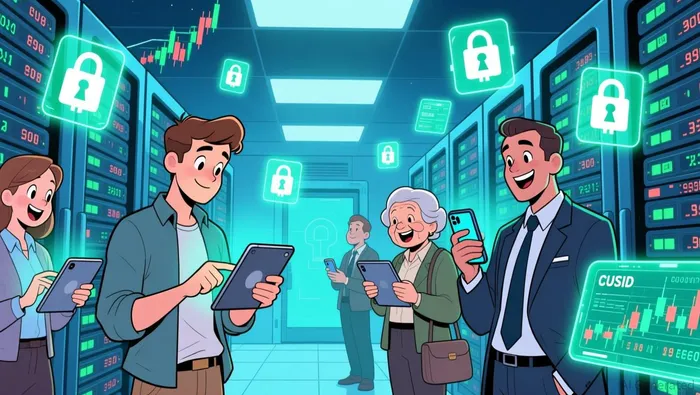 The SEC's Investor Advisory Committee will play a pivotal role in shaping the regulatory landscape. A Dec. 4 panel titled "Tokenization of Equities" will bring together market structure experts from Nasdaq, BlackRock, Coinbase, and other firms to outline implementation challenges. Key issues under scrutiny include how blockchain settlement interacts with the national best bid and offer (NBBO) framework, custody models for tokenized assets, and the legal equivalence of tokenized shares to traditional securities. Commissioner Hester Peirce has stressed that tokenized securities remain subject to full federal regulation, rejecting the notion that blockchain technology alters the asset's fundamental nature.
Nasdaq's proposal explicitly rejects "wrapper tokens" that mimic stock exposure without granting voting rights or legal ownership, a model prevalent in offshore platforms. Instead, the exchange envisions a closed, DTC-anchored ecosystem where tokenized shares settle via blockchain but remain tethered to traditional infrastructure. This hybrid approach avoids disrupting Reg NMS, which governs U.S. market structure, and maintains settlement timing on T+1. However, the proposal does not address 24/7 trading or cross-chain interoperability, areas where regulatory friction is expected to intensify.
Industry stakeholders remain divided. Galaxy Digital and Robinhood have already tokenized equity offerings on blockchains like SolanaSOL--, while the International Organization of Securities Commissions has flagged risks such as counterparty exposure and regulatory arbitrage. Nasdaq's conservative strategy-prioritizing incremental adoption over disruptive innovation-reflects a calculated effort to align with SEC priorities. As the exchange awaits a decision on its rule change, the outcome of the Dec. 4 panel could determine whether tokenized equities gain a foothold in the U.S. market or remain confined to niche, unregulated experiments.





Comentarios
Aún no hay comentarios