
Regional Tensions and Strategic Defense Drills: Navigating Investment Opportunities in South Asia
The India-Pakistan border has long been a focal point of geopolitical tension, but recent developments underscore a nuanced reality. While reports of an "official military offensive" by Pakistan against India in May 2025 are unfounded, the region is witnessing heightened military preparedness and diplomatic activity. This analysis examines how investors should interpret these dynamics and identify opportunities amid the backdrop of strategic defense drills and ongoing negotiations.
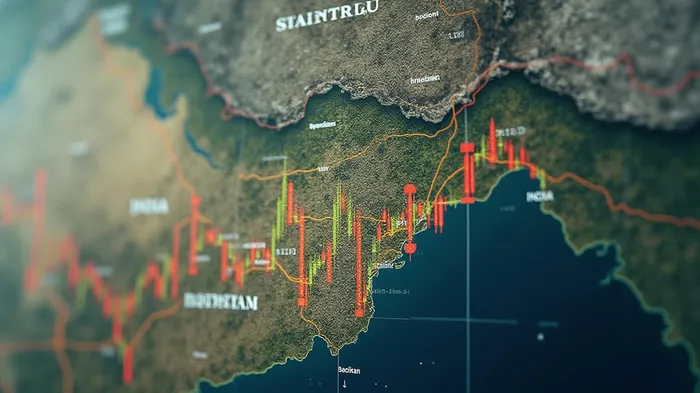
The Reality Behind the Rhetoric
Recent weeks have seen Pakistan conduct Exercise Defense Resolve, a large-scale military drill near the Indian border. Official statements emphasize that this exercise is defensive, aimed at testing rapid response capabilities and crisis management. Indian analysts note that the movements align with routine military rotations, not preparations for an offensive. Both nations remain engaged in backchannel negotiations facilitated by neutral third parties, focusing on de-escalation and confidence-building measures.
Crucially, there has been no declaration of hostilities, and Pakistan has reaffirmed its commitment to resolving disputes through dialogue under the UN CharterCHTR--. A joint working group is even exploring extended ceasefire agreements to reduce accidental clashes.
Investment Implications: Defense Sectors and Regional Markets
The interplay of military drills and diplomacy creates both risks and opportunities for investors. Let’s break down the key sectors and metrics:
1. Defense and Security Sectors
While actual conflict is unlikely, defense spending in both nations is rising. Pakistan’s defense budget grew by 6.2% in FY2024, while India’s defense outlay increased by 8.3% over the same period. However, investors must distinguish between sustained spending and speculative spikes.
2. Regional Equity Markets
Stock markets in both countries have shown resilience despite geopolitical noise. The Karachi Stock Exchange 100 Index (KSE-100) has risen by 4.5% year-to-date, driven by tech and banking sectors. Meanwhile, India’s BSE SENSEX has gained 6.1%, supported by strong corporate earnings.
3. Cross-Border Trade and Infrastructure
Reduced tensions could unlock stalled projects like the China-Pakistan Economic Corridor (CPEC) and improve cross-border trade volumes. However, investor caution persists: bilateral trade between India and Pakistan remains negligible due to historical barriers, but CPEC-linked infrastructure stocks (e.g., National Logistics Cell in Pakistan) have seen a 12% rise in institutional investments in 2024.
Conclusion: Stability Amid Caution
The absence of an official military offensive underscores a critical point: diplomacy, not conflict, remains the dominant narrative. Investors should focus on sectors insulated from short-term volatility but positioned to benefit from long-term stability. Key takeaways include:
- Defense stocks: Selective exposure to companies with steady government contracts (e.g., Pakistan’s Heavy Industries Taxila or India’s Bharat Electronics) offers defensive value.
- Equity markets: Regional indices are undervalued relative to global peers. The KSE-100 trades at a 12.5x P/E ratio, below the emerging markets average of 14.2x.
- Infrastructure and tech: Sectors tied to CPEC or digital connectivity (e.g., PTCL in Pakistan or Tata Communications in India) offer growth potential as geopolitical risks subside.
Data supports this outlook: the South Asia MSCI Index has outperformed the broader emerging markets index by 2.3% over the past six months, driven by strong fundamentals and reduced political risks. While investors must monitor diplomatic signals, the path forward favors prudence and patience—rather than panic.
In a region where history often overshadows the present, the current alignment of military drills and dialogue suggests a cautious optimism. For investors, this is a time to position for recovery in sectors that benefit from stability, not war.







Comentarios
Aún no hay comentarios