
Regional Labor Market Divergence and Its Implications for U.S. Equities
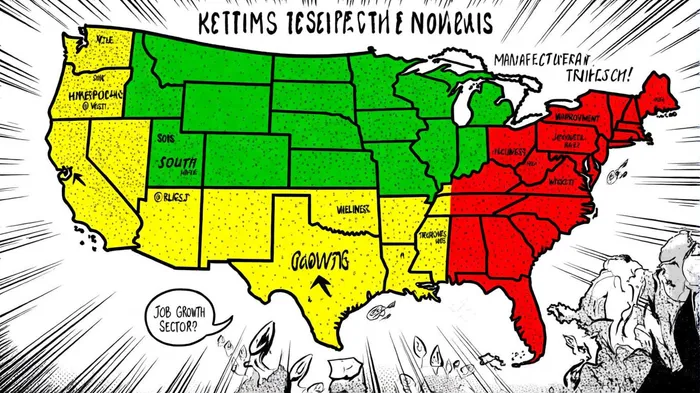
The U.S. labor market in 2025 is marked by stark regional divergences, with implications for equity performance and asset allocation strategies. As the economy navigates a fragmented recovery, investors must grapple with how sector-specific job growth, unemployment trends, and migration patterns shape regional economic resilience—and, by extension, equity valuations.
Regional Labor Market Divergence: A Macro View
The South continues to outpace other regions in job creation, driven by healthcare expansion and domestic migration. In June 2025, the healthcare sector added 39,000 jobs nationwide, with the South accounting for a disproportionate share of this growth [1]. Projections indicate healthcare occupations will grow at a 10.0% rate from 2023 to 2033, outpacing all other industries [2]. This trend is underpinned by aging demographics and a shift toward non-acute care delivery, creating a structural tailwind for healthcare equities in the South.
Conversely, the West faces a dual challenge: rising unemployment and slowing job growth. By 2025, the West's unemployment rate is projected to reach 4.7%, the highest among the four Census regions [3]. States like California and Washington are seeing declines in professional services and retail trade, sectors that historically drove employment in the region. Meanwhile, the Northeast's manufacturing sector, already weakened by high interest rates and input costs, is forecast to contract further, exacerbating regional imbalances [4].
Equity Performance and Labor Market Correlations
The inverse relationship between unemployment and equity prices remains a critical factor. A 2025 study found that higher unemployment rates correlate with lower real equity prices, while tighter labor markets (lower unemployment) boost valuations [5]. For instance, the South's 4.1% unemployment rate in June 2025—well below the national average—supports robust equity performance in healthcare and construction sectors, which are expanding due to electric vehicle infrastructure and AI data center demand [6].
In contrast, the West's higher unemployment rate and slower job growth could weigh on regional equity indices. Sectors like retail and professional services, which are overrepresented in the West, face margin pressures from weak consumer demand and rising labor costs. This divergence underscores the need for investors to differentiate between regional exposures, particularly in sectors tied to labor market dynamics.
Strategic Asset Allocation in a Fragmented Recovery
To navigate these disparities, asset allocators are adopting a nuanced approach:
1. Sectoral Overweights in High-Growth Regions: Investors are increasing allocations to healthcare and construction equities in the South, where labor demand is surging. For example, companies involved in elder care and chronic disease management benefit from the South's aging population and healthcare job growth [7].
2. Defensive Tilts in Weaker Regions: In the West and Northeast, portfolios are shifting toward defensive sectors like utilities and consumer staples, which are less sensitive to labor market volatility. This aligns with the broader trend of underweighting cyclical sectors in regions with weaker employment growth [8].
3. Geographic Diversification: A neutral stance on regional equity exposures is gaining traction, as highlighted by T. Rowe Price and InvescoIVZ--. This strategy balances the South's growth potential with the West's risks, while hedging against dollar volatility through ex-U.S. duration plays [9].
Macro Risks and Policy Considerations
Immigration policy and interest rates remain pivotal. The South's reliance on domestic migration to offset declining international immigration could strain labor supply in sectors like agriculture and hospitality [10]. Meanwhile, the Federal Reserve's tightening cycle continues to dampen manufacturing in the Northeast, where employment fell by 7,000 in June 2025 [11]. Investors must monitor these factors, as they could amplify regional divergences and influence equity valuations.
Conclusion
The U.S. labor market's fragmentation in 2025 demands a granular approach to equity investing. While the South's healthcare-driven growth offers compelling opportunities, the West's unemployment challenges and the Northeast's manufacturing decline necessitate defensive positioning. By aligning asset allocations with regional labor trends and sectoral dynamics, investors can capitalize on divergent recovery paths while mitigating downside risks.







Comentarios
Aún no hay comentarios