
Regional Airline Exit Impacts and Alternative Travel Infrastructure Opportunities
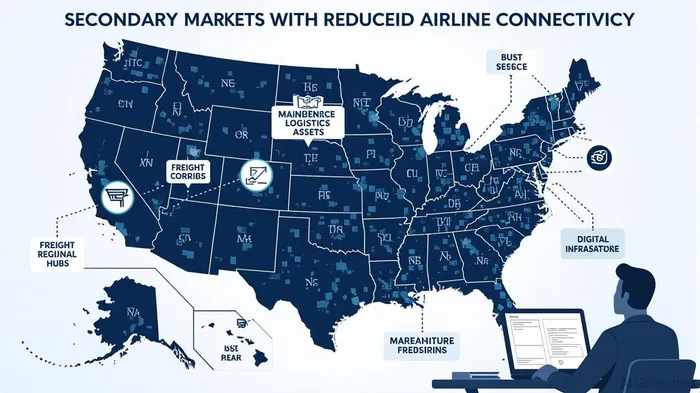
The U.S. regional airline sector is undergoing a seismic shift, driven by a confluence of economic pressures, supply chain bottlenecks, and aging infrastructure. Between 2023 and 2025, over 4,000 layoffs and multiple Chapter 11 filings have destabilized the transportation ecosystem, particularly in secondary markets reliant on regional carriers for connectivity [1]. While these disruptions have created systemic risks, they also present a unique window for investors to identify undervalued assets in logistics and transportation infrastructure.
The Perfect Storm: Why Regional Airlines Are Collapsing
The collapse of regional airlines is not an isolated phenomenon but a symptom of broader macroeconomic forces. Rapid interest rate hikes since 2022 have disproportionately impacted regional banks and carriers with fragile balance sheets, exacerbating liquidity crises [2]. For example, Illinois-based Elma Transport Inc. and Texas-based Balkan Express filed for bankruptcy in 2025, citing debts exceeding $25 million and operational liabilities tied to tariffs and trade disputes [1]. Meanwhile, aircraft delivery delays from BoeingBA-- and Airbus have forced carriers to operate aging fleets with higher maintenance costs and lower fuel efficiency [3]. The average age of regional aircraft now exceeds 14.8 years, up from 13.6 years historically, compounding operational inefficiencies [4].
Secondary Market Gaps and Infrastructure Vulnerabilities
Regional airlines serve as the arteries of the U.S. air travel network, connecting smaller communities to major hubs. The closure of carriers like Sunwing Airlines (merged into WestJet in 2025) and the abrupt exits of freight companies such as LTI Trucking Services have left critical gaps in these secondary markets [5]. For instance, the loss of regional services in Illinois and Texas has disrupted supply chains for perishable goods and manufacturing components, forcing businesses to rely on costlier alternatives like rail or road transport [1].
The ripple effects extend beyond airlines. A January 2023 FAA NOTAM system outage highlighted the fragility of air traffic management in underserved regions, where outdated infrastructure and limited redundancy amplify disruptions [6]. This vulnerability is compounded by a 3.3% CAGR rise in demand for aircraft maintenance, repair, and overhaul (MRO) services through 2032, driven by aging fleets [4].
Undervalued Assets: Where to Invest in the New Normal
The crisis has created opportunities in three key areas:
MRO Services and Fleet Modernization
The backlog of 17,000 aircraft orders at manufacturers like Boeing and Airbus has extended the operational life of older aircraft, driving demand for MRO services. Companies specializing in high-margin maintenance for regional jets, such as AerSaleASLE--, are well-positioned to capitalize on this trend [7].Logistics Technology and Supply Chain Resilience
Tariff volatility and hurricane disruptions in 2025 have accelerated the need for digital logistics platforms. Firms like Proficient AutoPAL-- Logistics (PAL) have demonstrated resilience, with Q2 2025 revenue surging 21.4% quarter-over-quarter despite broader industry declines [8]. Investors should prioritize companies leveraging AI for dynamic pricing and route optimization.Secondary Market Connectivity Hubs
Cities like Roanoke, Virginia, and Akron/Canton, Ohio—recently expanded by American Airlines—showcase the potential for revitalizing underserved markets. Acquiring assets in these regions, such as regional airport concessions or ground handling services, could yield outsized returns as carriers rebuild networks [9].
Conclusion: Navigating the Post-Crisis Landscape
The collapse of regional airlines is not the end of the story but a catalyst for reinvention. Investors who act decisively can capitalize on undervalued assets in MRO, logistics tech, and secondary market infrastructure. As the industry adapts to higher interest rates and geopolitical volatility, the winners will be those who recognize that today’s disruptions are tomorrow’s opportunities.
Source:
[1] FreightWaves, "Layoffs and Bankruptcies Archives" [https://www.freightwaves.com/news/category/news/business/layoffs-and-bankruptcies]
[2] IMF, "Navigating Trade-Offs between Price and Financial Stability" [https://www.elibrary.imf.org/view/journals/006/2025/003/article-A001-en.xml]
[3] Gminsights, "Aviation Challenges 2025" [https://www.gminsights.com/blogs/top-challenges-of-aviation-industry]
[4] Xeneta, "The Biggest Global Supply Chain Risks of 2025" [https://www.xeneta.com/blog/the-biggest-global-supply-chain-risks-of-2025]
[5] Wikipedia, "Sunwing Airlines" [https://en.wikipedia.org/wiki/Sunwing_Airlines]
[6] Zenduty, "Lessons from the biggest IT outages of 2023–2025" [https://zenduty.com/blog/it-outages/]
[7] EplaneAI, "AerSale Focuses on High-Margin MRO Services" [https://www.eplaneai.com/pt/news/aersale-focuses-on-high-margin-mro-services-to-drive-growth-in-aging-aviation-market]
[8] Investing.com, "Proficient Auto Logistics Q2 2025 Earnings Call" [https://www.investing.com/news/transcripts/earnings-call-transcript-proficient-auto-logistics-sees-q2-2025-revenue-surge-93CH-4183970]
[9] RoutesOnline, "Aruba Airport Reports Strong Passenger Growth" [https://www.routesonline.com/airports/2361/aruba-airport-authority-nv/news/299664917/aruba-airport-reports-strong-passenger-growth-in-first-half-of-2025/]





Comentarios
Aún no hay comentarios