
Regeneron's Earnings Hit by $83 Million Charge: Implications for Long-Term Growth and Investor Confidence
In the third quarter of 2025, Regeneron PharmaceuticalsREGN-- faces a significant earnings headwind as a $83 million pre-tax In-Process Research & Development (IPR&D) charge is set to reduce both GAAP and non-GAAP net income per diluted share by $0.68, according to a Panabee report. This charge, stemming from an $80 million upfront payment to Hansoh Pharmaceuticals for a licensing agreement, underscores the company's aggressive strategy to bolster its pipeline through high-risk, high-reward external acquisitions, as noted in a Regeneron release. For investors, the question looms: Does this non-recurring cost align with Regeneron's long-term growth ambitions, or does it signal a misstep in capital allocation?
The Strategic Rationale Behind the Charge
Regeneron's decision to in-license HS-20094, a dual GLP-1/GIP receptor agonist in Phase 3 trials in China, reflects a calculated bet on obesity and metabolic diseases-a market projected to grow substantially as demand for weight-loss therapies intensifies, according to a Hansoh announcement. The upfront payment of $80 million, coupled with potential milestone payments of up to $1.93 billion and low double-digit royalties, positions RegeneronREGN-- to access a molecule with demonstrated safety and efficacy in over 1,000 patients, as referenced in the company's Q3 financial report. By securing exclusive rights outside China, the company aims to integrate HS-20094 into its broader R&D portfolio, which already includes over 45 clinical-stage candidates, according to a Goldman Sachs presentation.
This move aligns with Regeneron's long-standing R&D strategy of combining internal innovation with strategic business development. As stated in the Goldman Sachs presentation, the company prioritizes "advancing a robust pipeline" while maintaining flexibility in capital allocation to support long-term sustainability. The IPR&D charge, though a near-term drag on earnings, is framed as a necessary investment to accelerate access to a high-potential asset that could differentiate Regeneron in a competitive therapeutic space.
Balancing Short-Term Volatility and Long-Term Potential
The $0.68 per-share reduction in Q3 earnings represents a material, albeit temporary, hit to financial performance. For context, Regeneron's Q2 2025 results showcased an EPS of $12.89, driven by strong revenue growth of $3.68 billion, as detailed in the Q2 earnings transcript. The Q3 charge, while significant, is non-recurring and does not reflect operational inefficiencies or declining core business performance. Instead, it highlights the inherent volatility of R&D-driven companies, where large upfront costs are often justified by the potential for blockbuster returns.
However, the speculative nature of the IPR&D charge raises questions about risk management. As noted by a GuruFocus note, the charge implies the acquired asset is "high-risk, early-stage, or lacks clear alternative future use." This aligns with the reality of biotech innovation, where only a fraction of clinical candidates reach commercialization. Regeneron's ability to navigate such risks will depend on its track record in optimizing external assets-such as its successful development of Dupilumab and Lebrikizumab-and its capacity to integrate HS-20094 into its existing metabolic disease portfolio.
Investor Confidence and Capital Allocation
Regeneron's approach to capital allocation remains a critical factor in assessing the sustainability of its business model. The company has historically balanced R&D investments with shareholder returns, including share repurchases and dividend growth. In 2025, it emphasized expanding U.S. manufacturing capabilities and maintaining flexibility in capital deployment. The Hansoh licensing deal, while costly in the short term, could enhance Regeneron's ability to diversify its revenue streams and reduce reliance on a single product line.
Investor sentiment will likely hinge on two metrics: the pace of data readouts from HS-20094's Phase 3 trials and the company's ability to manage future R&D expenses without compromising profitability. A recent interim analysis of the COURAGE study in obesity, for instance, has shown promise for fat loss, potentially paving the way for a Phase III trial in 2026, as discussed in the Goldman Sachs presentation. Such milestones could offset the Q3 earnings hit and reinforce confidence in Regeneron's long-term value proposition.
Historically, Regeneron's earnings releases have not shown a statistically significant impact on stock performance over a 30-day horizon, with an average return of +1.4% and a 60% win rate, though these results are not statistically significant-based on an internal backtest of earnings release impact from 2022 to 2025. This suggests that while there may be occasional positive momentum, investors should not rely on earnings dates as a consistent alpha generator.
Conclusion: A Calculated Bet on the Future
Regeneron's $83 million IPR&D charge is a textbook example of the trade-offs inherent in a R&D-intensive business model. While the near-term earnings impact is undeniable, the strategic rationale-accessing a high-potential obesity therapy through a cost-effective licensing deal-aligns with the company's broader vision of sustainable growth. For investors, the key will be monitoring how Regeneron balances these high-risk bets with disciplined capital allocation and operational execution. If the company can transform HS-20094 into a commercial success, the Q3 charge may be remembered as a small price paid for a transformative asset.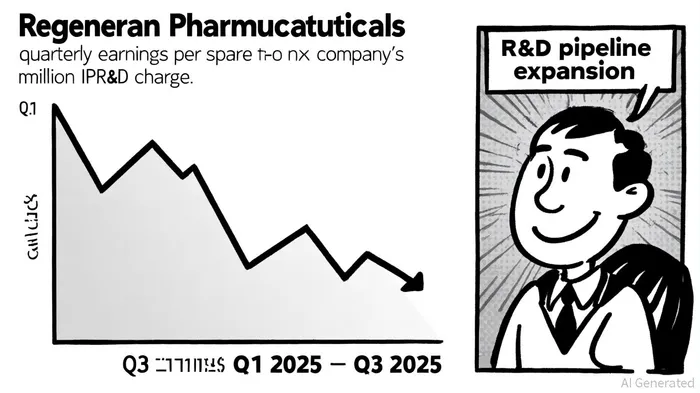





Comentarios
Aún no hay comentarios