
Reframing Procrastination: Strategic Delay as a Driver of Creative Innovation and Long-Term Value
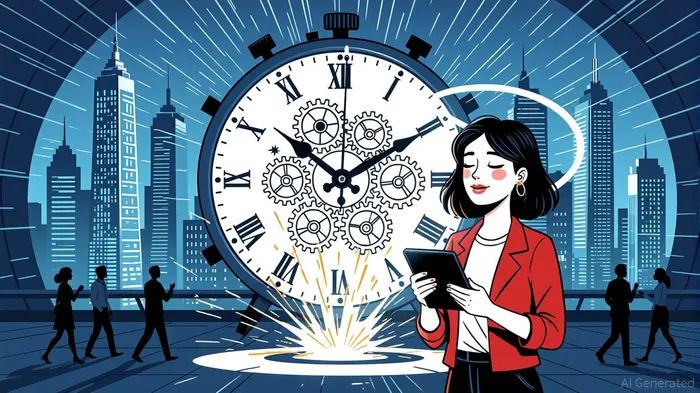
In the high-stakes world of finance and innovation, the term “procrastination” often carries a negative connotation. But what if delaying decisions—when paired with emotional regulation and strategic foresight—could actually unlock creative breakthroughs and long-term value? Behavioral finance and productivity-driven innovation are converging to reframe this concept, revealing how calculated delays can enhance decision-making in high-pressure industries. From tech giants to creative-sector disruptors, companies leveraging this approach are outpacing competitors by integrating emotional intelligence, AI, and disciplined prioritization into their DNA.
The Psychology of Strategic Delay: Emotional Regulation as a Catalyst
According to a report by ScienceDirect, emotional regulation is no longer just a personal skill—it's a corporate asset. High emotional intelligence (EI) enables individuals to navigate emotional trajectories flexibly, allowing them to delay decisions until optimal conditions arise . This is particularly critical in high-pressure sectors like finance and tech, where impulsive decisions can lead to costly errors. For instance, a 2022 review highlighted how emergency nurses use emotional restraint and resource utilization to manage crises, demonstrating that strategic delay isn't passivity but a calculated response to complexity .
In behavioral finance, emotional states like fear and overconfidence often distort investment decisions. A study published by MDPI found that investors who regulate their emotions—rather than acting on immediate impulses—avoid cognitive biases like loss aversion, leading to more rational, long-term strategies . This aligns with the concept of “strategic delay,” where pausing to assess risks and opportunities can amplify returns.
AI-Driven Tech Stocks: Turning Delay into Competitive Advantage
The tech sector is a prime example of how strategic delay, when combined with AI, can drive innovation. Take Micron Technology (MU), which has leveraged its leadership in high-bandwidth memory (HBM) to capitalize on AI's insatiable demand for data processing. By delaying aggressive expansion until HBM3E and HBM4 technologies matured, MicronMU-- positioned itself as a critical supplier for AI data centers while maintaining a low valuation relative to its growth potential .
Similarly, Dell Technologies (DELL) has adopted a phased approach to AI infrastructure. , , betting on long-term demand for cloud and AI workloads. This strategic delay allowed DellDELL-- to refine its engineering capabilities and deepen enterprise relationships before scaling .
For investors, these examples underscore a key insight: companies that delay overcommitment until AI and market conditions align are often rewarded with higher margins and stronger competitive moats.
Creative-Sector Innovators: Balancing Emotion and Automation
The creative sector is another arena where strategic delay and emotional regulation are reshaping value creation. AdobeADBE-- (ADBE), for instance, has integrated AI into its creative tools while emphasizing human-centric design. Its Generative Fill feature allows designers to iterate rapidly, but Adobe's success lies in its ability to balance automation with emotional storytelling—a skill that AI alone cannot replicate .
, an AI-driven trading platform, exemplifies how creative-sector stocks are leveraging strategic delay to refine their offerings. By simulating millions of trade scenarios overnight, TrendSpider delays real-time execution until optimal conditions are met, reducing emotional trading errors and enhancing precision . This approach mirrors the emotional regulation strategies seen in high-pressure industries, where patience and data-driven analysis trump impulsive actions.
The Risks of Premature Action: Why Strategic Delay Matters
While innovation thrives on speed, rushing into unproven technologies can be disastrous. , highlighting the gapGAP-- between investment and practical integration . For example, startups that adopt AI without addressing data scarcity or ethical concerns often face regulatory hurdles and reputational damage. Strategic delay allows firms to navigate these pitfalls, ensuring that AI adoption aligns with broader business goals.
Consider Applied Digital (APLD), a data center infrastructure player. By delaying large-scale expansions until partnerships with CoreWeaveCRWV-- and energy contracts were secured, Applied DigitalAPLD-- minimized operational risks while positioning itself to meet AI's surging power demands . This measured approach has attracted investors seeking long-term stability in a volatile sector.
Conclusion: Investing in the Art of Patience
The fusion of behavioral finance and productivity-driven innovation is redefining what it means to “act quickly.” In an era where AI accelerates decision-making, the ability to delay—strategically, not out of indecision—has become a competitive edge. From Micron's HBM dominance to Adobe's AI-enhanced creativity, companies that master this balance are poised for outsized returns.
For investors, the lesson is clear: Look beyond the hype of instant gratification. The next wave of market leaders will be those that harness emotional regulation, AI, and strategic delay to build sustainable value.







Comentarios
Aún no hay comentarios