
Redwire's Strategic Position in the Growing UAS Defense Market: Evaluating the Long-Term Investment Implications of the NATO Stalker Drone Contract
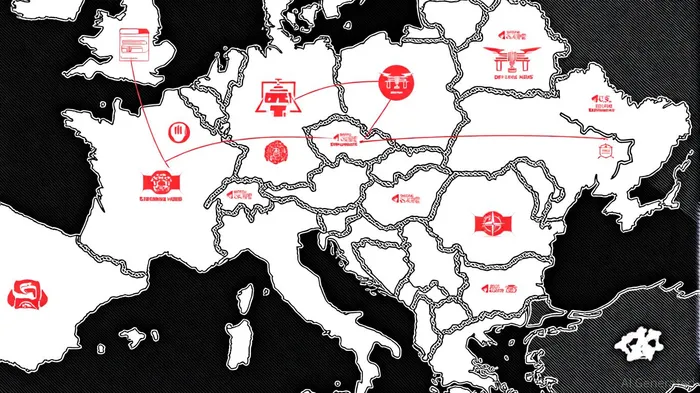
The UAS (Unmanned Aerial Systems) warfare market is undergoing a seismic shift, driven by geopolitical tensions, technological advancements, and the urgent need for persistent intelligence, surveillance, and reconnaissance (ISR) capabilities. According to a report by Mordor Intelligence, the global UAS warfare market is projected to grow from $25.59 billion in 2025 to $39.99 billion by 2030, at a compound annual growth rate (CAGR) of 9.34%[2]. Fixed-wing drones dominate this growth due to their endurance and payload capacity, but hybrid-VTOL (Vertical Takeoff and Landing) systems are gaining traction at a faster CAGR of 11.45%. Against this backdrop, RedwireRDW-- Corporation's recent NATO Stalker Drone Contract represents a pivotal moment in its evolution from a niche space infrastructure provider to a multi-domain defense technology integrator.
Market Dynamics and Redwire's Strategic Position
Redwire's subsidiary, Edge Autonomy, has secured a contract with an undisclosed European NATO ally to deliver its Stalker Group 2 fixed-wing UAS, a platform with over 500,000 operational flight hours across six continents[1]. The contract includes aircraft systems, spares, and operator training—a structure that signals potential for recurring revenue beyond the initial purchase. This aligns with broader trends in the UAS sector, where AI-enhanced swarming doctrines and modular designs are reducing per-mission costs while increasing mission flexibility[2].
The Stalker UAS bridges the gap between smaller tactical drones and larger Group 3 systems, offering a unique value proposition: 8+ hours of endurance, real-time data collection, and adaptability to harsh environments[3]. Its inclusion on the U.S. Department of Defense's Blue UAS list—a certification for secure, interoperable systems—further strengthens its appeal to NATO allies seeking to align with U.S. operational standards[1].
Financials and Growth Prospects
Redwire's financials, however, tell a more complex story. For Q2 2025, the company reported $61.8 million in revenue, a 9% decline from $78.1 million in Q2 2024, alongside a net loss of $97 million, driven by $90 million in acquisition-related expenses from its June 2025 purchase of Edge Autonomy[1]. Adjusted EBITDA was -$27.4 million, down from $1.6 million in the prior year[1]. Despite these challenges, Redwire's full-year 2025 revenue guidance of $385–$445 million reflects optimism about the Stalker contract's contribution and the integration of Edge Autonomy[1].
The contract's long-term implications hinge on recurring revenue streams from spares, training, and potential follow-on orders. NATO's push for interoperability—exemplified by programs like the U.S.-led Golden Dome missile defense initiative—creates a tailwind for platforms like the Stalker, which can integrate with satellite communications and secure data transmission systems[3]. Redwire's expertise in space-based infrastructure (e.g., Roll-Out Solar Arrays for the lunar Gateway) adds a layer of differentiation, enabling cross-domain solutions that competitors like AeroVironmentAVAV-- (AVAV) and Kratos (KTOS) lack[3].
Competitive Landscape and Risks
Redwire's competitive positioning is both a strength and a vulnerability. While its multi-domain approach—combining UAS, satellite communications, and in-space manufacturing—positions it to capture niche segments of the defense market[3], it faces headwinds from established players. AeroVironment, for instance, reported $820 million in trailing twelve-month (TTM) revenue and a 60.3% stock return in 2025, while Kratos, with $1.2 billion in TTM revenue, has a stronger balance sheet and higher profitability[3]. Redwire's price-to-sales ratio of 1.5x is lower than Kratos' 2.6x, but its lack of profitability and integration risks from the Edge acquisition remain red flags[3].
Political uncertainties also loom large. The U.S. defense budget in 2025 was $921 billion, with a projected 3.2% increase to $950.8 billion in 2026[3]. However, the potential return of President Trump and narrow Republican majorities in Congress could lead to budget volatility, complicating long-term planning for defense contractors.
Conclusion: A High-Beta Play in a High-Growth Sector
Redwire's NATO Stalker Drone Contract is a strategic win that underscores its potential to capitalize on the UAS defense boom. However, its long-term investment appeal depends on three factors:
1. Successful integration of Edge Autonomy to unlock cross-domain synergies.
2. Execution on recurring revenue from spares, training, and follow-on contracts.
3. Profitability by 2026, as current financials show a widening gap compared to peers[3].
For investors, Redwire remains a high-beta, event-driven stock. The bull case hinges on its ability to secure Golden Dome contracts and demonstrate operational efficiency post-acquisition. The bear case warns of integration delays, margin pressures, and being overshadowed by larger primes like Lockheed MartinLMT--. In a sector where innovation and agility are paramount, Redwire's bet on the Stalker UAS and multi-domain integration could pay off—but only if it navigates its financial and operational challenges with precision.





Comentarios
Aún no hay comentarios