
Redefining Urban Real Estate: Investing in Story-Driven Architecture
Urban real estate is undergoing a quiet revolution. As cities grapple with population growth, climate pressures, and shifting demographics, the traditional metrics of value-square footage, location, and amenities-are being redefined. At the heart of this transformation is narrative-driven architecture, a design philosophy that embeds cultural, social, and environmental stories into the built environment. For investors, this approach isn't just about aesthetics-it's a strategic tool to enhance property value, optimize functionality, and unlock market desirability in high-density urban projects.
The Value of a Story: How Narrative-Driven Design Elevates Property Prices
Narrative-driven architecture reshapes how buyers perceive "home." Developers now market high-density projects not as mere units but as curated lifestyles. For example, Copenhagen's Ørestad project leveraged its unique design to serve as both a city branding tool and a magnet for residents, demonstrating how storytelling can justify price premiums according to research. According to a report by Springer, such projects often command a 10–15% price premium over conventional high-density developments, as buyers associate narrative-driven design with exclusivity and innovation as research shows.
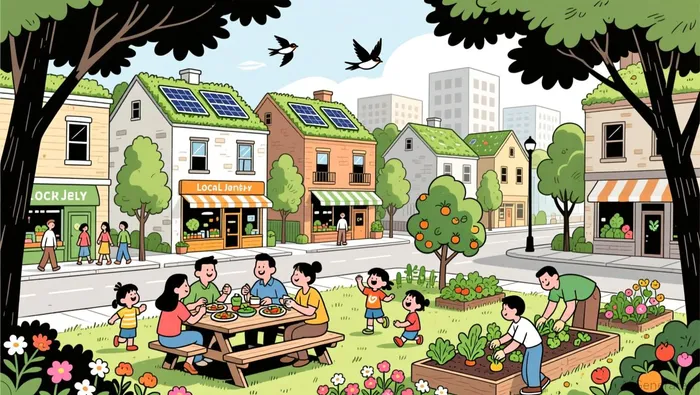
However, the value equation isn't always linear. A study on architectural setbacks in urban housing found that certain design choices-like reducing floor area for green space-can lead to a 10% negative pricing differential if not aligned with market expectations according to findings. This underscores the importance of balancing narrative with practicality: investors must ensure that design elements enhance livability without sacrificing functional utility.
Functional Advantages: Space, Sustainability, and the Compact City Model
Narrative-driven architecture isn't just about selling stories-it's about solving real-world problems. In high-density environments, space optimization and sustainability are critical. The compact city model, which prioritizes density, mixed-use zoning, and walkability, has emerged as a blueprint for future-proof urban development as research indicates. Projects like London's Donnybrook Quarter, with its tree-lined streets and low-rise, high-density housing, exemplify how narrative-driven design can integrate open space and communal areas without compromising density as case studies show.
Energy-driven circular design further amplifies functionality. By incorporating renewable energy systems and closed-loop material practices, developers can reduce operational costs while appealing to eco-conscious buyers. A 2025 study in Frontiers in Sustainable Cities found that such strategies can cut energy costs by up to 30%, a metric that directly enhances long-term asset value according to findings.
Market Desirability: Occupancy Rates and Resident Satisfaction
The success of any real estate investment hinges on occupancy and resident retention. Narrative-driven projects excel here by fostering a sense of community. Marcus Garvey Park Village in Brooklyn, though a 1970s project, remains a seminal case study: its integration of social infrastructure-schools, playgrounds, and communal gardens-created a mixed-income community that prioritized resident well-being according to analysis. Modern iterations of this model, like Hannibal Road Gardens in London, have reported 90%+ occupancy rates, driven by residents' desire for privacy and shared green spaces as research shows.
Quantitative data from Saudi Arabia and Iran further validates this trend. Post-occupancy evaluations (POEs) reveal that factors like green space and social interaction are the strongest predictors of resident satisfaction as studies demonstrate. In one Iranian study, social interaction with neighbors accounted for 60% of overall satisfaction scores, far outweighing physical attributes like building quality as research indicates. For investors, this means narrative-driven projects must prioritize not just architectural flair but also the social fabric of the community.
Strategic Implications for Investors
The evidence is clear: narrative-driven architecture is a multiplier for value, functionality, and marketability in high-density urban projects. However, success requires a nuanced approach. Investors should:
1. Align design with local narratives: Projects like Donnybrook Quarter succeed because they mirror the cultural and environmental context of their surroundings as research shows.
2. Balance density with livability: Low-rise, high-density models offer privacy and affordability without sacrificing urban connectivity as case studies indicate.
3. Leverage technology for optimization: AI and blockchain tools can streamline property valuation and risk management, ensuring that narrative-driven projects remain economically viable according to findings.
As cities evolve, the most compelling real estate investments will be those that tell a story-of sustainability, community, and resilience. For those who recognize this shift early, the rewards are not just financial but transformative.







Comentarios
Aún no hay comentarios