
Red Sea Undersea Cable Cuts and Global Internet Vulnerability: Geopolitical Risks Reshape Tech and Telecom Investment Landscapes
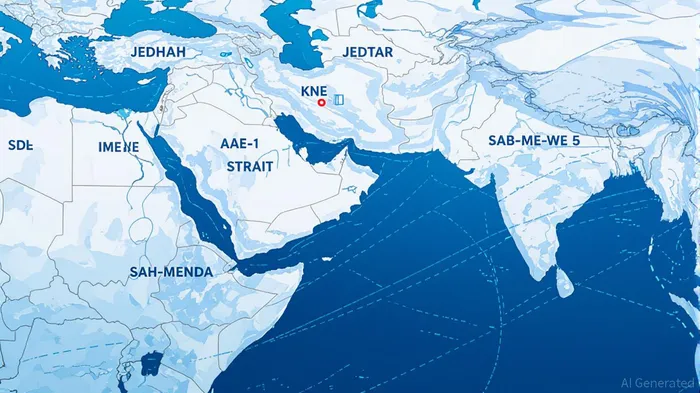
The 2025 Red Sea undersea cable cuts have exposed a stark reality: the global internet is built on a fragile web of infrastructure, with critical chokepoints vulnerable to both accidental and deliberate disruptions. The simultaneous severing of the SMW4 and IMEWE cables near Jeddah, Saudi Arabia, degraded internet access for millions in India, Pakistan, the UAE, and beyond. While repair timelines remain uncertain, the incident has forced investors to reevaluate the risks and opportunities in a world where digital infrastructure is increasingly weaponized.
The Anatomy of a Crisis
The Red Sea corridor carries 17% of global internet traffic between Asia, Europe, and Africa, making it one of the most critical digital arteries. The SMW4 and IMEWE cables, operated by Tata Communications and Alcatel-Lucent-led consortia, are part of a broader network that includes the AAE-1 and SEA-ME-WE 5 systems. These cables are not just technical assets—they are geopolitical flashpoints. The recent outages, which forced MicrosoftMSFT-- and others to reroute traffic, highlight the systemic risks of over-reliance on a handful of undersea routes.
The cause of the cuts remains unconfirmed, but speculation about deliberate targeting by regional actors—such as Yemen's Houthi rebels—has intensified. While the Houthis have denied involvement, their history of Red Sea disruptions during the Israel-Hamas conflict raises concerns about the weaponization of digital infrastructure. This blurring of physical and cyber warfare underscores a new era of geopolitical risk, where internet outages can destabilize economies and disrupt global supply chains.
Investment Risks: Telecom Giants in the Crosshairs
Telecom companies with concentrated exposure to Red Sea cables face heightened vulnerability. Telecom Egypt, a key operator of the AAE-1 and SEA-ME-WE 5 systems, is particularly exposed. Its partnerships with Saudi operators like stc and Mobily, while strategic, also amplify its reliance on the region's volatile infrastructure. Similarly, Orange, Vodafone, and Google—all stakeholders in the SEA-ME-WE 5—could face prolonged revenue losses if rerouting costs and latency persist.
The incident also raises questions about the resilience of legacy infrastructure. For example, the SMW4's 2015 capacity upgrade to 4.6 Tbit/s was designed to meet growing data demands, but its single-point-of-failure design in the Red Sea now appears outdated. Investors must scrutinize telecom firms that lack diversified routing options, as these companies could face reputational and financial damage during future outages.
Opportunities in Resilience: Satellite, AI, and Cybersecurity
The crisis has accelerated demand for alternative connectivity solutions. Satellite internet, once a niche market, is now a critical backup. SpaceX's Starlink and Amazon's Project Kuiper are gaining traction, with Starlink's recent expansion into the Middle East offering a lifeline for businesses reliant on real-time data. While satellites cannot replace the bandwidth of undersea cables, they provide a hedge against regional outages.
Cybersecurity firms are also emerging as beneficiaries. Companies like watchTowr (Singapore) and Securemetric (Malaysia) are leveraging AI to monitor undersea cables for sabotage and cyberattacks. The global AI cybersecurity market, projected to grow from $22.4 billion in 2023 to $60.6 billion by 2028, is attracting capital as firms seek to protect infrastructure from both physical and digital threats.
Geopolitical Mitigation: Policy and Partnerships
Governments and multilateral organizations are stepping in. The U.S. FCC's ban on foreign adversaries in subsea cable projects and NATO's “Baltic Sentry” operation reflect a growing emphasis on infrastructure security. Investors should watch for firms involved in public-private partnerships, such as Singapore's Counter Ransomware Initiative, which aligns with global efforts to secure digital ecosystems.
Investment Thesis: Diversify and Hedge
For investors, the Red Sea incident is a wake-up call. Here's how to position portfolios:
- Avoid Overexposure to Regional Telecoms: Prioritize companies with diversified cable networks. For example, Google and Meta are investing in redundant undersea systems like the 2Africa cable to mitigate single-point failures.
- Bet on Resilient Infrastructure: Allocate capital to firms building satellite and AI-driven monitoring solutions. SpaceX and Securemetric are prime candidates.
- Hedge with Cybersecurity: The AI cybersecurity sector offers long-term growth, particularly for firms with maritime domain expertise.
Conclusion
The Red Sea cable cuts are not an isolated incident but a harbinger of a more interconnected and vulnerable world. As geopolitical tensions and climate risks escalate, the stability of global internet infrastructure will remain a key investment consideration. For those who act now, the crisis presents an opportunity to capitalize on innovation in resilience, while avoiding the pitfalls of over-reliance on fragile systems.
In the end, the lesson is clear: in a world where data is the new oil, the infrastructure that carries it must be as robust as the economies it sustains.





Comentarios
Aún no hay comentarios