
Red Cat Holdings and the RCAT Securities Lawsuit: Assessing Risk Exposure and Shareholder Remedies in a Volatile Tech Sector
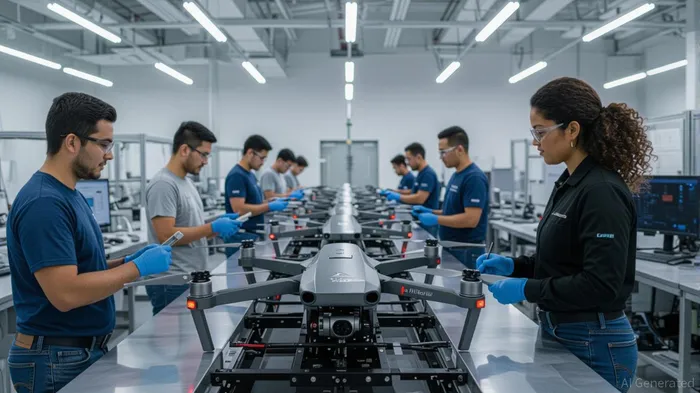
The recent securities class action lawsuit against Red Cat HoldingsRCAT--, Inc. (NASDAQ: RCAT), Olsen v. Red CatRCAT-- Holdings, Inc., No. 25-cv-05427 (D.N.J.), has become a case study in the risks of overpromising in high-growth, capital-intensive sectors like defense technology. From March 2022 to January 2025, the company faced a series of revelations that exposed alleged misrepresentations about its production capacity and contract value, triggering sharp stock price declines and a broader reckoning with corporate accountability. For investors, the case underscores the need to dissect not just financial metrics but also the integrity of management narratives in volatile markets.
The Unraveling of Red Cat's Narrative
The lawsuit alleges that Red Cat systematically overstated the capabilities of its Salt Lake City drone manufacturing facility and the value of its U.S. Army Short Range Reconnaissance Program (SRR) contract. Key events include:
- July 2023: Red Cat admitted its Salt Lake City facility could produce only 100 drones monthly, with full capacity (1,000 units/month) delayed by 2–3 years. This led to an 8.9% stock drop.
- September 2024: The company reported a $0.17 loss per share and $2.8 million in revenue—well below expectations—and revealed retooling efforts had paused Teal 2 sales. The stock fell 25% in two days.
- January 2025: A Kerrisdale Capital report questioned the SRR contract's value (estimated at $20–25 million vs. Red Cat's “hundreds of millions” claim), causing a 21% stock plunge.
These disclosures illustrate a pattern of misaligned expectations and operational underperformance. For investors, the case highlights the dangers of extrapolating future revenue from unproven production timelines or unverified contract valuations—a common pitfall in tech sectors where hype often outpaces reality.
Legal Implications and Shareholder Remedies
The lawsuit, led by Robbins Geller Rudman & Dowd LLP, seeks to hold Red Cat and its executives accountable for alleged violations of the Securities Exchange Act of 1934. Shareholders who purchased RCATRCAT-- stock between March 2022 and January 2025 may qualify for compensation if the court certifies the class action. Key remedies include:
1. Lead Plaintiff Motions: Investors must file motions by July 22, 2025, to serve as lead plaintiff. Successful lead plaintiffs may share in any recovery.
2. Contingency Fee Representation: Legal firms operate on a contingency basis, ensuring investors bear no upfront costs unless the case succeeds.
3. Reputational and Financial Fallout: Even if the lawsuit is dismissed, the prolonged legal scrutiny could deter future investors, exacerbating Red Cat's capital-raising challenges.
The case also raises broader questions about regulatory oversight in the drone and defense sectors, where companies often rely on government contracts to justify valuations. As the U.S. Department of Defense increasingly partners with private firms for innovation, the pressure to meet production targets and financial benchmarks will likely intensify, creating fertile ground for similar disputes.
Risk Exposure in Volatile Tech Markets
Red Cat's situation is emblematic of the risks inherent in investing in speculative tech stocks. Key lessons for investors include:
- Due Diligence on Operational Claims: Scrutinize the feasibility of production timelines, especially for capital-intensive projects. Red Cat's delayed Salt Lake City facility highlights the gapGAP-- between aspirational goals and execution.
- Contract Valuation Transparency: Verify the terms of government contracts through public records (e.g., U.S. Army budget documents). Red Cat's SRR Contract misrepresentation was exposed only after independent analysis.
- Diversification and Hedging: In sectors prone to regulatory and operational shocks, diversification remains critical. Investors should balance high-risk, high-reward plays with more stable assets.
A Path Forward for Investors
For those still holding RCAT shares, the immediate priority is to monitor the lawsuit's progress and potential settlements. However, the case also serves as a cautionary tale for the broader market. In an era where AI, drones, and defense tech are touted as the next frontiers of growth, investors must remain vigilant against overhyped narratives.
Long-term strategies should emphasize:
- Engagement with Management: Push for clearer communication about production bottlenecks and contract terms.
- Support for Strong Governance: Advocate for independent audits of high-impact projects, particularly in industries with opaque metrics.
- Scenario Planning: Model best- and worst-case outcomes for companies with aggressive growth trajectories, factoring in legal and regulatory risks.
As the RCAT lawsuit unfolds, it will likely influence how investors and regulators approach risk in the tech sector. For now, the takeaway is clear: in volatile markets, the line between innovation and misrepresentation is perilously thin—and the consequences for investors can be severe.





Comentarios
Aún no hay comentarios