
Red Cat's FANG Line: A Catalyst for FPV Drone Market Consolidation and Margin Expansion
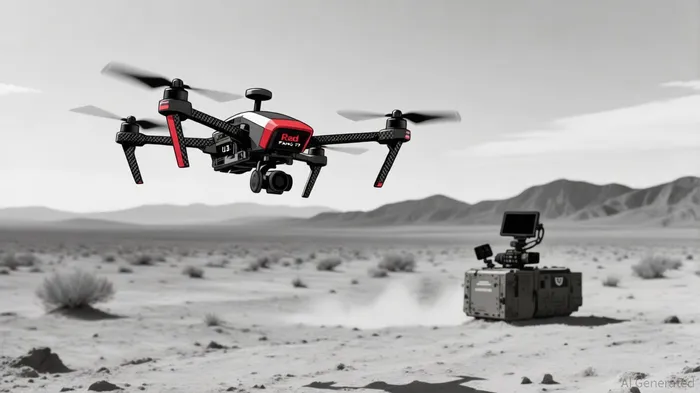
The FPV (First-Person View) drone market is undergoing a seismic shift, driven by technological innovation, regulatory pressures, and the rise of cost-efficient, domestically produced solutions. At the forefront of this disruption is Red Cat HoldingsRCAT--, Inc. (NASDAQ: RCAT), whose FANG™ line of NDAA-compliant FPV drones is reshaping industry dynamics. By combining affordability, retrievability, and U.S. manufacturing, the FANG line is not only challenging traditional market leaders but also accelerating industry consolidation and margin expansion.
Market Context: A Booming but Fragmented Sector
The FPV drone market is projected to grow from $558 million in 2025 to $4.5 billion by 2033, with a CAGR of 15.2% from 2026 to 2033, according to a FPV drone market forecast. This growth is fueled by advancements in battery life, camera technology, and the rising demand for FPV drones in racing, aerial photography, and defense applications. However, the market remains fragmented, with key players like DJI, Hubsan, and BETAFPV dominating the consumer segment, while defense and industrial applications are increasingly prioritizing compliance with U.S. federal procurement standards, as noted in a DataInsightsMarket report.
Red Cat's FANG Line: A Strategic Disruptor
Red Cat's FANG™ line, launched in October 2025, is engineered to address critical gaps in the defense and security sectors. The flagship model, the FANG™ F7, is a 7-inch carbon fiber FPV drone designed for retrievability, reducing the total cost of ownership by enabling reuse across training and tactical missions, as detailed in a Red Cat press release. Unlike one-time-use loitering systems, the FANG line emphasizes durability and scalability, aligning with the Pentagon's Replicator Initiative for attritable, low-cost systems, as reported by Breaking Defense.
The FANG line's U.S.-sourced components and NDAA compliance position it as a secure alternative to Chinese-sourced drones, a critical factor for government agencies and defense contractors. By collaborating with partners like Unusual Machines for motor production and Palantir for AI-driven navigation, Red CatRCAT-- is integrating advanced capabilities while maintaining cost efficiency, according to SUAS News.
Industry Consolidation: Competitor Exits and Market Share Shifts
The FANG line's entry has intensified competition in the defense FPV segment, prompting market consolidation. Smaller firms struggling with high R&D costs and regulatory hurdles are exiting or pivoting. For instance, companies like Field Group have restructured drone divisions, while acquisitions (e.g., Delair's purchase of Squadrone System) highlight the sector's consolidation trend, according to a DroneII analysis.
Red Cat's Q2 2025 financial results underscore its growing influence: the company reported a 15.92% year-on-year revenue increase, outperforming competitors who collectively saw a -0.07% contraction, per CSIMarket. While Red Cat's market share remains modest at 0.01%, its focus on defense contracts-such as the $14.7 million in Black Widow drone quotes-positions it to capture a larger slice of the $4.5 billion projected 2033 market, as noted in a Red Cat press release.
Margin Expansion: Cost Efficiency and Software Synergies
Despite initial challenges, Red Cat's strategic partnerships and manufacturing optimizations are driving margin expansion. The company anticipates gross margins of up to 50% for the Black Widow drone under mass production, with Palantir's AI and visual navigation software further enhancing profitability, as discussed in Yahoo Finance's earnings call highlights. While specific FANG line margins are undisclosed, the integration of high-margin software and U.S. manufacturing is expected to improve overall profitability.
Red Cat's Q2 2025 gross profit of $375,054, though modest, reflects progress. The company's CEO highlighted that hardware margins could reach 50% with scale, and software add-ons could push margins higher, as detailed in a Red Cat press release. This trajectory aligns with broader industry trends, where firms leveraging vertical integration and AI are outpacing peers.
Investment Implications
Red Cat's FANG line represents a compelling case study in market disruption. By addressing cost, compliance, and reusability, the FANG line is forcing competitors to innovate or exit, while its software partnerships and U.S. manufacturing base create a durable moat. For investors, the key risks include execution challenges in scaling production and the volatile nature of defense contracts. However, the long-term potential-given the FPV market's growth and Red Cat's strategic positioning-makes the FANG line a catalyst worth watching.
Historical performance around RCAT's earnings releases, however, suggests caution for short-term tactical trades. A backtest of RCAT's price movements following earnings announcements from 2022 to 2025 reveals that the stock underperformed its benchmark in a 30-day window, with a cumulative return of -12.3% versus +12.4% for the benchmark. Only one of three events (≈33%) delivered a positive 10-day return, and the worst average drawdown (~-19%) occurred around day 16 post-announcement, as shown in that backtest. These findings underscore the limited reliability of earnings-driven timing strategies for RCATRCAT--, given the small sample size (three events) and lack of statistically significant excess returns. Investors should weigh these historical patterns against the company's long-term strategic momentum.





Comentarios
Aún no hay comentarios