
Is Recursion Pharmaceuticals (RXRX) a High-Potential AI-Driven Biotech Play or a High-Risk Speculation?
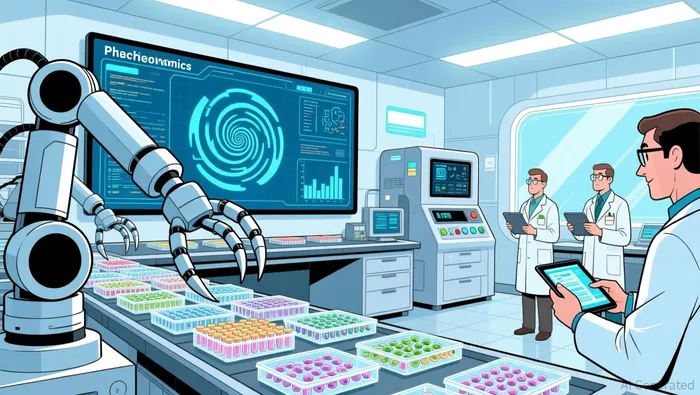
Recursion Pharmaceuticals (RXRX) has emerged as a focal point in the AI-driven biotech sector, leveraging its proprietary RecursionRXRX-- Operating System (OS) to industrialize drug discovery. The company's platform integrates multimodal data-including phenomics, transcriptomics, proteomics, and ADME-to accelerate drug development. By processing 2.2 million samples weekly and generating millions of phenomics images, Recursion claims to have built one of the largest biological datasets in the industry. In 2025, the company achieved a $30 million milestone with Roche and Genentech for delivering a whole-genome map of microglial immune cells, a critical advancement for neurological disease treatments. These technical capabilities, combined with over $500 million in partnership payments, underscore the platform's scalability and third-party validation.
Clinical Pipeline: Promising Data, High Stakes
Recursion's clinical pipeline has shown early promise, particularly with REC-4881, a Phase 2 candidate for familial adenomatous polyposis (FAP). The TUPELO trial reported a 43% reduction in polyp burden for FAP patients, positioning the drug as a potential blockbuster with over $1 billion in annual sales if approved according to analysis. However, the company's lack of commercialized products and reliance on milestone payments from partners like Roche and Sanofi remain significant risks according to financial reports.
Other programs, such as REC-617 (Phase 1/2 for fibrosis) and REC-1245 (Phase 1/2 for oncology), offer "multiple shots on goal" but face the binary nature of clinical trial outcomes according to market analysis.
Despite these advancements, Recursion's financials reveal a precarious position. As of October 2025, the company held $785 million in cash, projected to last through 2027. However, a 2025 cash burn rate exceeding $450 million raises concerns about dilutive financing if clinical milestones falter or costs escalate according to financial modeling. This financial vulnerability is compounded by the absence of revenue-generating drugs, leaving the company dependent on partnerships for liquidity.
Valuation and AI Efficacy: A Double-Edged Sword
Recursion's stock has declined 39.9% year-to-date, trading at a discount to peers like Vertex Pharmaceuticals according to market analysis. Analysts argue the stock is undervalued, with a fair value estimate of $6.30 according to financial sources, but this hinges on the AI platform's ability to deliver consistent results.
Industry experts highlight AI's transformative potential in pharma, citing examples like Insilico Medicine (18-month drug discovery for idiopathic pulmonary fibrosis) and Exscientia (12-month development of an OCD candidate). These cases validate AI's capacity to reduce timelines and costs, yet Recursion's long-term success depends on replicating such outcomes across its pipeline.
Critically, AI's "black-box" nature and regulatory hurdles-such as data privacy concerns-pose challenges for widespread adoption. While Recursion's platform has attracted major pharma partners, its value remains unproven until it generates revenue from commercialized drugs.
Risk-Reward Assessment
For risk-averse investors, Recursion's high cash burn, unproven commercialization model, and reliance on binary clinical outcomes make it a speculative bet. However, the company's AI-driven approach aligns with a $350–$410 billion annual market opportunity for AI in pharma by 2025 according to financial reports, and its partnerships provide a financial buffer. The key question is whether Recursion can translate its platform's technical prowess into regulatory approvals and marketable therapies.
In conclusion, RXRXRXRX-- represents a high-potential play for investors comfortable with volatility and long-term horizons. Its AI platform and clinical progress justify optimism, but the risks of financial strain and unmet expectations necessitate caution. For now, the stock remains a bet on the future of AI in biotech-rewarding if the vision materializes, but perilous if it falters.







Comentarios
Aún no hay comentarios