
Recce Pharmaceuticals: A Biodefense Breakthrough with Strategic Implications
In an era where antimicrobial resistance and bioterrorism threats loom large, Recce Pharmaceuticals’ recent collaboration with the U.S. Army Medical Research Institute of Infectious Diseases (USAMRIID) under a Cooperative Research and Development Agreement (CRADA) marks a pivotal moment. This partnership, active from 2023 to 2025, positions Recce at the forefront of developing solutions to combat some of the world’s deadliest pathogens.
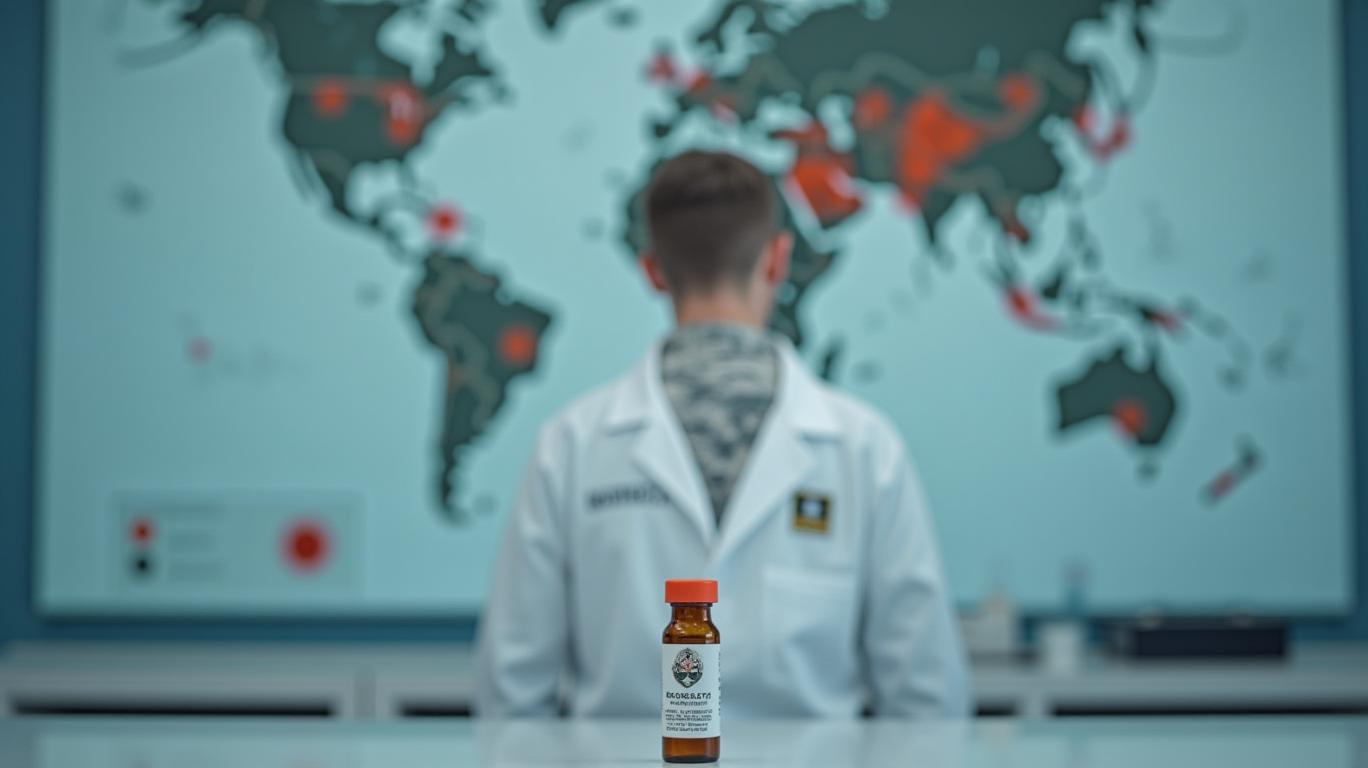
The CRADA focuses on evaluating Recce’s lead compound, RECCE® 327 (R327), a broad-spectrum anti-infective designed to target both Gram-positive and Gram-negative bacteria, including multidrug-resistant strains. Testing under Biosafety Level 4 conditions at USAMRIID—a facility equipped to handle high-threat pathogens—will assess R327’s efficacy against biodefense priorities such as anthrax, Ebola, and other agents. Success here could advance the compound into small-animal studies, a critical step toward clinical validation.
Strategic & Scientific Momentum
The CRADA is not Recce’s only government-backed initiative. A $2 million grant from the Congressionally Directed Medical Research Program (CDMRP) supports testing R327G, a gel-based formulation of R327, for burn wound infections—a pressing need in both civilian and military settings. Combined with the Department of Defense’s (DoD) emphasis on biodefense, these partnerships underscore Recce’s alignment with U.S. strategic priorities.
Scientifically, R327’s profile is compelling. Preclinical studies have shown no resistance development, a major advantage over traditional antibiotics. Recent Phase II trial results for R327G in treating acute bacterial skin infections (ABSSSI) delivered a 93% primary efficacy rate over 14 days, with no serious adverse events. This robust data has enabled Recce to streamline its Phase III trials: the Indonesian cohort now requires just 100 patients instead of 300, drastically reducing costs and timelines.
Market Potential and Regulatory Tailwinds
The antibacterial market is booming, projected to reach $26 billion by 2032, driven by rising antimicrobial resistance and a dearth of new treatments. Recce’s pipeline directly addresses this gap. R327’s Qualified Infectious Disease Product (QIDP) designation from the FDA grants Fast Track status and 10 years of market exclusivity—a critical advantage for commercialization.
Financially, the company is poised for acceleration. With Phase III trials in Indonesia and Australia set to yield interim data as early as 2025, Recce aims to file for regulatory approval by 2026. Its wholly owned manufacturing capabilities further reduce risks, ensuring scalability without third-party reliance.
Risks and Considerations
While the CRADA and clinical data are promising, challenges remain. Biodefense pathogens require rigorous testing, and small-animal studies may uncover unforeseen safety issues. Additionally, geopolitical tensions could shift funding priorities. However, Recce’s track record—demonstrating efficacy across over 500 bacterial isolates—and the FDA’s supportive stance mitigate these risks.
Conclusion: A Strategic Investment Play
Recce Pharmaceuticals stands at a critical inflection point. Its partnership with USAMRIID and the DoD not only validates R327’s potential but also aligns with global health priorities. With a Phase II success rate of 93%, streamlined Phase III trials, and a $26 billion market on the horizon, the company is well-positioned to capitalize on unmet needs in biodefense and infectious diseases.
The QIDP designation and Fast Track status are accelerants, while manufacturing control and U.S. government backing add layers of stability. Investors should note that Recce’s stock has already seen a 40% rise in 2024 on early clinical wins—a trend likely to continue as Phase III data emerges.
In summary, Recce’s CRADA with USAMRIID is more than a research pact; it’s a catalyst for transforming a promising compound into a market-ready solution. For investors seeking exposure to the antibiotic renaissance, Recce’s combination of scientific rigor, regulatory tailwinds, and strategic partnerships makes it a compelling play in a $26 billion—and growing—opportunity.







Comentarios
Aún no hay comentarios