
Reassessing US Inflation Risks in a Post-Georgieva Outlook
The global economic landscape in 2025 is defined by a fragile equilibrium between central bank credibility and the persistent risks of inflation, particularly in the United States. With IMF Managing Director Kristalina Georgieva warning that "uncertainty is the new normal and it is here to stay," according to Al Jazeera, investors must reassess how policy shifts, geopolitical tensions, and market expectations interact to shape inflation dynamics. At the heart of this analysis lies the Federal Reserve's credibility-a cornerstone of its ability to anchor inflation expectations and manage rate cuts amid a complex macroeconomic environment.
The Georgieva Framework: Policy Uncertainty and Inflationary Pressures
Georgieva's recent remarks underscore the dual challenges facing central banks: mitigating inflation while navigating policy uncertainty. The U.S. tariffs imposed under President Donald Trump, which now span nearly all major trading partners, have created a "second round of tariff hikes" risk as supply chains adjust, AP News reported. According to Georgieva's remarks at the G20 meeting, these policies could compress margins in the U.S., leading to higher price pass-through and complicating disinflation efforts. This aligns with data showing core inflation remaining stubbornly above 3% in late 2025, despite a cooling labor market, according to Yahoo Finance.
Georgieva's emphasis on central bank independence is equally critical. She has warned, according to Swissinfo, against political pressures to accelerate rate cuts during the 2025 global election year, citing historical lessons from the 1970s, when weak mandates eroded credibility and fueled inflation. Her stance reflects a broader concern: if central banks lose their autonomy, inflation expectations could spiral, undermining years of progress in stabilizing prices.
Market Pricing of Rate Cuts: Fed Funds Futures and the Credibility Conundrum
Financial markets are pricing in a gradual easing cycle by the Federal Reserve, with fed funds futures indicating an 87.7% probability of a 25-basis-point rate cut in October 2025, as reported by Fortune. The FOMC's September 2025 projections, published by the Federal Reserve, anticipate two more cuts to bring the federal funds rate to 3.5%–3.75% by year-end, suggesting a data-dependent approach. However, the market's confidence in these projections hinges on the Fed's credibility.
Research shows that credibility matters: a 0.6 credibility score-a measure of the Fed's perceived commitment to its inflation target-directly influences yield curve dynamics, as demonstrated in a 2017 study. When credibility is high, inflation expectations remain anchored, reducing volatility in fed funds futures. Conversely, if credibility wanes, markets price in a broader range of outcomes, as seen in the "Reverse Conundrum" of 2025, according to a Monash analysis, where long-term Treasury yields rose despite rate cuts. This divergence from historical norms reflects shifting investor behavior, including reduced foreign demand for U.S. Treasuries and a flight to alternatives like gold; the Fed's favorite recession indicator is also signaling potential strain.
The Yield Curve and Macroeconomic Stability
The inversion of the 10-year/3-month Treasury yield curve-a traditional recession signal-has further complicated the Fed's task. While the Fed's favorite recession indicator is flashing warnings, the labor market remains resilient, with unemployment at 4.3%, noted by Morningstar. This disconnect highlights the limitations of traditional metrics in an era of fiscal dominance and geopolitical uncertainty.
Central bank credibility plays a pivotal role in stabilizing these dynamics. Studies demonstrate that inflation targeting enhances credibility, which in turn reduces macroeconomic volatility, according to a 2022 study. For instance, the Fed's credibility in the 1980s, built through its prioritization of low inflation, created a predictable environment that minimized disruptive policy shocks, as discussed by the St. Louis Fed. Today, maintaining this credibility requires balancing rate cuts to support growth with a firm commitment to price stability.
Implications for Investors
For investors, the post-Georgieva outlook demands a nuanced approach. While the Fed's credibility supports a gradual easing cycle, the risks of policy missteps-whether from political pressures or miscalculations in inflation persistence-remain significant. The yield curve's inversion and the Reverse Conundrum suggest that markets are pricing in both near-term rate cuts and long-term inflation risks.
A diversified portfolio that accounts for both inflationary pressures and potential rate volatility is essential. Assets such as Treasury inflation-protected securities (TIPS), gold, and equities in sectors insulated from trade tensions (e.g., technology) may offer hedging benefits. Additionally, investors should monitor the Fed's communication closely, as deviations from its credibility framework could trigger sharp repricing in financial markets.
Conclusion
The post-Georgieva era is defined by a delicate interplay between central bank credibility and the forces of economic uncertainty. While the Fed's credibility remains a stabilizing factor, the challenges posed by Trump-era tariffs, global trade tensions, and shifting market dynamics underscore the need for vigilance. As Georgieva has emphasized, the path to disinflation requires not only technical precision in rate cuts but also a steadfast commitment to institutional independence. For investors, navigating this landscape demands a strategic balance between macroeconomic fundamentals and the evolving credibility of central banks.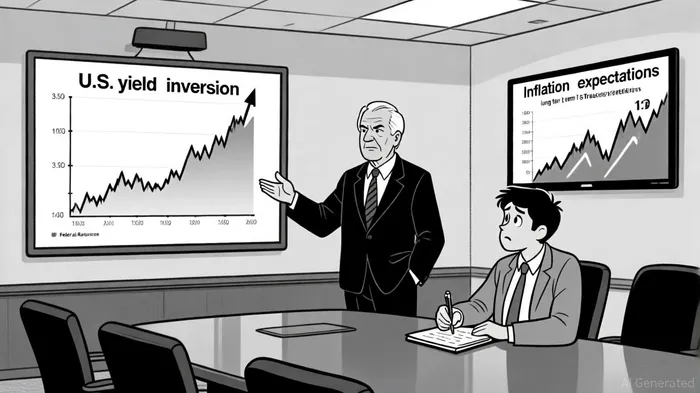







Comentarios
Aún no hay comentarios