
Reassessing Domino's Pizza's Growth Story: Can It Overcome Delivery and Consumer Demand Headwinds in 2026?
Domino's Pizza has long been a poster child for fast-food innovation, leveraging digital transformation and operational efficiency to dominate the global pizza delivery market. However, as the company enters 2026, its growth trajectory faces mounting scrutiny. While third-quarter 2025 results highlighted resilience-global retail sales grew 6.3% (excluding foreign currency impact), and U.S. same-store sales rose 5.2%)-underlying challenges persist. Net income fell 5.2%, and analysts like TD Cowen have downgraded the stock to "Hold," citing concerns over U.S. market saturation and the company's ability to meet its 2026 same-store sales targets. This article evaluates Domino'sDPZ-- strategic risks and sector dynamics to determine whether its ambitious growth story can withstand evolving consumer behavior and competitive pressures.
Strategic Strengths: Digital Innovation and Franchise Expansion
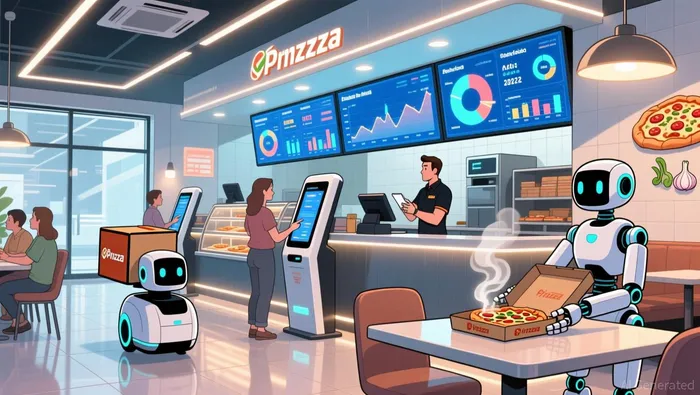
Domino's has built its dominance on two pillars: digital innovation and a scalable franchise model. The company's AI-powered ordering platform, real-time delivery tracking, and Pulse analytics system have streamlined operations, reducing delivery times and enhancing customer satisfaction. Its "Best Deal Ever" promotion, which allowed customers to build custom pizzas for $9.99, drove significant sales growth in 2025 and reinforced its value proposition. Meanwhile, the franchise model-responsible for 98% of its global revenue-has enabled rapid expansion, with 1,100 net new stores added in 2024 alone. The company's 2030 goal of 25,000 stores hinges on this model, particularly in high-growth markets like India and China according to analysis.
However, these strengths come with vulnerabilities. The company's reliance on digital platforms for 85% of U.S. sales exposes it to margin pressures from third-party delivery aggregators like Uber Eats and Deliveroo, which now command a larger share of customer data and transaction fees. While Domino's is testing delivery-only Hotspots and autonomous vehicles to reduce costs, these initiatives remain unproven at scale.
Sector Dynamics: Shifting Consumer Behavior and Intensifying Competition
The pizza delivery market in 2026 is defined by two key trends: consumer downsizing and digital-native expectations. According to a 2026 study, average cheese pizza prices have risen 22% over five years, prompting customers to order smaller pies and fewer toppings. Domino's value-driven campaigns, such as its $9.99 stuffed crust promotion, have mitigated some of this demand erosion, but the broader shift toward affordability could pressure margins. Additionally, consumers increasingly prioritize speed and personalization, favoring brands that offer seamless digital experiences.
Competitive pressures are also intensifying. Independent pizzerias are leveraging community ties and real-time data to compete with chains, while tech-savvy rivals like Little Caesars and Papa John's are investing in AI-driven loyalty programs. Meanwhile, digital aggregators are tightening their grip on customer acquisition, siphoning data and transaction fees that could erode Domino's franchisee profitability.
Strategic Risks: Operational and Macroeconomic Headwinds
Beyond competition, Domino's faces operational and macroeconomic risks. The company's 2025 net income decline-despite a 12.2% rise in operating income-highlights margin fragility. Rising labor and supply chain costs, coupled with a 1.5% drop in total orders, underscore the challenges of sustaining growth in a mature market. In Japan, where same-store sales have lagged, Domino's has resorted to store closures to reset earnings, a move that signals regional underperformance.
Macroeconomic uncertainties further complicate the outlook. Geopolitical tensions and fiscal policy shifts in key markets like Europe could disrupt expansion plans. While Domino's has hedged against some of these risks through its asset-light model, its reliance on international growth-where 45% of revenue is generated-leaves it vulnerable to currency fluctuations and regulatory shifts.
Can Domino's Navigate the Headwinds?
Domino's 2026 prospects depend on its ability to balance innovation with operational discipline. Its investments in AI quality control (e.g., the DOM Pizza Checker) and delivery automation aim to offset margin pressures, but these technologies require significant capital and time to scale. The company's focus on loyalty programs-personalized value propositions and tiered rewards- could help retain customers in a price-sensitive market, but execution will be critical.
Financially, Domino's remains well-positioned. With a projected 4-6% annual global retail sales growth and 100 basis points of operating margin expansion through 2028, the company has the financial flexibility to fund its ambitions. However, the downgrade by TD Cowen and the 5.2% drop in net income in 2025 suggest that investors are growing wary of over-optimism.
Conclusion
Domino's Pizza's growth story is far from over, but 2026 will test its ability to adapt to a rapidly evolving market. While its digital innovation and franchise model provide a strong foundation, the company must address margin pressures, shifting consumer preferences, and intensifying competition. If Domino's can execute its strategic priorities-expanding delivery efficiency, refining its value proposition, and maintaining operational discipline-it may yet reaffirm its position as the pizza delivery leader. For now, however, the path to 25,000 stores by 2030 remains fraught with uncertainty.





Comentarios
Aún no hay comentarios