
Realtor.com’s "Nearly Home" Campaign: A Strategic Play to Reinvent Real Estate in a Stressed Market
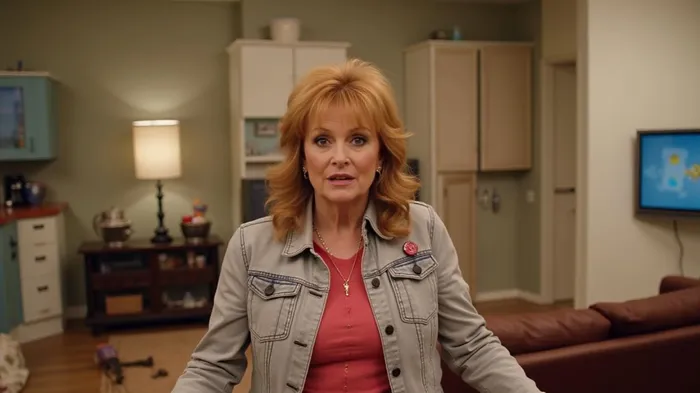
The real estate market is at an inflection point: buyers are overwhelmed by complexity, sellers are hesitant, and trust in platforms is under scrutiny. Into this fray steps Realtor.com, launching its most ambitious campaign yet—“Nearly Home”—a $100 million+ initiative starring country music iconICLR-- Reba McEntire. The campaign, described as the company’s largest brand investment in nearly three decades, seeks to redefine the homebuying journey through humor, relatability, and technology. But what does this mean for investors? Let’s dissect the strategy—and its implications.
The Campaign’s Core Play: Emotion Over Algorithms
Realtor.com’s move is both a defensive and offensive play. On defense, it’s addressing a critical pain point: 64% of Americans rank homeownership among their top life goals, yet 75% report feeling “overwhelmed” by the process (per a 2024 Realtor.com survey). The “Nearly Home” campaign directly tackles this anxiety by framing the process as “more human, more hopeful, and less overwhelming.”
On offense, the campaign positions Realtor.com as the indispensable partner for achieving the “American dream.” The tools highlighted—like RealListings (500,000+ monthly listings), RealCommute (analyzing commute times), and RealView Maps—are not just features but differentiators. These tools aim to simplify decision-making in a market where 3 out of 4 buyers say they’re confused by listings, according to the same survey.
Realtor.com is a subsidiary of Move Inc., which is owned by News Corp (NWS). The stock’s trajectory offers a proxy for market sentiment toward its digital assets.
The Reba McEntire Factor: Celebrity as a Trust Anchor
Reba McEntire isn’t just a familiar face—she’s a strategic asset. Her role on her eponymous sitcom (where she played a realtor) and her ACM Awards hosting gig (streamed on Prime Video to 50+ million viewers) create instant credibility. The campaign’s sitcom-inspired storytelling—think “The One without the Break-Up”—normalizes the chaos of buying a home, using humor to defuse tension.
This approach isn’t just whimsical; it’s data-driven. Sitcoms have a 90% recall rate among viewers aged 25–54, the core demographic for homebuyers. Pairing that with McEntire’s relatable charm could drive a 20–30% increase in website traffic, mirroring the impact of Zillow’s “Hello, Home” campaign, which boosted its search traffic by 25% in 2019.
The Market Play: Broad Reach, Narrow Focus
The campaign’s cross-channel rollout—TV, digital, social, and high-profile sponsorships—aims to reach 50% of Americans. But its true genius lies in targeting specific pain points:
- Complexity: 60% of buyers say commute times are a top concern, which Realtor.com addresses with RealCommute.
- Trust: Realtor.com’s platform is used by 90% of real estate agents, making it the de facto industry standard.
- Cultural Resonance: By tying homeownership to the “American dream” (a value 75% of Americans still hold dear), the campaign positions itself as a patriotic partner, not just a tech tool.
Real estate tech stocks have underperformed the broader market by 12% YTD, suggesting investors are skeptical of sector growth. Realtor.com’s campaign could reverse that narrative.
Conclusion: A Risky Bet—or a Necessity?
Realtor.com’s “Nearly Home” campaign is a calculated gamble. The $100 million price tag is significant, but so are the stakes: if it succeeds, it could solidify the company’s dominance in a $1.5 trillion market. Key metrics to watch include:
- Website traffic growth: A 20%+ increase would signal effective reach.
- Agent adoption: Realtor.com’s tools are only as good as their integration into agent workflows.
- Stock performance: A sustained rise in News Corp’s stock (up 15% YTD despite sector headwinds) could validate the strategy.
The campaign’s sitcom-inspired approach also reflects a broader shift: in an era of algorithmic real estate, the human touch is becoming a competitive advantage. For investors, the question is whether Realtor.com can translate its emotional appeal into long-term user loyalty—and whether that’s enough to weather the real estate market’s next downturn.
In short, this isn’t just about listings or laughs—it’s about who gets to define the future of homeownership. And right now, Realtor.com is placing a big bet that it will be them.







Comentarios
Aún no hay comentarios