
RealReal (REAL): Navigating Geopolitical Risks and Market Overreaction in the Luxury Resale Sector
The luxury resale market in 2025 has emerged as a resilient segment amid a turbulent macroeconomic landscape. Geopolitical risks-including U.S. tariffs, Middle East conflicts, and Chinese market volatility-have disrupted global luxury sales, yet platforms like The RealRealREAL-- (REAL) have demonstrated unexpected strength. This article examines REAL's valuation resilience through the lens of geopolitical risk assessment and evaluates whether market overreaction has created mispriced opportunities.
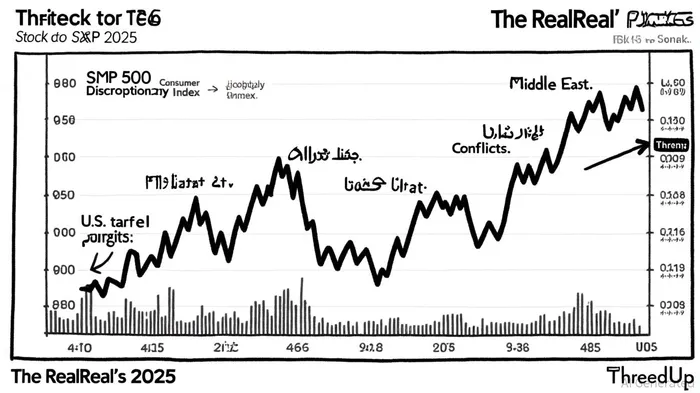
Geopolitical Headwinds and the Resale Market's Counterbalance
The luxury sector faces a perfect storm of challenges. U.S. tariffs on imported goods, coupled with ongoing geopolitical tensions, have driven up the cost of new luxury items, pushing consumers toward more affordable alternatives like pre-owned goods. According to a McKinsey report, personal luxury goods sales are projected to decline by 2% to 5% in 2025 due to economic uncertainty and war-related instability. Meanwhile, Chinese demand-a historically critical market-remains weak, with six consecutive quarters of contraction, according to a BNNBloomberg study.
However, the luxury resale market is countering these headwinds. A GlobeNewswire report notes that the U.S. resale market is expected to grow at a 7.08% CAGR through 2030, reaching $13.04 billion, as tariffs make new luxury goods less accessible. Consumers are increasingly prioritizing sustainability and affordability, trends that align with The RealReal's business model. The RealReal's 2025 resale report highlights a 30% year-over-year surge in vintage searches and a 32% increase in sales of "Fair Condition" items, driven by new buyers seeking value.
RealReal's Financial Resilience Amid Volatility
The RealReal's Q2 2025 results underscore its ability to thrive in a challenging environment. Revenue rose 14% year-over-year to $165.2 million, with Gross Merchandise Value (GMV) hitting $504 million-a record. Adjusted EBITDA improved to $6.8 million, a $8.6 million increase from the prior year, and the company raised its full-year revenue guidance to $667–674 million, according to a MarketBeat forecast. These figures suggest operational efficiency and strong demand for its curated inventory of luxury goods.
Despite these positives, REAL's stock has experienced volatility. On October 10, 2025, it fell 7.53% amid broader market jitters over Middle East tensions, according to Yahoo Finance historical data. Yet, analysts remain cautiously optimistic. B. Riley Securities reiterated a "Strong Buy" rating with a $9–$12 price target, while Morgan Stanley's average price target of $11.13 implies a 35.24% upside from its October 13 closing price of $9.78, according to MarketBeat. This divergence between short-term volatility and long-term optimism raises questions about market overreaction.
Peer Comparisons and Strategic Differentiation
Compared to peers, The RealReal has outperformed in 2025. As of May 2025, REAL's stock gained 13.4% year-to-date, far outpacing the -2.7% average for the Consumer Discretionary sector, according to an InvestorsHangout post. This outperformance is attributed to its high take rate (36%), AI-driven authentication, and focus on high-end brands like Hermès and Rolex, which have seen resale value increases of 15–20%, as noted in a GuruFocus piece. In contrast, platforms like eBay and ThredUp face steeper competition in the mass-market resale space, where margins are thinner and brand loyalty is lower.
Geopolitical events have also highlighted REAL's unique positioning. For instance, rising tariffs on imported luxury goods in the U.S. have accelerated demand for pre-owned items, with The RealReal reporting a 17% increase in fine jewelry resale values in a StockTitan report. Meanwhile, Chinese market volatility-a drag on new luxury sales-has had a muted impact on the resale sector, as Chinese consumers increasingly turn to domestic platforms for pre-owned goods.
Assessing Market Overreaction
The RealReal's stock price movements reveal a pattern of overreaction to geopolitical news. For example, a -7.53% drop on October 10, 2025, followed a spike in Middle East tensions, yet the company's fundamentals remained robust. Analysts argue that such volatility reflects broader market sentiment rather than REAL's intrinsic value. Morgan Stanley's mid-year outlook warns of policy uncertainty and geopolitical risks but acknowledges that active stock selection-like investing in resilient sectors such as luxury resale-can mitigate these risks.
Technical indicators further complicate the picture. While an Intellectia forecast predicts a 116.54% rise in REAL's stock over three months, other models issue "Strong Sell" ratings based on short-term moving averages, according to a StockInvest analysis. This divergence underscores the market's struggle to balance macroeconomic fears with the company's strong operational performance.
Conclusion: A Case for Strategic Investment
The RealReal's valuation resilience in 2025 is a testament to its adaptability in a fragmented luxury market. While geopolitical risks persist, the company's focus on sustainability, AI-driven operations, and high-margin luxury goods positions it to outperform peers. Analysts' "Buy" consensus and the stock's outperformance relative to the Consumer Discretionary sector suggest that current volatility may present a buying opportunity for investors willing to look beyond short-term noise.
As the luxury resale market continues to grow-projected to reach $13.04 billion by 2030-The RealReal's ability to navigate geopolitical headwinds and capitalize on shifting consumer preferences makes it a compelling case study in market resilience.





Comentarios
Aún no hay comentarios