
Real Estate Tokenization and Its Implications for Luxury Assets: A New Era of Liquidity, Accessibility, and Diversification
The real estate market has long been a cornerstone of wealth preservation and growth, but its high barriers to entry-geographic limitations, illiquidity, and capital intensity-have historically excluded smaller investors from luxury property markets. In 2025, however, tokenization is reshaping this landscape. By converting physical assets into digital tokens on blockchain platforms, real estate tokenization is unlocking unprecedented liquidity, democratizing access, and enabling strategic diversification for investors.
Liquidity: From Illiquid Assets to 24/7 Trading
Traditional luxury real estate investments are notoriously illiquid. Selling a high-value property can take months or even years, and liquidity events often require intermediaries like brokers or private equity firms. Tokenization disrupts this model by fractionalizing ownership into tradable digital tokens. For example, a $50 million luxury apartment complex in Manhattan could be divided into 10,000 tokens, each representing a $5,000 share. Investors can buy and sell these tokens on blockchain-based platforms 24/7, bypassing traditional market hours and reducing transaction costs, according to a Custom Market Insights report.
According to an SCN Soft report, tokenization platforms are projected to expand the tokenized real estate market to $3 trillion by 2030. This growth is driven by smart contracts that automate processes like dividend distribution and compliance verification, ensuring transparency and reducing operational friction, as noted in the Custom Market Insights report. For instance, a tokenized property in Aspen generated 254 owners per asset in 2025, with investors trading shares based on real-time performance data, according to a PMC article. Such liquidity not only attracts retail investors but also institutional players seeking flexible capital deployment.
Market Accessibility: Breaking Down Barriers to Entry
Luxury real estate has traditionally been the domain of ultra-high-net-worth individuals. Tokenization, however, is democratizing access by lowering capital requirements. A 2025 study by Custom Market Insights notes that fractional ownership models enable investors to participate in high-value assets with as little as $1,000, compared to the millions typically required for direct ownership. This shift is particularly impactful in emerging markets, where geographic and regulatory barriers previously limited participation.
Platforms like Lofty and Brickken are highlighted in a Stobox guide. By leveraging blockchain, these platforms eliminate the need for intermediaries, reducing transaction costs by up to 40%, according to an Elevex analysis. For example, a tokenized commercial property in Detroit attracted over 1,000 investors from 30 countries, with smart contracts automating revenue sharing from rental income (see the PMC article). Such models not only expand the investor base but also foster cross-border investment flows, aligning with the global nature of luxury real estate.
Investor Diversification: A New Paradigm for Portfolio Strategy
Diversification is a cornerstone of prudent investing, yet luxury real estate has often been excluded due to its high entry costs. Tokenization changes this by allowing investors to allocate capital across multiple properties and geographies. A single investor can now own tokens in a Parisian penthouse, a Dubai skyscraper, and a rural vineyard in Tuscany-all within the same portfolio, as discussed in the Elevex analysis.
Case studies underscore this potential. The Sabai Ecoverse project in Southeast Asia tokenized a luxury resort, attracting both institutional and retail investors through automated revenue-sharing mechanisms (PMC article). Similarly, Etherland's tokenized commercial properties in Manhattan demonstrated how blockchain streamlines capital raising, with projects securing funding in weeks rather than months (Elevex analysis). These examples highlight tokenization's role in creating diversified, globally balanced portfolios.
Challenges and the Path Forward
Despite its promise, real estate tokenization faces hurdles. Regulatory frameworks remain fragmented, with jurisdictions like the U.S. and EU adopting divergent approaches to token classification and compliance, as noted in the Custom Market Insights report. Cybersecurity risks, though mitigated by blockchain's inherent security, also persist. For example, a 2025 breach of a tokenization platform in Singapore exposed 1,200 investors to potential fraud, according to the Elevex analysis.
To address these challenges, industry stakeholders are pushing for standardized protocols. The Real Estate Tokenization Association (RETA), launched in 2025, aims to establish global benchmarks for token issuance, custody, and governance, according to the SCN Soft report. Meanwhile, advancements in zero-knowledge proofs and decentralized identity verification are enhancing security and compliance, as described in the Custom Market Insights report.
Conclusion
Real estate tokenization is redefining luxury asset investment by addressing liquidity, accessibility, and diversification challenges that have long constrained the market. As platforms mature and regulatory clarity emerges, the sector is poised for exponential growth. For investors, the opportunity to own a slice of the world's most exclusive properties with minimal capital represents a paradigm shift-one that could democratize wealth creation in the 21st century.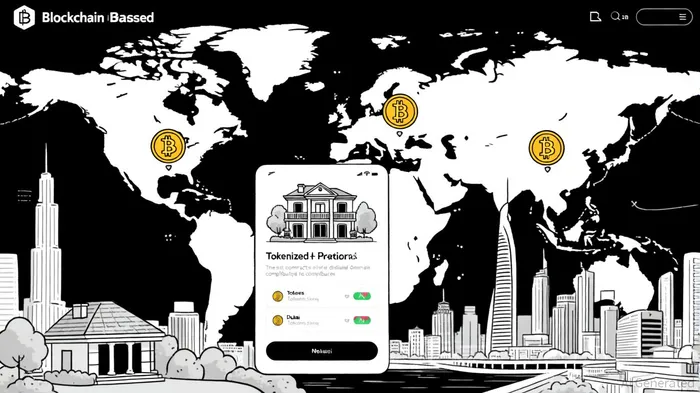







Comentarios
Aún no hay comentarios