
Real Estate Labor Market Stability Post-DOGE Policy Shifts: Short-Term Recovery and Long-Term Resilience
The Department of Government Efficiency (DOGE) policy shifts in 2025 have sent shockwaves through the U.S. real estate sector, reshaping labor dynamics and market fundamentals. While the immediate fallout has been marked by volatility, emerging signals suggest a cautious path toward recovery. For investors, understanding the interplay between short-term disruptions and long-term resilience is critical to navigating this evolving landscape.
Short-Term Recovery Signals: Navigating Uncertainty
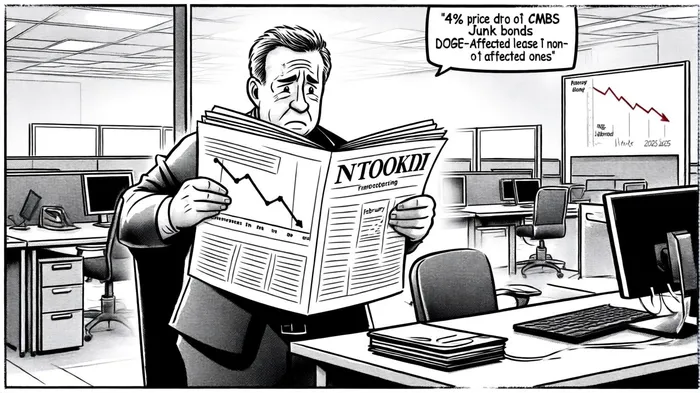
The real estate labor market in 2025 has been profoundly impacted by DOGE's aggressive cancellation of federal leases, particularly in commercial office spaces. According to a report by Yale Insights, landlords experienced a 5% reduction in net operating income between February and June 2025, compounding pre-existing post-pandemic challenges[3]. This disruption has spilled over to adjacent properties, with nearby buildings also seeing income declines, though foot traffic and retail activity remain largely unaffected[3]. The ripple effect is evident in the commercial mortgage-backed securities (CMBS) market, where junk bonds tied to DOGE-affected leases dropped 4% more in price than non-affected bonds, signaling heightened risk perception[3].
On the residential side, the housing market has entered a more balanced state, with inventory levels rising and buyers gaining leverage. However, job growth in the sector remains tepid. Data from CBRE indicates that real estate employment is projected to grow by only 0.5% in 2025, with an unemployment rate of 4.4% expected by year-end[2]. This stagnation is partly attributed to broader economic uncertainty, including erratic trade policies and geopolitical tensions, which have dampened business and consumer confidence[2].
Long-Term Resilience: Strategic Adaptation and Structural Shifts
While the short-term outlook is fraught with challenges, the real estate sector's long-term resilience hinges on proactive adaptation. The U.S. Bureau of Labor Statistics highlights that employment in construction and related industries—driven by renewable energy, AI-driven infrastructure, and electric vehicle expansion—is expected to grow significantly from 2024 to 2034[1]. This trend underscores the sector's potential to pivot toward high-demand areas, even as traditional real estate roles face headwinds.
Federal agencies, however, remain a wildcard. The General Services Administration's (GSA) proposed mass layoffs in the Public Buildings Service, aimed at shrinking its real estate portfolio, have sparked backlash and highlight policy-driven instability[2]. Yet, private real estate operators are increasingly prioritizing risk management and workforce retention. A FacilitiesNet analysis emphasizes the importance of tailored insurance strategies, compliance audits, and disaster preparedness to mitigate climate-related and legal risks[1].
Economic factors also play a pivotal role. The Federal Reserve's anticipated interest rate cuts in 2025 could alleviate borrowing costs and stimulate demand, though high mortgage rates are expected to constrain housing market activity through 2025 and into the early 2025–2030 period[4]. Investors must balance these dynamics with sustainability investments, as properties designed to withstand extreme weather events are likely to retain value and secure favorable insurance terms[4].
Conclusion: Balancing Risk and Opportunity
The real estate labor market post-DOGE policy shifts presents a complex interplay of immediate challenges and long-term opportunities. While short-term recovery is constrained by policy uncertainty and economic headwinds, the sector's resilience lies in its ability to adapt through innovation, sustainability, and strategic workforce planning. For investors, the key is to remain agile, leveraging data-driven insights to navigate volatility while positioning for growth in emerging subsectors like renewable energy and smart infrastructure.






Comentarios
Aún no hay comentarios